Showing posts sorted by relevance for query wobbly bike. Sort by date Show all posts

Wednesday, July 2, 2025

Book Week Early Childhood Shortlist: The Wobbly Bike by Darren McCallum and Craig Smith


This book The Wobbly Bike  by debut author Darren McCallum and 'old hand' Craig Smith is a joy and will certainly make you smile. It is fun and very pertinent to this age group.

So often the parents at school will say 'my child can't ride a bike. When will he learn?' in a manner that implies that it is the school's job to teach him, and then they add 'we live in a unit/ apartment'.
I think this is sad because it means that this child isn't outdoors at the park often or that his parents don't see it as their job to make time to ensure he does learn. Learning to ride a bike is about time, practice, perseverance, risk taking, adult belief and investment in their child, but so rewarding when a child shouts 'I can do it!'

Linked displays:
1. books about learning to ride bicycles
2. books set in the Northern Territory and /or Darwin and books by authors who live in the Northern Territory
3. books about Australian birds
4. other books by Craig Smith

Display 1: Learning to Ride a Bike
The library often has a display about bikes. The preschoolers are very keen to borrow books about bike riding. If you are putting together a display, these are popular
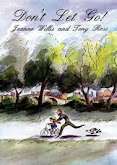
• Don't Let Go! by Jeanne Willis and Tony Ross   (this would make a perfect companion text)
• Don't Let Go, Dad!  by Mark Wilson
• Hello, Bicycle!  by Ella Boyd and  Taming a big-kid bike
• Everyone Can Learn to Ride a Bicycle  by Chris  Learning to Ride a Bike
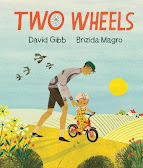
• Two Wheels  by David Gibb and Brizida Magro  (this would make a perfect companion text)
• Let's Ride a Bike  by Ruth Walton
• I Love My Bike  by Simon Mole and Sam Usher
• Off We Go!  by Will Hillenbrand
• Logan's Big Move by Logan Martin, Jess Black and Shane McG
• The Bike Lesson  by Stan and Jan Berenstain
• Duck on a Bike  by David Shannon
• Wild Blue: Taming a Big-Kid Bike  by Dashka Slater and Laura Hughes
• Bike on Bear by Cynthia Liu Kristyna Litten


Display 2: Books set in the Northern Territory 
• Ernie Dances to the Didgeridoo  by Alison Lester
• To the Top End  by Roland Harvey
• My Home in Kakadu  by Jane Christophersen
• Dry to Dry: the Seasons of Kakadu by Pamela Freeman and Liz Anelli
• Walking the Country in Kakadu  by Diane Lucas, Ben Tyler and Emma Long
• Collecting Colour  by Kylie Dunstan
• Big Rain Coming  by Katrina Germein
• Too Many Cheeky Dogs  by Joanna Bell and Dion Beasley
• Aunty's Wedding  by Miranda Tapsell and Samantha Fry
• Look See, Look at Me!  by Leonie Norrington and Dee Huxley
• Cyclone by Jackie French and Bruce Whatley

Leonie Norrington, Joanna Bell, Samantha Fry, Rosemary Sullivan, Katrina Germein and Kylie Dunstan have all lived in the Northern Territory at some time.

Display 3: Books about Australian Birds
The teaching notes for the book suggests:
• Have your class work in groups to research different species of birds in Australia. What do they look like? Where do they live? How many birds illustrated in the story can they identify?

Display of books like these would help with this:


Coming in August from CSIRO


Display 4 Books illustrated by Craig Smith.

The library has more than 100 books illustrated by Craig Smith. Time to revisit these two humorous tales:


And these two more serious tales:


Sunday, August 17, 2025

16th - 23rd August Australian Children's Book Week

Happy Book Week! If you are someone who is not into children's books though, you might not know that it is Book Week!

The winners in each category were announced on Friday, 15th at 12.00 noon, yet I have not read anything in the newspapers, there was nothing to indicate it was Book Week at the local library I visited today or at either of the bookshops at my local shopping mall. One of the cheaper department stores had a sale on dress ups for Book Week. Not so long ago there would have been much more fanfare. The newspapers ran an article about the merit of Australian books for children, an author may have spoken on the radio ... but now? 

How disappointing! It is the Children's Book Council's 80th birthday this year and it still didn't rate a mention. Most schools will have a dress up parade for Book Week sometime this week, but really will it make children or teachers read more books? Yes, it might provide some fun, but given the falling statistics on reading in schools and reading for pleasure in particular, will it address this need. I do hope so! 

Unfortunately in my experience, everyone at school has an opinion about how Book Week should be celebrated. Often those with the loudest voices and the most power are not readers themselves and the Teacher Librarian(s) who should be running a week that focusses on books are not consulted about best practice. As long as we have an author visit and a dress up parade we can tick the Book Week box. 

Do I sound cynical? I sure do, because for quite some time now this is what has been happening at my school. The Book Week we were home with Covid and couldn't dress up and parade was amazing because the teacher librarian (me) was left to plan it all and we had a book grid with a choice of activities every day. The students posted photos of the things they were doing and the feedback was so positive. When the library reopened many students and parents borrowed books they were introduced to during Book Week.

I find it easy to enthuse the students when sharing the shortlisted books or books by the visiting author, but I do find it hard to get the teachers  involved in activities unless I do all the planning, provide the books and give them a run sheet. They are just so busy and feel very time-poor. The curriculum and timetable are just so jam-packed and there is the feeling that everything suggested in a unit of work must be done, even though they are suggestions only, and there is wriggle-room and the outcomes could just as easily be met by reading other titles.

Enough! The shortlisted books for Early Childhood this year were a very good collection to share with my young audience. I have written about each of them elsewhere in this blog: The Wobbly Bike; How to Move a Zoo; One Little Dung Beetle; Everything You Wanted to Know About the Tooth Fairy; Spiro; and  Don't Worry Felix.  And, the author illustrator who is visiting is Cate James who will be perfect for 5 to 8 year olds. 

Now to get ready for a dress up parade... think outside the box...put on your safari suit and go adventuring just like Lollipop and her Grandfather series of books by Penelope Harper and Cate James. I've got hiking boots, shorts, a vest and a tie. I could be a grandparent. I just need Lollipop!


To finish on a more positive note I did spy this book in the bookshops.

This book is based on a song about bookshops that was written by musician Emily Arrow quite a while ago now, but which has just come out in book form with illustrations by Genevieve Godbout.

Dear Bookstore, I remember
the first time I ever visited you...

For one little girl, the local bookstore is not only the beginning of her reading journey, it’s a world that’s always there for her—one that allows her imagination to soar, provides any answers she needs, and sparks her curiosity. It’s a place of wishes and dreams, where everybody and every book fits in. There’s always someone there who is happy to see her and help find her next exciting read. Dear Bookstore is an ode to bookstores, the people who love them, and the books that fill them with magic and it could just as easily be a library as a bookshop.

You can hear Emily sing her song here. This is certainly a book to share the joy of books and reading!


Wednesday, July 9, 2025

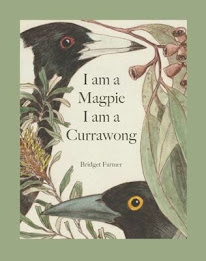
Book Week Eve Pownall Award Shortlist: I am a Magpie I am a Currawong


This book is on the shortlist for the Eve Pownall Award, which is an award for an information book, but it has minimal text so could just as easily be an Early Childhood choice. Bridget Farmer is a master illustrator of Australian birds and here she has chosen two birds that are very common in Australian backyards. They do look alike, being a similar size and both black and white, but this book allows young readers to discern differences. My young readers immediately commented on the eyes.

There's a myriad of wonderful books about Australian birds that could be used in conjunction with this book. (see this blog post for Wobbly Bike) Students can use the index of the books to see if these two birds are mentioned. Magpies will probably get more text than currawongs, but that will make it fun.  

You need a book like this to hear the difference in their calls, but online you can find their calls if you don't have this book.


Birds in Backyards website is a good place to get information on both of these birds too. The location map and the soundbite of their calls will allow for comparison too. I can see a Venn diagram being used for compare and contrast activity. The magpie page states that the magpie has one of the world's most complex bird songs. How amazing is that? The currawong page explains that the currawong got its name from its call.


The library has several stories about magpies, but I could only think of one about currawongs. Then when I checked in the catalogue there was another one.

Currawongs:


Magpies: