Tuesday, March 5, 2024

14th March International Day of Mathematics


The International Day of Mathematics (IDM) is a worldwide celebration. Each year on March 14 all countries are invited to participate through activities for both students and the general public in schools, museums, libraries and other spaces. The theme for 2024 is Playing with Math

World Maths Day
World Maths Day is an annual event that promotes the empowering nature of Maths, helping to encourage children and adults alike to become more excited about the subject and work to develop their Mathematical abilities! In 2024, it will take place on the 23rd of March.

I'm not sure why there is two dates or what the difference is, but which ever day you choose, it is a good excuse to look at all things mathematical, including picture books that feature maths.

Over the years our library displays for this day have taken various starting points, counting, numbers, geometry and problem solving. One year we just pulled out all the books that had a number in their title. Another year we looked at 'shapes in nature'. What to do this year?

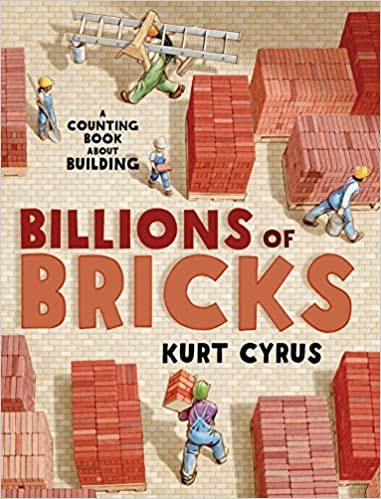
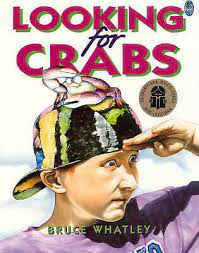
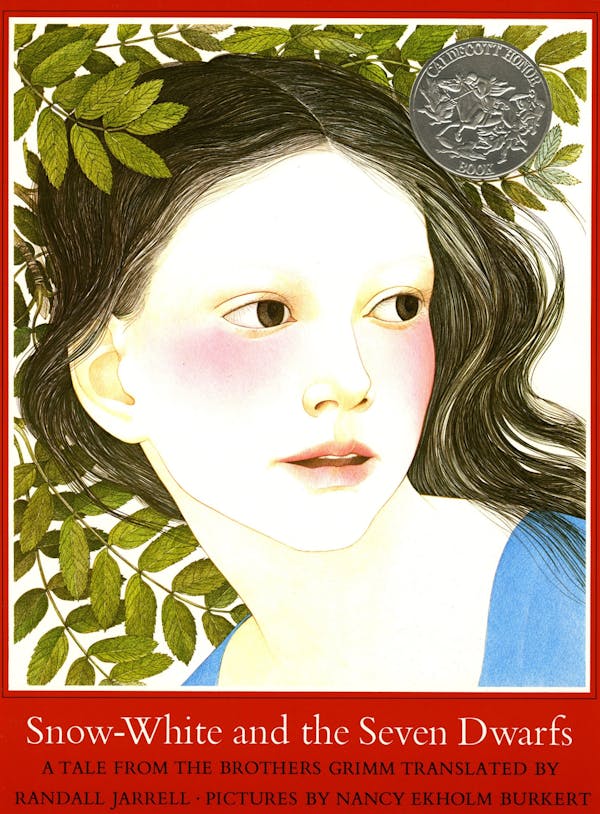
Each year I do try to purchase the Mathical award winning books that are suitable for my age group of readers. This years winners were announced recently. Just displaying all the past winners and nominees would make a good display by itself.

Here's some of my favourites, all of which enable mathematical discussions and the chance to play with maths.



















Saturday, March 2, 2024

9th March to 8th April Ramadan

In the ninth month of the year, when the first crescent moon rises in the sky, it’s time to celebrate Ramadan!

Ramadan is the ninth month of the Muslim calendar and it is one of the most sacred times for MuslimsMuslims are expected to refrain, which is one of the five pillars of their faith. To demonstrate this they abstain from eating and drinking from dawn to sunset each day of this month. After the sunset prayer, Muslims gather in their homes or mosques to break their fast with a meal called ifṭār that is often shared with friends and extended family. The ifṭār usually begins with dates, as was the custom of Muhammad, or apricots and water or sweetened milk.

There are very few muslim students at the school I work at, but it is a multicultural school and lots of other festivals are celebrated and so because of this we do have books in the library that allow students to see what happens at Ramadan.

Start with 

The Great Night Journey  by Anita Ganeri. This is a brief story in the Hopscotch series of beginning readers where Muhammed is given a message and he must go on an incredible journey through the heavens and then deliver the word of Allah to the people.

The Great Night Journey and Other Stories  by Anita Ganeri.

Ramadan  by Suhaib Hamid Ghazi

Ramadan and Id-ul-Fitr by Nancy Dickmann

• Ramadan and Eid-al-Fitr by Sara Khan and Nadiyah Suyatna 

Ramadan Kareem  by M.O. Yuksel

Sweet Dates to Eat  by Jonny Zucker

The Month that Makes the Year by Inda Ahmad Zahri

Then stories

Ramadan Moon by Robert B. Na'ima and Sharon Adl

The Gift of Ramadan  by Rabiah York Lombard and Laura Horton

Under the Ramadan Moon  by Sylvia Whitman

The Blessed Pomegranates  by A. Helwa 

• Lailah's Lunchbox  by Reem Faruqi and Lea Lyon 

The Very Best Doughnut  by Randa Abdel-Fattah

The Little Green Drum  by Taghreed Najjar

My Grandma and Me  by Mina Javaherbin and Lindsey Yankey

Maymoona's Moon  by Razeena Omar Gutta and Zayneb Haleem

Salat in Secret  by Jamilah Thompkins-Bigelow and Hatem Aly

Crescent Moons and Pointed Minarets by Hena Khan and Mehrdokht Armini   

Golden Domes and Silver Lanterns  by Hena Khan and Mehrdokht Armini   

One Sun and Countless Stars  by Hena Khan and Mehrdokht Armini   


For more books that are set in the Middle East and which may help in your quest for Ramadan books see this Pinterest.

Friday, March 1, 2024

9th March Meatball Day

There’s just so much to love about meatballs. We all have our own recipes, and preferred spice or meat mix. There's Italian meatballs, Swedish meatballs and then meatballs that have other names like kofta and kibbeh.

Like most celebrations Meatball Day can be celebrated by reading children's books!

Try:

Cloudy with a Chance of Meatballs by Judi Barett and Ron Barrett

Spaghetti and Meatballs for All by Marilyn Burns and Debbie Tilley

• On Top of Spaghetti  the song by Tom Glazer 

Tyler Makes Spaghetti  by Tyler Florence and Craig Frazier 

If I Give My Cat Spaghetti  by Sophia Ralli and Marina Salagub


Coming just after the celebration

Meatballs for Grandpa by Jeanette Fazzari Jones and Jaclyn Sinquett  

And this title for a biography intrigues me:

Make Meatballs Sing by Matthew Burgess and Kara Kramer


Now have a look in the cookbook section of your library and I'm sure you will find a recipe for meatballs that can be made with children, eg.

Cool Kids Cook  by Jenny Chandler has a meatballs recipe.

Tuesday, February 27, 2024

9th March Crab Meat Day

Over 1.5 million tons of crabs are eaten all over the globe every year and I guess that is why there is a day to celebrate that fact. However there is no day set aside to just celebrate live crabs which I think is sad, given how many children's picture books feature crabs. So here, this day is about crabs, not the 'meat' they provide seafood connoisseurs with.

While there are some amazing factual books in the nonfiction section of the library (595.3) there are also so many crab stories. Probably the best known are Eric Carle's and Julia Donaldson's books about hermit crabs, but you will be surprised to see just how often a crab features as a main character.  


See:

A House for Hermit Crab  by Eric Carle

Sharing a Shell  by Julia Donaldson


• Herman Crab by Peter Helliar

• Tiny Crab is a Tidy Crab by Paula Bowles

• Clem and Crab  by Fiona Lumbers

• Tip Tap! Went the Crab by Tim Hopgood

• Don't Worry Little Crab  by Chris Haughton

• I'm Fabulous Crab  by Nicki Greenberg

• Koko and the Coconut by Turia Pitt

• The Crab Ballet by Renee La Tulippe

• Crab Moon  by Ruth Horowitz

• One is a Snail Ten is a Crab by April Pulley Sayre

• Fish and Crab  by Marianna Coppo

• The Selfish Crab by Anya Glazer

• Crab Cake  by Andrea Tsurumi

• How the Crab Got His Claws by Rosie Dickins

Mr Clownfish, Miss Anemone and the Hermit Crab  by Sean E. Avery

• Crabbing with Dad by Paul Seden

• Joshua and the Two Crabs  by Joshua Button

Hector the Hermit Crab  by Katie Boyce

This is Crab by Harriet Evans

Clumsy Crab by Ruth Galloway

Bad Crab by Amelia McInerney

Looking for Crabs  by Bruce Whatley

Old Shell New Shell  by Helen Ward

Basghetti Spaghetti by Susanne Vettiger


and two fun graphic series


A Crabby Book by Jonathan Fenske

Crab and Snail by Beth Ferry


Once you associate crab with a favourite character you will care less about celebrating by eating crab.


I love this acronym. I'm going to make some badges to give children I see reading!


Saturday, February 24, 2024

26th February Tell a Fairytale Day


Despite the fact that I keep reading that many teacher librarians have radically weeded the traditional literature section of their libraries (the 398.2s) because they perceive these stories to be sexist and racist, I see them as part of history and a very strong oral tradition of times gone past. Every culture has a version of Cinderella. Wouldn't it be sad if English speaking children did not know at least the Perrault version with the fairy godmother? I would like them to know the Grimm version too! Disney has romanticised many fairytales and made them into films and my young students just think they are 'films'. They are amazed when I tell them there was a book first for Pinocchio, the Little Mermaid, and even for Shrek.

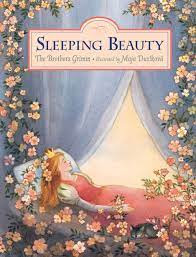
My school library does have a large collection of traditional stories, in mainly one story per picture book format. The girls clamour over the Sarah Gibb's versions of tales and little wonder the art work is wonderful. Any story with princesses is borrowed. The girls all seem to say they like Rapunzel best.  I then introduce them to The Twelve Dancing Princesses, Snow White and Rose Red and The Frog Prince. I do like the stories where the prince has been duped by a spell! Then they can read Sleeping Beauty  and Snow White.


I really enjoy the language and repetition in good retellings of The Three Billy Goats Gruff, The Elves and the Shoemaker and Rumplestiltskin.


The younger teachers at school are in a big hurry to introduce their students to fractured fairytales or spoofs because they think they are fun. However often they don't work as well as they should because the very young students have very little knowledge of the traditional version.

If you are looking to expand this section of your library look for beautifully illustrated versions such as those by Sarah Gibb, Bernadette Watts, Paul Zelinsky, Charles Santore, Jerry Pinkney, Gerda Muller, Rachel Isadora, Kinuko Y Craft, and Ruth Sanderson.  Joy Cowley has a series of World Classics too.


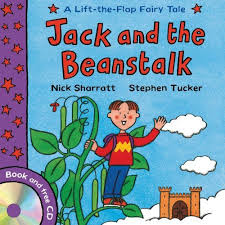
If like me, you have pre-schoolers using the library, look for the lift the flap versions by Stephen Tucker and Nick Sharratt, the Flip-Up Fairytales by Child's Play and the Ed Bryan ones from Nosy Crow.


Now, can you tell a fairytale without a book? I love playing the game with students where we retell a fairytale. I ask a student to start off a story, then point to another student and say continue, then another one saying 'more detail' here, or flashback to...etc. Sometimes I start a story in the middle, with a particular character as the storyteller. Often he does not know what has come before and so the point of view is very different. This retelling does not work either unless the students know the story very well. 

So tomorrow it's your chance to tell (or read) a fairytale!

Tuesday, February 20, 2024

25th February Quiet Day


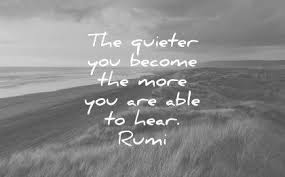
Quiet Day, also known as Don't Utter a Word Day, is observed annually on February 25th. It  was established to remind us to slow down and give silence a chance. It is about taking a pause and appreciating the sound of silence. Noise is everywhere — be it on the train, in a busy office, in the classroom, or even at home!

Most religions advocate for quiet and the wonders it can do for one’s emotional and physical well-being. They advocate for meditation and reflection.

Surrounding ourselves with peace and clarity can open our minds to new experiences and inspire us to lead more meaningful lives. 

It is very hard to get a class full of children to be completely quiet for any length of time, but some students do find their classrooms and the playground 'noisy'. These students come to the library at lunchtime and say can you make it quiet here. Even that isn't always possible because there are groups of children using puppets, doing jigsaw puzzles, drawing ... Perhaps I should invest in some headphones for the library, but I do like the congenial, cross-grade chat that occurs at lunchtime.

I will do a display of books for Quiet Day in the hope that some of them may spark some good discussions about silence and its virtues.

Books to display:

 Be Quiet!  by Ryan T. Higgins

Silence  by Lemniscates

 Quiet by Tommy de Paola

The Quiet Book  by Deborah Underwood

The Quiet Place  by Sarah Stewart

A Quiet Girl  by Peter Carnavas

Quiet as a Mouse  by Martha Lightfoot

Charlotte and the Quiet Place  by Deborah Sosin  Sara Woolley

The Sound of Silence  by Katrina Goldsaito & Julia Kuo

Hush! by Minfong Ho & Holly Meade 

The Silence Slips In  by Alison Hughes & Ninon Pelletier

I Am Quiet  by Andie Powers and Betsy Petersen

Silence  by Lena Shamshurina

• Why Are You So Quiet? by Jaclyn Desforges & Risa Hugo

Mole's Quiet Place  by Jane Chapman

When I Listen to Silence  by Jean E. Pendziwol & Carmen Mok

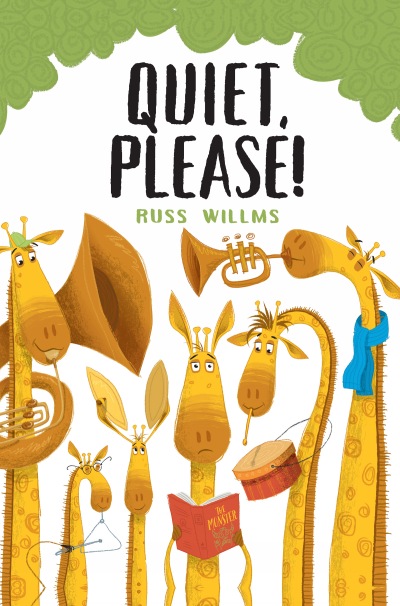
Quiet, Please!  by Russ Williams

I Don't Want to be Quiet! by Laura Ellen Anderson

Shhh! Quiet!  by Nicola Kinnear