Sunday, September 30, 2012
3rd October James Herriot (1916 - 1995)
Friday, September 28, 2012
29th September Reading Champions Part 2
The other success this term followed on from what Steven Layne said at the ALEA conference about it being everyone on the staff's job to sell reading to the students. So every staff member was given six Reading Champion stickers with their name on it which they had to affix to the cover of books in the library. These books were displayed in the library, in classrooms and in the school foyer. Students could then borrow them, and borrow them they did! It caught on like wildfire and staff were asking for more stickers, and then stickers for the children in their class. Students were keen to have their own sticker on a book. The Principal of the school, it is a Preschool to Year 12 school, had stickers, my boss, the Head of libraries had stickers, the non-teaching staff had stickers and the PE teacher and music teacher had stickers.
In other terms I have spoken at assembly, 'sold' books or talked about the Premier's reading Challenge, but this term class teachers with or without their class's help did it. We had a Reading Champion speak at each assembly. The Principal even did it. He is not naturally at home with very young children but he spoke about an Oliver Jeffer's book and did a wonderful job of connecting it to the children's lives.
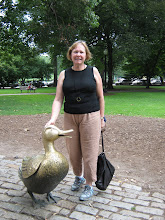
One teacher took the idea of student recommendations a step further and the students wrote about their book and made a picture of themselves carrying the book for me to display in the library.
29th September Reading Champions
Well it is school holidays, Term 3 is over and I finally have time to write about the successes of the term. Firstly with my Year 2 Book Club students I had fun reading biographies. Extending ideas associated with the Book Week theme, 'Champions Read', I collected together over 30 picture book biographies and designed work cards for each. Each card had only 4 questions on it which were designed to encourage higher order thinking skills. As well each student had a bookmark with generic questions on it to think about while reading the book. Each student took a book to read each week and when they came to the next session they met in pairs to sell their chosen book and then we had a whole group Book Talk/Literature Circle to talk about the week's reading. I often focussed this discussion by asking a question such as, 'What do you most admire about this person?' or asking them to comment upon the setting or the time of the story. By the end of the term most students had read at least eight biographies and we had presented a short reader's theatre-type performance in assembly. It was a huge success and I can't believe how much these children's parents now know about biographies and these people. The parents have come to borrow biographies as well, so for the next term I have removed them from their normal shelves and started a 'Biography Box'. The students were so keen to talk about what they had read. They often used the 'text-to-self' response as well, which made me realise that many of these gifted readers saw themselves in many of the lives they read about. Rather than write out a complete list of the books in the box I have made a Pinterest Board.

Sample of Work Card
Sample of Book Mark (the logo was borrowed from a program used in England that I found in Google Images)
Biography of …
| |
Champion of …
|
Which of these qualities does the person
you are reading about display?
| |
Knowledge
| |
Passion
| |
Vision
| |
Integrity
| |
Courage
| |
Perseverance
|
While you are reading
this book think about these:
|
Which
of them was of most importance to achieving his/her goals?
|
|
Would
you like to meet this person?
|
|
What
advice do you think they would give your reading group?
|

Sample of Work Card
Book: Blockhead the Life of Fibonacci
Author:
Joseph D’Agnese
Illustrator:
John O’Brien
Questions:
1.
Whose life is the book about?
This
story is about the life of
2.
What do you think is the best thing Fibonacci discovered?
3.
What would you have done if you had gone to school with
Fibonacci and you had
seen how he was treated at school?
4.
How would you describe Fibonacci to your teacher?
Monday, September 17, 2012
15th September Choose Your Favourite Colour Day


What a wonderful day to celebrate with very young children. (You don't need to mention Crayola.) This question elicits so much passion and fervour, everyone championing their own favourite colour and certainly not listening to what other children are saying. Last week I was reading Mozzie and Midgie to a kindergarten class and there are many colours mentioned as the two spoonbills try many disguises in a quest to make themselves 'more special', but they are not colours that children hear often. There was emerald, russet, aqua and crimson. We had fun defining them and then trying to think of other things that were that colour. Next children thought of other colours that were less common like maroon, mauve, violet and lemon.
This inspired me to put together a display of books about colour. There were so many and I was surprised how many were quick to leave the library. Of course there are old favourites like Ella Doran's Colour, Leo Lionni's Little Blue and Little Yellow and Ellen Walsh's Mouse Paint but there have been so many books more recently with a colour in their title. See:
* The Sun is Yellow by Kveta Pacovska (Amazing. Full of hidden treasures and very different)
* Green by Laura Vaccaro Seeger (How many shades of green did you pick?)
* Grandpa Green by Lane Smith
* Blue Chicken by Deborah Freeman (The children are fascinated by the way the colour is absorbed by the chicken)
* Baby Bear Sees Blue by Ashley Wolff
* The Artist Who Painted a Blue Horse by Eric Carle
* Red Cat, Blue Cat by Jenni Desmond
* The Red Lemon by Bob Staake
Tuesday, August 21, 2012
24th August Daffodil Day


This book proved to be somewhat of a sleeper. When I first read it, I thought 'quite nice' but not earth shattering. However the more I shared it with classes and he
ard the children, especially the preschoolers cackle with laughter, the more I realised that this story worked on a deeper level. It elicited much discussion about growing things. Most children thought everything grew from seeds so we had the chance to explore bulbs and I bought some daffodil bulbs that flowered. It was ideal also for lengthy discussions relating to literature in context as the Australian English curriculum calls it. The children picked up on Mr Yilmaz's name and the mention of Turkey, they discussed neighbours and backyard gardens and they related closely to Tom and his creative play. This book certainly deserved to be an honour book.

The students' interest also made me realise that while we had a number of books about gardening and growing things, the library did not have anything specific on bulbs or daffodils, so I have bought two new books to be used in conjunction with this picture book. They are:
* From Bulb to Daffodil by Ellen Weiss
* What are Bulbs and Roots? by Molly Aloian
Monday, August 20, 2012
20th August World Mosquito Day


August 20th is World Mosquito Day. On August 20, 1897, Sir Ronald Ross discovered the link between malaria transmission and mosquitoes. Ross was awarded the Nobel prize for medicine in 1902, the second person to receive it.
Probably mosquitoes are not something to be revered, but Ronald Ross certainly is worth talking about, and given my penchant for biographies lately I went looking to see if there was anything about him in book form. I didn't find anything suitable for the age group I teach, so I will make do with the books I found which outline the lifecycle of the mosquito and discuss briefly how they cause disease and then I have a good excuse to read one of my all-time favourite books Why Mosquitoes Buzz in People's Ears by Verna Aardema and Diane and Leo Dillon.
Labels:
Diane Dillon,
Leo Dillon,
mosquitoes,
Verna Aardema
Friday, August 17, 2012
Champions Read 6 - Sport


Another group of champions - this time sport champions. The Olympics are over and we can once again think of all sports and not just the ones that belong in the Olympic Games. Not as many biographies in this category for young children. In my library there were:
• Two on Pele, the great soccer player and these are popular with my good Year 2 readers.
Young Pele: Soccer's First Star by Lesa Cline-Ransome & James E. Ransome.
Pele: The King of Soccer by Monica Brown & Rudy Gutierrez
• Two on cricket. One on Sir Donald Bradman and another on Steve Waugh.
The Boy From Bowral by Robert Ingpen
Tugga: The Steve Waugh Story by Morris Booth & Jo Martin
One about the Australian swimmer, Annette Kellerman
Mermaid Queen by Shana Corey & Edwin Fotheringham
Subscribe to:
Posts (Atom)