Showing posts with label Allan Drummond. Show all posts

Saturday, November 30, 2024

2nd December World Pollution Prevention Day


• If I Were the World  by Mark Sperring


If I were the world, I’d want flowers and bees. 
A chorus of birds singing high in the trees. 
If I were the world, I’d want sparkling seas. 
If I were the world . . . 
would YOU look after ME?

Today is the day to listen to our world!

This beautiful and uplifting book will inspire us all to join hands and help our amazing planet. With an irresistible rhyming text by Mark Sperring and stunning illustrations by  Natelle Quek, it's the perfect book to inspire children to ask questions and take action and that is what we want everyone to do on World Pollution Day. Stop. Think. Act. Three words that are used in schools so often.

Increasing pollution is posing threat and danger to our existence. Pollution can be of different types such as water pollution, air pollution, soil pollution, food pollution, etc, but whichever kind it is, it is not 'a fun topic' for young students. The students I teach are young, constantly bombarded by messages about what is happening to the earth and I worry that each time we talk about pollution and its effects we are adding to their anxiety, so books such as this one allow us to start with the positive and things we can do without dwelling on the horrors.

Allan Drummond's books provide positive case studies of dealing with specific kinds of pollution. Through the eyes of children this inspiring series about everyday communities inventing exciting new approaches to green living, shows that working together for a common cause has an impact that is lasting, meaningful and fun!


Green CityHow One Community Survived a Tornado and Rebuilt for a Sustainable Future

In 2007, a tornado destroyed Greensburg, Kansas, and the residents were at a loss as to what to do next--they didn't want to rebuild if their small town would just be destroyed in another storm. So they decided they wouldn't just rebuild the same old thing; this time, they would build a town that could not only survive another storm, but one that was built in an environmentally sustainable way. 


Pedal PowerHow One Community Became the Bicycle Capital of the World

Cycling rules the road in Amsterdam today, but that wasn't always the case. In the 1970's, Amsterdam was so crowded with vehicles that bicyclists could hardly move, but moms and kids relied on their bicycles to get around the city. PEDAL POWER is the story of the people who led protests against the unsafe streets and took over a vehicles-only tunnel on their bikes, showing what a little pedal power could do! Author and illustrator Allan Drummond returns with the story of the people that paved the way for safe biking around the world.


Energy Island: How One Community Harnessed the Wind and Changed Our World

At a time when most countries are producing ever-increasing amounts of greenhouse gasses, the rather ordinary citizens of the Danish island of Samsø have accomplished something extraordinary--in just ten years they have reduced their carbon emissions by 140% and become almost completely energy independent. A narrative tale and a science book in one, this inspiring true story proves that with a little hard work and a big idea, anyone can make a huge step toward energy conservation.


Solar Story
How One Community Lives Alongside the World's Biggest Solar Plant

This is the story of the Noor Solar Power Plant in Morocco's Sahara Desert. Drummond relates the story through the everyday life of a school girl who lives in a small village next to the plant. Through a school excursion to the plant we see how the reliable power is brought to the village and beyond, and how it provides jobs, changes lives and upends the old ways of doing things.


Zero Waste:
How One Community Is Leading a World Recycling Revolution


Kamikatsu, Japan, is known worldwide for its sanitation innovations. This small community of 1,700 people is leading the way in recycling and upcycling, and has nearly achieved its goal of zero waste. Told in Allan Drummond's energetic, informal narrative style, this is the story of a group of citizens who dared to break out of their comfort zone and make radical change for the good of their town and the planet.


 

Thursday, January 6, 2022

SDG 7 Affordable and Clean Energy


Goal 7 Ensure access to affordable, reliable, sustainable and modern energy for all.

Now that the Sustainable Goals have become relatable to the environment, my students will have more to say. They have been looking at their impact on the environment since preschool where their teachers spend a large amount of time educating them about both their natural and built environment. They come to Kindergarten knowing about reducing their environmental footprint, including what to do to conserve energy at home and school so there is less reason to start at the beginning, but rather to leap in to a picture book that gives them 'food for thought'.


Here's the list of books to choose from.


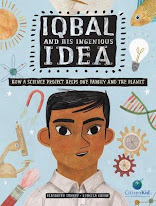
Maybe start with an inspiring person who solved a problem for his environment, such as Iqbal or William Kamkwamba . These two books are truly inspiring.


Here's the blurb:

It's monsoon season in Bangladesh, which means Iqbal's mother must cook the family's meals indoors, over an open fire. The smoke from the fire makes breathing difficult for his mother and baby sister, and it's even making them sick. Hearing them coughing at night worries Iqbal. So when he learns that his school's upcoming science fair has the theme of sustainability, Iqbal comes up with the perfect idea for his entry: he'll design a stove that doesn't produce smoke! With help from his teacher, Iqbal learns all about solar energy cooking, which uses heat from the sun to cook --- ingenious! Has Iqbal found a way to win first prize in the science fair while providing cleaner air and better health for his family at the same time?


Here's the blurb:

When fourteen-year-old William Kamkwamba's Malawi village was hit by a drought, everyone's crops began to fail. Without enough money for food, let alone school, William spent his days in the library . . . and figured out how to bring electricity to his village. Persevering against the odds, William built a functioning windmill out of junkyard scraps, and thus became the local hero who harnessed the wind. 


If you do not have these and you have a book from Allan Drummond's series about places that have taken on a sustainable energy project read one of them.


And of course there is always Philip Bunting's Superpower which explains renewable energy"with a positive outlook and a generous dollop of humour. Superpower shows that using renewable energy and taking care of our environment can be both fun and rewarding". 


Provocation: 
If your house had no access to electricity, what would you not be able to do? 

We read:


This book makes me want to... 


Thursday, June 13, 2013

15th June Global Wind Day


 Global Wind Day is the international annual day for discovering wind power. It’s a day for taking the energy debate – switching to renewables from fossil fuels, supporting wind power – out of the realm of policy and in to the real world.
So says the website for the day.

One way to show children the power of wind energy is to share these two fabulous picture books with them.

1. The Boy Who Harnessed the Wind by William Kamkwamba and Bryan Mealer.
This is the true story of young William Kamkwamba's childhood in a drought-ravaged Malawi. His family was poor and hungry. He had to give up school because his parents could not afford the fees for High School. Instead he took himself to the library, read science books and worked out how to make a windmill from scrap and salvaged materials. he wanted the windmill to produce electricity because his village had none and  pump water so that they would be able to grow crops. At just fourteen years old and using a tractor fan and a wheel from a broken bicycle he managed to do that. This is a truly inspiring story for children.


2. Energy Island; How One Community Harnessed the Wind and Changed Their World by Allan Drummond. This is also a true story. It tells of Samso, an island in Denmark. It was an ordinary place except for the fact that it was very windy. The Danish Ministry of Environment and Energy chose Samso as an ideal place to become independent of nonrenewable energy and a teacher named Soren Hermansen was selected to lead the project. This was the beginning of a very communal project which created wind turbines to produce energy for the island.

These books have a mixture of story, factual information and science and both have amazing illustrations to keep even the youngest children interested.