World Space Week 2022 celebrates “Space and Sustainability”!
Its focus is on achieving sustainability in space and achieving sustainability from space. The theme is inspired by how sustainability in space relates to how humanity uses space, most pressingly, the orbital area surrounding Earth.
Space exploration and remote Earth observation can help drive change for our home planet. This includes measuring climate change, identifying pollution on land and at sea, supporting agriculture in developing nations.
The event begins on the 4th to commemorate the launch of the first human-made satellite (Sputnik 1) on October 4th 1957. It ends on the 10th to honour the signing of the Treaty on Principles Governing the Activities of States in the Exploration and Peaceful Uses of Outer Space, including the Moon and Other Celestial Bodies on 10th October 1967.
It is not easy to find space books that fit this year's theme for children under 8 years old, but there are many events happening in this week that are suitable for this age group. If you are lucky enough to live in Adelaide you can attend events at the Australian Space Discovery Centre. One of there events is a showing of a film about Jarli Jones who is a proud Aboriginal girl with a knack for building things, especially things that fly. Jarli’s story of ingenuity and determination aims to inspire the next generation of bright minds to reach for the stars with an education in STEM.
This video, Jarli Reach for the Stars can be accessed here and here. Directed by Simon Rippingale, the animated short is a collaboration with First Nations storytellers, the UTS Animal Logic Academy in collaboration with the Royal Australian Air Force and Like a Photon Creative.
As of March 2022, 75 women have flown in space, including cosmonauts, astronauts, payload specialists, and space station participants. The first woman in space was Russian cosmonaut Valentina Tereshkova, who flew on Vostok 6 on June 16, 1963. The theme for Space Week last year was about women in space and it would be a fantastic topic to explore reading picture book biographies.
When you talk to young children about space they rarely mention any women, but they can tell you about Neil Armstrong and Buzz Aldrin so that's another good reason to do a display.
If you have some of these picture book biographies you will get quite a good timeline of what women have done in the area of space research.
• Hypatia (born 350–370; died 415 AD) was a philosopher, astronomer, and mathematician who lived in Alexandria, Egypt. She was a prominent thinker in Alexandria where she taught philosophy and astronomy.
• Caroline Herschel (1750-1848) becomes the first woman professional scientist and one of the greatest astronomers who ever lived. Born the youngest daughter of a poor family in Hanover, Germany, Caroline was scarred from smallpox, stunted from typhus, and used by her parents as a scullery maid. But when her favorite brother, William, left for England, he took her with him. The siblings shared a passion for stars, and together they built the greatest telescope of their age, working tirelessly on star charts. Using their telescope, Caroline discovered fourteen nebulae and two galaxies.
• Maria Mitchell (1818-1889) was the first American scientist to discover a comet, which brought her international acclaim. Additionally, she was an early advocate for science and maths education for girls and the first female astronomy professor.
• Williamina Stevens Fleming (1857 – 1911) was a Scottish astronomer active in the United States. She helped develop a common designation system for stars and catalogued thousands of stars and other astronomical phenomena. She was the first person who knew of the existence of white dwarf stars.
• Henrietta Swan Leavitt (1868 -1921) changed the course of astronomy when she was just twenty-five years old. Henrietta spent years measuring star positions and sizes from photographs taken by the telescope at the Harvard College Observatory, where she worked. After Henrietta observed that certain stars had a fixed pattern to their changes, her discovery made it possible for astronomers to measure greater and greater distances-leading to our present understanding of the vast size of the universe.
• Katherine Johnson (1918 -2020) In 1962, the United States decided to send people to the Moon. That was big news. Getting to and from the Moon would take a lot of work. As the U.S. space agency, NASA would have to solve many, many problems. One of those teams consisted of Katherine, Dorothy Vaughan Christine Darden and Mary Jackson, four black women who helped NASA launch men into space They are the subject of Hidden Figures a movie and the picture book biography.
Katherine Johnson studied how to use geometry for space travel. She figured out the paths for the spacecraft to orbit (go around) Earth and to land on the Moon. NASA used Katherine's math, and it worked! NASA sent astronauts into orbit around Earth. Later, her math helped send astronauts to the Moon and back.
• Dorothy Vaughan (1910 - 2008) was an American mathematician and human-computer who worked for NACA and NASA. In 1949, she became acting supervisor of the West Area Computing Unit, the first African-American woman to do so.
• Mary Jackson (1921 - 2005) She started as a computer at the segregated West Area Computing division 1951. She took advanced engineering classes and, in 1958, became NASA's first black female engineer. After 34 years at NASA, Jackson had earned the most senior engineering title available.
• Christine Darden (1942 - ) is an American mathematician, data analyst, and aeronautical engineer who devoted much of her 40-year career in aerodynamics at NASA researching supersonic flight and sonic booms. In 1989, Darden was appointed as leader of the Sonic Boom Team, a subsidiary of the High Speed Research (HSR) Program. On the Sonic Boom Team she worked on designs to decrease the negative effects of sonic booms, such as noise pollution and the depletion of the ozone layer. Her team tested new wing and nose designs for supersonic aircraft. She also designed a computer program to simulate sonic booms which fits with this year's theme for Space Week.
• Mary Sherman Morgan (1921 – 2004) was a U.S. rocket fuel scientist credited with the invention of the liquid fuel Hydynein in 1957, which powered the Jupiter C rocket that boosted the United States' first satellite, Explorer.
• Nancy Grace Roman (1925 – 2018) was an American astronomer who made important contributions to stellar classification and motions. The first female executive at NASA. Roman served as NASA's first Chief of Astronomy throughout the 1960s and 1970s, establishing her as one of the "visionary founders of the US civilian space program". She created NASA's space astronomy program and is known to many as the "Mother of Hubble" for her foundational role in planning the Hubble Space Telescope.
• Vera Rubin (1928 - 2016) was an American astronomer who pioneered work on galaxy rotation rates. She spent her life advocating for women in science and was known for her mentorship of aspiring female astronomers.
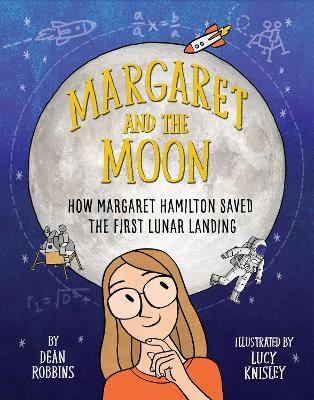
• Margaret Hamilton (1936 - ) is an American computer scientist and systems engineer. She was director of the Software Engineering Division of the MIT Instrumentation Laboratory, which developed on-board flight software for NASA's Apollo program.
• Valentina Tereshkova (1937 -) is an engineer, and former Soviet cosmonaut..She is known for being the first and youngest woman in space having flown a solo mission on the Vostok 6 on 16 June 1963. She orbited the Earth 48 times, spent almost three days in space, and remains the only woman to have been on a solo space mission.
• Jocelyn Bell Burnell (1943 -) is an astrophysicist from Northern Ireland who, as a postgraduate student, discovered the first radio pulsars in 1967. The discovery eventually earned the Nobel Prize in Physics in 1974; however, she was not one of the prize's recipients.
• Bonnie Dunbar (1949 - ) is an American engineer and retired NASA astronaut. She flew on five Space Shuttle missions between 1985 and 1998, including two dockings with the Mir space station. Since leaving NASA, she has worked in museums and STEM leadership, and as a professor of aerospace engineering.
• Sally Ride (1951 – 2012) was an American astronaut and physicist. Born in Los Angeles, she joined NASA in 1978, and in 1983 became the first American woman and the third woman to fly in space, after cosmonauts Valentina Tereshkova in 1963 and Svetlana Savitskaya in 1982. She was the youngest American astronaut to have flown in space, having done so at the age of 32.
• Kathy Sullivan (1951 -) was an American oceanographer and astronaut, the first American woman to walk in space and a veteran of three shuttle missions. She was part of the team that launched, rescued, repaired, and maintained the Hubble Space Telescope .
• Mae Jemison (1956 -) is an American engineer, physician, and former NASA astronaut. She became the first black woman to travel into space when she served as a mission specialist aboard the Space Shuttle Endeavour. Jemison joined NASA in 1987 and was selected to serve for the STS-47 mission, during which she orbited the Earth for nearly eight days on September 12–20, 1992.
• Ellen Ochoa (1958 -) became the first Hispanic woman to go to space when she served on a nine-day mission aboard the Space Shuttle Discovery in 1993. The purpose of the Shuttle mission was to study the Earth's ozone layer. A veteran of four space flights, Ochoa has logged nearly 1000 hours in space. She was also a gifted musician.
And of course there will be more. There are also many anthologies about exemplary women that will have sections devoted to these women and others.
See:
There are also many general picture books that will inspire girls to think about space such as
and an Australian oldie that may be in your library too
And two short chapter book series
If you live in Australia it is always good to introduce girls to Lisa Harvey-Smith who is an award-winning astronomer and Professor at the University of New South Wales. In 2018 she was appointed as the Australian Government's Ambassador for Women in Science, Technology, Engineering and Mathematics (STEM). She is the author of the best-selling children's book Under the Stars.