Wednesday, March 24, 2010

25th March Kate DiCamillo (1964)

Kate DiCamillo is very well known because of her wonderful book, The Tale of Despereaux, which has since been made into a movie. I haven't seen the movie, but I love the book and so do the second class children I teach. The sales blurbs say that it is a book for 9 to 12 year olds, but as a serial it is accessible to younger children. I love the characters names. I was in high school doing art when I was first introduced to the Italian word 'chiaroscuro' and the teacher told us about juxtaposition of light and dark. I remember thinking it was a great word and it certainly is a great starting point forthe character, Roscuro who is a rat. Originally I thought 'despereaux' was French for 'desperate' and I thought that too was a wonderful name for the mouse character. I know now it is not a real word, but it is still appropriate and Pea for the princess also creates plenty of things to discuss.
DiCamillo names always resonate. Timothy Basil Ering has used chiaroscuro drawings to create stunning illustrations that befit the 'feel' of the story.

More recently one of the American expat teachers at school came back from the States with a DiCamillo picture book, Louise, The Adventures of a Chicken. It hasn't proved to be as popular as her novels, but whenever it is on display it is borrowed. It has a very unlikely heroine which is in keeping with what DiCamillo likes to do.

Tuesday, March 23, 2010

27th March Dick King-Smith (1922)


Dick King-Smith is a prolific British author who is probably best known for his novel Sheep Pig which became the movie Babe and the book seems to have been renamed this too. Dick King-Smith makes an ideal author study because:
• he has written so many books that it is easy to locate enough books for a whole class.
• the range of reading abilities his novels cover mean there will be a book for every kind of reader, from the one who needs lots of scaffolding right up to the reader who is both a fluent and independent reader.
• he has a wonderful way with words. The vocabulary and turn of phrase allows for plenty of discussion and research.
• his books are humorous.
• his books have common themes and can be grouped using a variety of criteria.
• there is a number of children's biographies written about him.

My favourite books to serialise are:
• The Hodgeheg
• Hairy Hezekiah
• Aristotle and
• Omnibombulator
but there are so many more. See a full list.

My daughter still often mentions the year she went to the Book Week dress-up parade as The Invisible Dog and how the school librarian wasn't amused. She obviously hadn't read the book!

26th March Robert Frost (1874 - 1963) Natalie M. Rosinsky

It is American poet, Robert Frost's birthday. The poem that springs readily to mind when his name is mentioned is Stopping by the Woods on a Snowy Evening. In Australia this poem depicts an experience that is very foreign unless you live in the Snowy Mountains. Many children would not experience snow or the rural life it encapsulates, but when it is combined with Susan Jeffers' illustrations as it is in this beautiful picture book the experience is much more easily imagined. The purity of the black and white illustrations, with minor green and red touches creates a perfect atmosphere for the gentle, reflective words of the poem, where the traveller stops to admire the beauty of the woods but then is pulled back to his obligations.

Natalie M. Rosinsky is not as well-known as Robert Frost and I do not know her birth year, but she is a writer of non-fiction books. Rosinsky's books Rocks: Hard, Soft, Smooth and Rough; Dirt: The Scoop on Soil and Water: Up , Down and all Around which are part of the Amazing Science series are worth a look if you are looking for simple information books for under eights.

24th March


No birthdays! Friday is Bandaged Bear Day in New South Wales, so if your library has Cory Taylor and Peter Townsend's Bandaged Bear books, now is a good time to dig them out. Bandaged Bear is the mascot of the Children's Hospital at Westmead in Sydney. The series of books published by Scholastic address issues affecting children, such as asthma, accidents and staying in hospital. They do this in a non-threatening and entertaining way. My library has these three:
• Bandaged Bear and the Broken Bones
• Bandaged Bear Saves his Breath
• Bandaged Bear and the Birthday Party

Monday, March 22, 2010

23rd March World Meteorological Day


No birthdays and I can't show you photos of Poetry Day because I left the camera at school, but I did want to tell you about an amazing poetry book that I used a lot last year during Book Week when the theme was Book Safari. The book, Flamingo Bendalingo: Poems from the Zoo is a collection of animal poems by New Zealand poet, Paula Green and fifty children. Paula runs poetry workshops and after a series of workshops she took two groups of children to the Auckland Zoo to do more activities that she had designed. The result, this book, which is divided into two parts, a part with poems that she wrote, and another part with poems written by the children.

These poems have then been illustrated by prominent New Zealand artist, Michael Hight who also happens to be Paula Green's partner. The illustrations, black ink outlines with colour wash are divine - light and mischievous. And then to top off all this there is a glossary of poetry terms in the back with a myriad of examples that make you want to rush out and try writing or teaching them.

Here are two poems I loved:
Flamingo Ballet
Pink legs like statues
Lithe rubber necks stretch and bend
Flamingo ballet
Jessica Kyne 9


An Elephanty Poem

Loom large
Jumbo diddy elephiddy
Large loom
Jambo daddy elephaddy
Looming barge
Jimbo doddy elephinty
Large boom
Jumbo body elephanty.

Paula Green


Now to search for more by this talented duo!

And if you want to note Meteorological Day, why not start a discussion with Lilian Moore's poem:

Weather Report

Pinging rain
stinging sleet
tonight.

Frost at dawn,
bright
sun in the morning.

Ice-bearing trees,
a glass
orchard,
blinking
sunwinking.

A noonwind will
pass,
harvesting the brittle crop,
crashing
clinking.

Thursday, March 18, 2010

22nd March Randolph Caldecott (1846 -1886) World Water Day


Randolph Caldecott was an English 19th century illustrator around the same time as Kate Greenaway and Walter Crane. It is interesting that he was honoured by being chosen for the American picture book award. He was travelling in America with his wife when he died, just short of his fortieth birthday. The illustration depicted on the medal of a moving horse clearly shows the dynamicism of his illustrations in comparison to those of Kate Greenaway.

World Water Day is a day when we need to remember the important role water plays in our lives. Several children's books do this very well, but a deceptively simple one that has all the facts, is Did a Dinosaur Drink This Water? by Robert E. Wells. It starts with the premise that "the water we drink every day isn't new. It's been recycled - not once, but thousands of times!" and goes on to explain the water cycle in a very entertaining way. The illustrations are cartoon-like and certainly not beautiful, but you can get the artwork from other water books such as
• Frank Asch's Water
• Libby Hathorn & Peter Gouldthorpe's The Wonder Thing
• Thomas Locker's Water Dance, and
• Walter Wick's A Drop of Water

21st March Margaret Mahy (1936) Michael Foreman (1938) David Wisniewski (1953 - 2002) World Poetry Day


Too much on today to do any of them justice, and each of them is very important in the world of children's literature and needs their own entry!
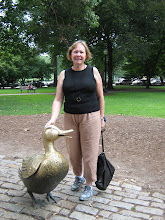
Firstly, Margaret Mahy. She is probably New Zealand's best-known children's author and she deserves to be. She won the Hans Christian Andersen Award in 2006, she has a sculpture in her honour in Christchurch and she has won numerous writing awards such as the Carnegie medal. She writes fantastic novels and short stories , but the children I teach know her because of her picture books, especially The Great White Man-eating Shark and The Man Whose Mother Was a Pirate. Have you read The Great Piratical Rumbustification? The story is great fun and the children love saying 'rumbustification'.

Secondly, Michael Foreman who is one of Britain's best-known author/illustrators. His first book was published over fifty years ago. The General has just been republished so that it can be enjoyed again. A lot of Foreman's books after this one continue to have war and conflict as themes. Last year he published A Child's Garden: A Story of Hope which also continued this theme, but that is not to say his books are depressing or unneccessarily negative. Three of his more popular books in my library, One World (1990), Seal Surfer (1996) and Wonder Goal (2002) have very positive messages.

Foreman has won the Greenaway medal twice, in 1982 and 1989. He has collaborated with Michael Morpurgo on many books (see Dolphin Boy), likes to do biographical-type stories and often sets his books in Cornwall. His illustrations are usually luminous, very blue, with vast skies and watercolour washes. Their lightness and colour are not something I immediately associate with the weather in Britain. He needs to paint in Australia!

And thirdly, an American author/illustrator who was born in England, David Wisniewski who did amazing illustrations with layers of cut paper. His book Golem won the Caldecott medal in 1997, but my favourite of his is Rain Player where Mayan boy Pik meets the rain God and is challenged to a ball game.

World Poetry Day can wait till tomorrow. We are celebrating it at school tomorrow so I should have some photos!