Sunday, May 21, 2023

22nd May Let's teach Australian kids more about dugongs than dinosaurs ...


While researching dugongs for this blog I read this article, 'Let's teach Australian kids more about dugongs  than dinosaurs with these books'. This is a quote from it

''Australia is home to more than one million species, many of which are found nowhere else. Tragically, it also has the fourth-highest level of animal species extinction in the world

Some 100 Australian species have become extinct and more than 1,700 are listed as threatened. This is due to threats such as climate change, invasive species, , land clearing, unsustainable agriculture, and an increase in natural disturbances such as drought and fire.

To fix the mistakes of the past, and prevent those of the future, it's important that young people become more knowledgeable about Australia's environment than previous generations. Storytelling can do this. It imparts information, nurtures emotional connections with natural places and allows us to reimagine our world."

Many of my students use 'hedgehog' when talking about 'echidnas'. If asked what is a dugong, quoll, bettong, cuscus, numbat, or potoroo is many would not have heard of the words let alone the animals.

The article cites a 2018 study which found children today spend half the amount of time playing outside that their parents did as youngsters. And 10% of the children studied had not been in a natural environment such as a park or beach for at least a year. It then uses this as a  reason to state that exposure to ecology through storytelling is particularly important. But often, Australian stories can get drowned out.

    This got me thinking about whether the part about Australian stories not being foremost is in fact true. They used the Dymocks list of the top 51 kids' books as the indicator and yes it is true that most of these do not feature the natural environment, but publishers such as the CSIRO and Wild Dog are addressing this with a variety of amazing books that introduce students to some of the amazing wildlife in their country. Perhaps Australian adults need to make sure they are made more visible and accessible.

    The CSIRO was first noticed as a publisher for children when Phasmid by Rohan Cleave made the CBCA shortlist. Reading it to classes was eyeopening for me. The students were immensely interested despite its length. It lead to researching other stick insects and having stick insects in the library for several months. It lead to finding out more through watching Melbourne Uni videos about the phasmid, about Lord Howe Island, their reintroduction and near extinction.

    Since then I have been keen to buy any CSIRO picture book and share them with students. Year 2 and I tracked the Great Lizard Trek by Felicity Bradshaw as part of a unit of study on Australian animals and mapping.

    In the past while looking at true animal stories Year 2 and I read Gordon Winch's Penelope the Mountain Pygmy Possum and now I would use it as a companion text to The Possum and the Migrating Moths by Julie Murphy.

    One Potoroo by Penny Jaye seems to have some aura because it keeps going missing. I have now purchased three copies, two that were replacements.

    The Voyage of the Whale by Vanessa Pirotta was a huge success, partly because she visited school for Science Week last year, but given where my students live, whales are always popular.

    And this year with Year 2 while learning about Australian animals we used A Hollow is a Home by Abbie Mitchell and since then a new book Life in a Hollow  by Dean Gullan has been published.

    I love the art in On the Trail of the Plains-wanderer and it was great to learn about a creature I did not even know existed.

    Likewise Wild Dog Publishing has a large number of beautiful information books about Australian wildlife. Three that I have used very successfully with classes are:

    Peregrines in the City by Andrew Kelly. This book tells the amazing story of two peregrines who live on a high rise in the Melbourne CBD. They are filmed and on Youtube here.

    The Accidental Penguin Hotel by Andrew Kelly tells the story of the little penguin colony who has made its home in a man-made breakwater in St Kilda.

    Nestling Cockatoos: The story of Squeak and Squawk by Angela Robertson-Buchanan. This is the story of two sulphur-crested cockatoos who were rescued from the hollow of a tree when the tree was chopped down.

    Another source of wonderful books to share on Australian wildlife is Walker Books Nature Storybooks. There are titles Dingo; Great White Shark; Wombat; Kookaburra; Searching for Cicadas; Platypus; Emu; Tasmanian DevilKoala; Big Red Kangaroo; Python; Beware of the CrocodileThe Echidna Near My Place and Bilby Secrets all with teaching notes.

    If you are looking for a book that has a comprehensive list of Australian animals so that the children you share books with get an overview, try:

    A is for Australian Animals by Frane Lessac

    A to Z of Australian Animals  by Jennifer Cossins

    Australian Animals by Matt Chun

    Australian Animals  by Melanie Mahoney (All About Australia series from Australian Geographic)

    Of course there are other books, fiction and non-fiction that introduce children to Australian wildlife, many that are old favourites and still popular, such as

    Jeremy by Chris Faille (kookaburra)

    Sebastian Lives in a Hat  by Thelma Catterwell (wombat)

    The Snow Wombat  by Susannah Chambers

    Possum in the House by Kirsten Jensen

    Little Platypus by Nette Hilton

    The Best Beak in Boonaroo Bay  by Narelle Oliver

    Olga the Brolga  by Rod Clement

    Rufus the Numbat by David Miller

    • Clancy the Quokka  by Lili Wilkinson

    And these are new:

    Bowerbird Blues by Aura Parker

    Iceberg by Claire Saxby

    Where the Lyrebird Lives  by Vikki Conley

    Need more Australian animals? See Australian Animals and Australian Birds on Pinterest

    Back to the article...there is mention of geology and the environment too and certainly there are Australian picture books that address these topics, but they are another blog entry.


    Saturday, May 20, 2023

    28th May World Dugong Day

    What is a dugong?

    Dugongs are large grey mammals which spend their entire lives in the sea. Fully grown, they may be three metres long and weigh 400 kilograms. Dugongs swim by moving their broad whale-like tail in an up and down motion, and by use of their two flippers. They come to the surface to breathe through nostrils near the top of their snouts. Dugongs only hairs are the bristles near the mouth. This short video from National Geographic shows you this.

    Dugongs are one of four living species of the order Sirenia, which also includes three species of manatees. Dugongs are related to manatees but their habitats do not overlap.


    Where do dugongs live?

    Dugongs are found in warm coastal waters from East Africa to Australia, including the Red Sea, Indian Ocean, and Pacific.

    Dugongs are largely dependent on seagrass for subsistence so they are found in coastal habitats which support seagrass meadows. The largest dugong concentrations typically occur in wide, shallow, protected areas such as bays, mangrove channels, the waters of large inshore islands and inter-reefal waters. Most of the world's dugong population now occurs in northern Australian waters between Shark Bay in Western Australia and Moreton Bay in Queensland. The Great Barrier Reef region supports globally significant populations of dugong. There is a good map showing the distribution of dugongs in Australia here.

    Where did the name dugong come from?

    The name was first adopted and popularised by the French naturalist Georges-Louis Leclerc, Comte de Buffon, as "dugon" in Histoire Naturelle (1765), after descriptions of the animal from the island of Leyte in the Philippines. Other common local names include "sea cow", "sea pig" and "sea camel". It is known as the balguja by the Wunambal people of the Mitchell Plateau area in the Kimberley, Western Australia.

    Want to know more?

    Read:

    Dugong Magic  by Deborah Kelly and Lisa Stewart

    Wandihnu and the Old Dugong by Elizabeth and Wandihnu Wymarra and Benjamin Hodges

    The Dugong Meadow by Naomi Mairou

    The Bravest Dugong by Alec Frost and Graeme Compton

    Is it a Mermaid? by Candy Gourlay and Francesca Chessa

    Facts About the Dugong by Lisa Stratton  


    Tuesday, May 16, 2023

    23rd May World Turtle Day


    Around the world there are many animals close to extinction. One group particularly under threat are sea turtles. In Woody Bramble's Sea Turtles On the Edge readers learn how sea turtles  are threatened and what is being done to help them survive. The photo on the cover ensures thatches book is often on loan from the library. Turtles interest young children and there are plenty of books designed to keep them reading about them. See Pinterest


    In the last year though, three books have been published about a 'famous' loggerhead turtle, Yoshi  who has made her home on the north western coast of Australia after a very long swim. Yoshi was released off the Cape Town coast in 2017 by Two Oceans Aquarium, an institution who had cared for her for twenty years since she was given to the aquarium in 1997 by a Japanese fishing boat captain because she was injured. 

    With modern satellite tracking technology in collaboration with the government and donors, Two Oceans Aquarium was able to follow along with Yoshi to map her progress and understand the sights she saw along the way. In her swim was equivalent to nearly 1.5 million lengths of a 25m Olympic size swimming pool.


    Kids News has an entry about Yoshi that gives students the information in a factual manner, but these three books give students the facts embedded in a narrative and with beautiful illustrations. 'Discover an amazing story celebrating teamwork, science, and an animal hero who swam more than 22,000 miles to her true home--the longest journey of any animal ever tracked. In addition to being awe-inspiring, Yoshi's story underlines the importance of wildlife conservation and the power of one animal to unite people around the world for a common cause.' This could be the blurb for all three!

    Yoshi and the Ocean by Lindsay Moore

    • Yoshi's Big Swim  by Mary Warley Copp and Kaja Kajfez 

    Yoshi Sea Turtle Genius  by Lynne Cox and Richard Jones 


    The library is well-equipped with 'true' animal stories. These are  a great way to show students what is happening in the world to save animals from harm.


    Sunday, May 14, 2023

    16th May International Day of Light

    Every year on May 16th, the International Day of Light promotes awareness for the appreciation of light and the role it plays in science, art, education, and sustainable development. The day also recognises the natural benefits of light, as well as its many technological applications.

    This new book Spark, Shine, Glow! What a Light Show by Lola Schaefer and James Yang  does just this, tells us what light is and how it shapes and impacts our world.

    Light is everywhere: from the shining sun to a bright light bulb to a glowing firefly. Light from a torch helps you see in the dark, and light from the sun makes plants grow. And did you know that light makes X-rays possible, and also keeps cars, trucks, trains, ships, and planes moving safely It even allows us to see deep into space! Where would we be without light?

    The first official International Day of Light was held on May 16th, 2018. The date May 16th marks the anniversary of the first successful operation of the laser. American physicist and engineer, Theodore Maiman is credited for inventing the laser. He fired the first laser in 1960.

    Even though everyone knows what light is, it can be hard to define. Light is not just the opposite of darkness. It is electromagnetic radiation within the electromagnetic spectrum that is perceived by the human eye.

    When I started teaching Light was a very popular science topic for young children. Teachers and students engaged in experiments with prisms, lens, rainbows, torches, switches, electric  circuits, bulbs... 

    Most school libraries had an abundance of science experiment books because of these topics, but many of these books would be old now and have probably been weeded. It is not a topic studied at length with the young students at my school. However there are a few books that I have kept for the keen young scientists.

    Light 'shines' in story books though too, in the guise of torchlight, electric light, metaphoric light, lighthouses, light shows, bioluminescence...


    A new picture book City of Light  by Julia Lawrenson, Heather Potter and Mark Jackson tells of an historic event that occurred in Perth. On Monday 20th  Februrary 1962, the people of Perth lit up their city overnight to acknowledge the special mission of American astronaut John Glenn – the first American to orbit the Earth. Glenn, in turn, observed that the city was clearly visible from space, and Perth became known worldwide as ‘The City of Light’.


    Other books that look at historical events that feature light or lack of it are:

    Blackout  by John Rocco

    On a hot night in the city of New York, everyone in the family is busy with their own activities-too busy to play with the young girl hoping for a partner in a board game. When the electricity suddenly goes out, however, the busy family slows down; at first "huddled around flashlights and candles" together, they're then driven by the heat to the apartment-building roof, where they discover a power-free block party in progress and a sky full of stars usually bleached out by city glow. 


     Keeper of the Light: Juliet Fish Nicoll Fights the San Francisco Fog  by Caroline Arnold and Rachel Sumpter

    This book is inspired by  the logbooks of a female light keeper who kept the light shining through the fog during the 1906 San Francisco earthquake.


    Two new books that look at bioluminescence are Who is Afraid of the Light? by Anna McGregor and The Science of Light: Things that Shine, Flash and Glow by Margaret Peot. 


    Some favourites of mine worth looking for:

    Chandra's Magic Light by Theresa Heine and Judith Gueyfier is a heartwarming story set in Nepal of two resourceful sisters who bring the safety of solar-powered light to their family.

    On a Beam of Light; A Story of Albert Einstein  by Jennifer Berne and Vladimir Radunsky is a  picture book biography of Albert Einstein which chronicles his development from a boy riding his bicycle through sunbeams to the man who created the Theory of Relativity.

    Flash and Gleam: Light in our World by Sue Fleiss and Khoa Le follows four children as they experience different forms of light. The soft glow of a candle, the blink of a firefly, a burst of fireworks-light is everywhere in our world! 

    Fox in the Night  by Martin Jenkins and Richard Smythe  is the perfect introduction to light and dark. Fox is hungry. She waits until it's dark and then she hunts for food, using the moon and the streetlights to find her way. 

    Light Bulb  by Kathleen Weidner Zoehfeld is a "biography" of the light bulb, an essential invention that lights up our days and nights.

    Who left the Light On?  by Richard Mariner and Aude Maurel tells the story of how in a town where everyone follows the rules, one neighbour's decision to leave the light on at night completely disrupts the neighbourhood, sparking a creative revolution. Vibrant, poetic, and fun, Who Left the Light On? playfully teaches the powerful lesson that diversity, creativity, and individuality should be celebrated. 

    You Are Light by Aaron Becker is  an elegant, sparely narrated ode to the phenomenon of light. Aaron Becker follows as light reflects off the earth to warm our faces, draws up the sea to make the rain, feeds all the things that grow, and helps to create all the brilliant wonders of the world, including ourselves.

    Share Some Kindness Bring Some Light  by April Stott tells how when Bear is sad, the other animals think he's mean because he's so big. But his human friend, Coco, offers to help him. Coco shares her grandmother's advice: "When life gets dark as winter's night, share some kindness, bring some light." 

    Not enough? Try Pinterest


    Saturday, May 13, 2023

    14th May Mothers' Day


    Every year at this time, besides checking in with my own children, I look at what books are new or recommended reading for young children . This year I purchased only one book to be added to our Mothers Day list. It is Mummy's Special Day (2023) by Frances Stickley and Caroline Rabei.

    Like most schools we have a Mothers Day Celebration in the form of a breakfast with mum and each class does something special for their mothers. 

    In the library we display all the picture books about mothers and the children and teachers borrow them. There are plenty, but when it comes to what I read to children in the library I try to pick a 'meaty', book where there is plenty to discuss. Often the discussion centres on what the children want to buy as presents for their mothers because dad is taking them shopping. As an antidote to this we talk about what they could give their mothers that costs nothing. This is hard for some children. 


    Titles that are good for this discussion are: 

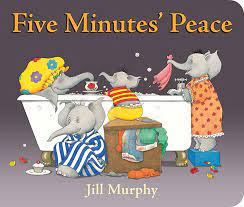
    Five Minutes Peace (1986) by Jill Murphy

    The Kinder Hat (1987) by Morag Loh and Donna Rawlins

    Mr Rabbit and the Lovely Present (1962) by Charlotte Zolotow and Maurice Sendak

    A Chair for Mother (1982) by Vera Williams 

    Pink Fluffy Slippers (1992) by Maureen Sherlock and Craig Smith


    You will notice these books were published quite a while ago and except for the first one are probably hard to find. This brings up two dilemmas for me. 

    1. Many older picture books have a longer, more complicated, satisfying plot and a worthwhile, yet subtle theme, but as they are old copies, irreplaceable because they are out of print they may no longer look enticing. Compare this with some more modern picture books for younger children which concentrate on 'writing in rhyme', have computer generated illustrations, teach a lesson, and thus are quite didactic.

    2. If a book is 'old' it may be weeded from the library stock. This happens because weeding is ad hoc, done by an ill-informed helper or because someone has decided the library has too many books and new is better. Teacher librarians should have criteria for weeding a library, know what resources are used and when, and because they have favourites and teachers have favourites know what not to discard until the person is no longer on the staff.

    The Trouble With Mum (1985)  by Babette Cole, Are You My Mother? (1960) by P.D. Eastman, Tucking Mummy In (1987) by Morag Loh and Mums Don't Get Sick  (1995) by Marylin Hafner are still favourites with teachers and mothers. They are 'old'. Should all these books be weeded? 

    Compare the books above with I Love My Mummy (2010) by Emma Dodd and Giles Andreae, There's Only One Mum Like You (2019) by Jess Rackyleft, The Strongest Mum (2018) by Nicola Kent and Superhero Mum (2018) by Timothy Knapman and Joe Berger. Although short on depth, currently these books are all out of the library on loan, so they do appeal, but will they still be around in twenty to thirty years and remembered as favourites?

    Doing special things with Mum is another thing to talk to the children about, using books like these as provocation.

    Saturday by One Mora

    One Day With Mum  by Helen Oxenbury

    Mum, Me and the Mulberry Tree by Tanya Rosie and Chuck Groenik

    The Big Big Sea  by Martin Fadell and Jennifer Eachus

    • Any of the Shirley Hughes' books about Alfie and Annie Rose doing things with their mother or the Sarah Garland books Going Swimming, Doing the Garden etc.


    Friday, May 12, 2023

    13th May Train Day


    I have written about books for train lovers before but it was back in 2017 and now I have a whole new lot of train enthusiasts looking for books in the library. What is it about trains and young boys? Yes in my library it is boys. Of course any book about Thomas the Tank Engine and The Little Red Train by Benedict Blathwayt are still popular, but I thought I'd look at some other favourites and just how long trains have been a fascination for young children.

    Picture books about trains for children have existed for quite some time, when you consider that the Little Golden Books: The Little Engine That Could (1930) by Watty Piper, Tootle (1945) by Gertrude Crampton, The Train to Timbuctoo (1951) by Margaret Wise Brown and The Little Red Caboose (1953) by Marian Potter have existed for so long and are still in print. 


    Cherished by readers for over ninety years, The Little Engine That Could is a classic tale of a little engine who, despite her size, triumphantly pulls a train full of wonderful things to the children waiting on the other side of a mountain. The repetitive refrain hooks in very young readers and keeps them eager to continue. Many versions of this story now exist. It has been reillustrated, abridged and even made into a movie.


    Watty Piper is the pseudonym for Arnold Munk, the author behind the classic retelling of The Little Engine That Could and cofounder of Platt & Munk Publishers (now part of Grosset & Dunlap.) Munk's retelling of the beloved children's tale has sold millions of copies since its 1930 publication and inspired generations to believe they can. As of 2001, Tootle was the all-time third best-selling hardcover children's book in English. All of this certainly confirms that trains are a popular topic for young children's books and reading!

    Other 'oldies' are Choo Choo: The Story of a Little Engine Who Ran Away (1937)   by Virginia Lee Burton, The Little Train (1940) by Lois Lenski, Two Little Trains (1949)  by Margaret Wise Brown and Leo and Diane Dillon, 1,2,3 To the Zoo (1968) by Eric Carle, The Caboose Who Got Loose (1971) by Bill Peet and The Little Train (1974) by  Graham Greene and Edward Ardizzone and Freight Train (1978) by Donald Crews.


    The six stories by Benedict Blathwayt about The Little Red Train  and his driver Duffy continue to amuse even me when I get to read any of them aloud. Huffitty-chuffitty . . . huffitty-chuffitty . . . huffitty-chuffitty puff" went the smoke from the Little Red Train's funnel. Chuff-chuff, chuffity chuff, whoo. . . oo. . oo! There's plenty of train noise to make.


    I can just remember steam trains. I have memories of standing on the bridge over the railway line in the country town I grew up in, listening to the loud noise and getting covered in smelly smoke. This memory is front of mind when I share Charlotte Voake's Here Comes the Train with children. I do like steam trains and many of the trains depicted in children's picture books are steam trains still, despite the fact that most children nowadays are unlikely to have seen one unless their family has taken them to a museum or rail open day.


    These children's books that are popular have steam trains involved in the adventure:

    Steam Train Dream Train  by Sherry Duskey Rinker & Tom Lichtenheld

    Oi! Get Off My Train  by John Burningham

    Down By the Station  by Will Hillenbrand

    The Cat, the Mouse and the Runaway Train  by Peter Bently & Steve Cox

    How to Train a Train  by Jason Carter Eaton & John Rocco

    See the covers of these books here on Pinterest.


    It is the sounds that trains make on the tracks that often provide a rhythm for the story and a myriad of opportunities for onomatopoeia. That's why poems such as  A Peanut Sat on a Railroad Track  and Philip Booth's Crossing remain. There is an illustrated version of Crossing. It was Bagram Ibatoulline's first foray into illustration and although it is quite American it is a beautiful book.


    Here in Australia, train journeys can be very long. The trips that take days like The Ghan from Adelaide to Darwin, and the trip on The Indian Pacific from Sydney to Perth via the Nullarbor Plain still seem to excite tourists enough to pay the large fares. They are historical railway journeys and because trains have featured in the history of remote Australia there are picture books that celebrate them:

    The Shop Train by Josie Wowolla Boyle & Paul Seden

    Tea and Sugar Christmas by Jane Jolly & Robert Ingpen

    Bob the Railway Dog by Corinne Fenton & Andrew McLean

    Of course there are other avenues to explore. There is all the wonderful nonfiction information books. There are subways, stations, station masters, everything related to trains to explore ...