Showing posts with label Melissa Stewart. Show all posts

Monday, December 9, 2024

14th December International Monkey Day

Monkeys, also known as simians, live all over the world. More than 260 species of monkeys populate Africa, Central America, South America, and Asia. They range in size from very small like the pygmy marmoset to the larger mandrill. Monkeys tend to walk on all four limbs. As a member of the primate family, they are considered a lesser ape. Most monkeys have a tail, though not all do. Monkeys are divided into two categories – Old World monkeys and New World monkeys. Old World monkeys live in Africa and Asia while New World monkeys live in South America.

Monkey species include baboons, macaques, marmosets, tamarins, and capuchins. Some of these monkeys have their own celebratory day.

It is International Baboon Day on 3rd December. It is International Macaque Day on 16th March. It is International Tamarin Day on 21st September, but I would find it very hard to celebrate these days in the library with books because we do not have that many books about specific monkeys.


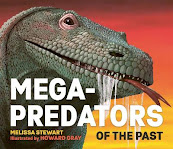
I'd start this celebration of monkeys with a book such as Fourteen Monkeys  by Melissa Stewart and Steve Page so as to have the simians sorted.


Then some more non-fiction:


Next explore the myriad of fun 'monkey' stories.
See this Pinterest page for ideas.


Finish with Quentin Blake and Emma Chichester Clark's series about three little monkeys.


Saturday, October 26, 2024

National Non-Fiction November (7th November National Non-Fiction Day) Part 1 Authors and Illustrators


National Non-Fiction November was set up by the Federation of Children's Book Groups in the UK as a way to highlight the importance of information books and to promote reading non-fiction for pleasure. 

National Literacy Trust research (2022), said more than half (56%) of children and young people told us that they read non-fiction. We also found that children and young people who read non-fiction are more engaged with environmental issues.

Overall, this report found that more children and young people who read non-fiction were motivated to read for educational purposes, to satisfy curiosities, to foster social connections and to support their mental wellbeing.

Each year, National Non-Fiction November has a different theme. The theme for 2024 is Why Don’t You…? and is designed to stimulate discussion around hobbies and leisure activities and to encourage young people to try something new. (More about this in Part 2)

Non-Fiction books for young children have definitely changed from the traditional non-fiction books used for research which had short tiles, photographs, a contents page, an index, a glossary and other features ideal for researching. Now some of the most exquisitely illustrated books in the library are in the non-fiction section of the library. Another difference is the amount of narrative nonfiction that now exists and it is not only biography.

Author/illustrators such as these excel at non-fiction and while the list is not exhaustive, these will make a great beginning reading-wise and display-wise.