Showing posts with label Sally Odgers. Show all posts

Wednesday, April 19, 2023

27th April World Veterinary Day

World Veterinary Day was instigated by the World Veterinary Association (WVA) in 2000 to be celebrated annually on the last Saturday in April.

The day honours the lifesaving work performed by veterinarians around the world. If you have a pet, there is a good chance you have a veterinarian or vet for short.

Not many of the children I teach own a pet dog or cat, but some of them have a farm they visit on weekends or school holidays. When we share books about pets it is often hard to get them interested. In the past when teaching point of view, I have had fun reading A Boy in the Doghouse by Betsy Duffey. Not so long ago I shared it with a Year 1 enrichment group and they didn't enjoy it nearly as much. They had so many questions and not one of them had a dog at home. There is a scene in the book where the boy, George who is the owner of the dog, Lucky takes him to the vet. It is a very funny scene, but I realised it is only funny if you have an animal or if you have visited the vet. This is such a shame because Betsy Duffey's series of stories which begins with this book is such a gem to read. (This book has been republished several times with different covers.)


In the past teachers have done a Unit of Inquiry which looks at People in the Community or People Who Help Us, so the library has four or five nonfiction books about vets and what they do.


There's a few picture book stories:


But it is in the series of short chapter books for young readers that vets come into their own.
The series about vets probably started with Animal Ark  by Lucy Daniels. These books tell stories about Mandy, the daughter of the local veterinarian, who finds animals in trouble and tries to help them with the assistance of her best friend James, and other people in the village. Animal Ark is the name of the vet surgery. There are still some Little Animal Ark stories in my library and they are in poor condition now because they are still being read. They are the perfect length for Year 1 and 2  readers.

Magic Molly by Holly Webb
There are six books in this series about Molly who loves animals and wants to be a vet when she grows up just like her dad.

Lulu Bell by Belinda Murrell
These twelve books feature Lulu Bell who is a fun-loving, adventurous eight year old girl who is growing up in a vet hospital.

Juliet Nearly a Vet  by Rebecca Johnson.
Juliet is a ten year old girl whose mother is a vet and she spends many hours watching her so she thinks she's nearly a vet. There are twelve books in this series.

Pet Vet  by Darrell and Sally Odgers
In this series of six books, Trump, a dog is the narrator and she lives with vet Dr Jeanie behind the Pet Vet Clinic. It is her job to help the sick animals.

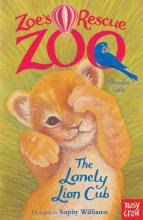
Zoe's Rescue Zoo by Amelia Cobb
When Great-Uncle Horace brings back lost and homeless animals from his travels around the globe, it falls to Zoe, and her mum, the zoo vet, to settle them into their new home. She's good at this, because she can understand what they say and talk to them, too. There's at least 24 of these.

Magical Rescue Vets  by Melody Lockhart 
Kat and Rosie, best friends have been helping out at Calico Comfrey's Veterinary Surgery ever since they stumbled across its secret door. Join them as they rescue and care for the incredible, enchanted creatures of Starfall Forest. There are 6 titles.
 
Hattie B. Magical Vet by Claire Taylor Smith

On her tenth birthday, Hattie B is swept into the magical Kingdom of Bellua where she meets a little pink dragon who needs her help.  There are 6 titles.

Vet Volunteers by Laurie Halse Anderson. This series I do not have but one of my students said I should. The children in these stories are older and they volunteer at Dr Mac's Wild at Heart Animal Clinic. There's at least 17 of these.

I'm sure to have missed some series! You have probably noticed that there is an abundance of girls wanting to be vets!


Thursday, July 23, 2020

24th July Curious Creatures


I have had a lot of fun reading one of my favourite books to my K to 2 library classes this week. I know Book Week has been postponed until Term 4, but I was keen to get started on displays and exploring the theme 'Curious Creatures Wild Minds'. I wanted to start a discussion of this theme using the bunyip, an Australian mythical creature.

I asked the students to draw a creature. They all drew an animal that they could attach a label to. No one drew anything imaginary, extinct, or an amalgam of many animals. When I said, "Is a creature an animal?" The answer was a unanimous, "Yes." "So are you a creature?" Some hesitation, but finally a yes.

Then I asked the students to look at the picture above. "Is this a creature?" "Why do you say that?"
I asked them to make a mental list of three things they could see in the picture. I scribed the long list and there were some very interesting things on the lists, including a mobile phone, lipstick and a magnifying glass. Next, I asked them for one question they would like to ask this creature. There was the obvious like, "What are you?"; "What are you holding?"; "Who are you?" and  "Where do you live?" but there was also ones like, "Do you have friends?" ; "Why do you only have three toes?" and  "What is on your head?".

Lastly, I asked,  "Is this creature curious?" "What makes you say that?" This lead to a discussion of what the word 'curious' meant and after finding out that there are two meanings and that the second meaning is 'strange or unusual' there seemed to be consensus that it was a curious creature.

I then showed the students the cover of the book, The Bunyip of Berkley's Creek by Jenny Wagner and Ron Brooks, the book that won Picture Book of the Year in 1974, forty six years ago. They now knew what the character was, and many students then had anecdotes that they wished to share.

I read the story, slowly and quietly. The first page sets the mysterious tone beautifully. You could hear a pin drop while I read, so few children knew the book. I stopped only once to discuss and explain the sign which has the long words, 'Environment Preservation' and 'Trespassers Prosecuted'.

After reading, in pairs students discussed what they liked about the story and Year 2 pairs also devised a definition of a bunyip eg A bunyip is ... We listened to each others definitions and then amalgamated the pertinent bits to get something like this...
A bunyip is a large mythical creature which lurks (hangs around) in creeks, billabongs,              swamps and waterholes.

The Year 2 students had decided that bunyips weren't real, but wanted to know more, so we looked for other books in the library with bunyips and on Kiddle which they had used last term. We found these books:
1. What's a Bunyip?  by Nette Hilton and Roland Harvey. 
2. Bunyips Don't !  by Sally Odgers and Kim Gamble.
3. Emily and the Big Bad Bunyip by Jackie French and Bruce Whatley.

The students thought that Harvey, Gamble and Whatley had all seen Ron Brooks' bunyip, because they too had drawn the bunyip with a tail, floppy ears, a very rounded body and it didn't look overly scary.


If you choose to do this, do not show the students the Kiddle entry before you read the books, because it will give them a different view of bunyips from the one Jenny Wagner intended. It is for further exploration for the students who want to read up on Australian folklore or Aboriginal mythology.

Later I found three more books:
Out of Nowhere by Tricia Oktober
Rosie and the Bunyip  by Meredith Costain, and 
The Butti Butti Bunyip by Dianne Bates

If there had been time we could have looked at and compared the four bunyip illustrations that appeared on Australian stamps in 1994, one of which was Ron Brooks' Berkley Creek one.


Well we ran out of time, but all the bunyip books were borrowed, some students went off to explore the Indigenous Book Bins and others took from all the unusual animal books that we had on display!

PS. Jenny Wagner seems to 'like' curious creatures! Her novel The Nimbin is also about an endearing curious creature. It is perfect for primary classes.


Thursday, November 25, 2010

26th November Sally Odgers (1957) Simon French (1957)


Sally Odgers is a prolific Australian author who writes for a large age range and on a wide variety of subjects. In my library she is popular because of her series Jack Russell:Dog Detective which she writes with her husband. In these a dog also named Jack Russell lives with his friend Sarge and together they solve mysteries. Her website says that she has a number of Jack Russell dogs so it is little surprise that she has chosen them as characters for books. She is also responsible for another series of books, Little Horrors, about bad fairies, which she writes as Tiffany Mandrake. The main characters in this series are based on traditional bad fairies, the sort present in literature and life before the Victorian era, but they also behave like and have a lot in common with girls around seven to eight, the audience who read them. This year Sally released a large picture/information book called Fantastic Creatures which is illustrated by Mark Salwowski and it is constantly being borrowed and at times almost fought over.

Simon French is also an Australian author. He started to write his first novel while he was still at high school and went on to write many more novels for young adolescents, but as a teacher of very young children he has also written picture books. Two that are set in a multicultural infants classroom are Guess the Baby and What Will You Be? Both are illustrated by Donna Rawlins.