Showing posts with label Bruce Whatley. Show all posts

Tuesday, May 5, 2026

6th May Bruce Appreciation Day

I was reading through a lighthearted calendar pertaining to the Pastafarians and they said today was Bruce Appreciation Day, but looking further I found a website saying it is National Bruce Day on 14th May. It doesn't really matter when it is I'm celebrating today. 

Bruce is my mother's maiden name and we were lead to believe that it is a Scottish name, but Bruce, or Brus, was a name introduced to England in the massive migration wave from Normandy during the Norman Conquest of 1066. Therefore, contrary to popular belief, its roots are outside the British Isles.

Here's two ways to celebrate:

1. Do a Bruce  display. Start with Mother Bruce who is a character created by Ryan T. Higgins.

This is the first book in a series about Bruce.
Bruce is a bear who likes living alone and making fancy gourmet recipes he finds on the internet. But when the goose eggs he's cooking for breakfast hatch, Bruce becomes something new- a mother.


Look at Ryan Higgins website and see just how many books there are about Bruce. Our library has nine  of the 11 titles.


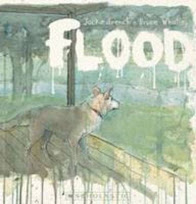
2. Display books by Australian author illustrator Bruce Whatley. He has so many wonderful books to explore, more than 70.  You will know his series about Mothball, a wombat that he has illustrated for Jackie French. He has another series where he has collaborated with Jackie French. Each of these books features an extreme weather event eg. Cyclone; Flood; Plague; Fire.  There is the series about Billy, a bilby that he has done with Nette Hilton and Danny daVinci  which he did with his wife, Rosie Smith.


If you don't like these ideas, or if your students are older, you could also celebrate author Bruce Pascoe.

Monday, October 23, 2023

22nd August International Wombat Day


Today we celebrate a small, burrowing marsupial that is native to Australia, known as the wombat. They are the largest burrowing mammals. They spend most of their time underground in their extensive burrows and emerge mainly at night. There are three species of wombats: the common or bare-nosed wombat, and the southern and northern hairy-nosed wombats.

Celebrating Wombat Day can be as simple as reading about your favourite wombat. For Australian children, that is probably Jackie French's Mothball, who made famous because he is the 'star' of the series of diaries about him. It started with Diary of a Wombat and now there are many sequels and even a prequel, The Diary of a Rescue Wombat which was published to celebrate the 20th anniversary of the first book. 

The children at my school still love the 'old favourite'  Sebastian Lives in a Hat  which tells the story of an orphaned four month old wombat joey who is nursed in the home of the author Thelma Catterwell and who sleeps in a hat, his pretend pouch. This book has had its 30th anniversary, but is still in print.


And thirdly, look for and then read Susannah Chambers' wombat stories, The Snow Wombat and The Beach Wombat.


There are many others in our library on display at the moment!


Saturday, June 17, 2023

17th June World Day to Combat Desertification


Every year on June 17th, the World Day to Combat Desertification and Drought highlights methods to prevent desertification. It’s also a day to focus on finding ways to recover from drought.

Desertification is the process by which fertile land becomes desert. This is usually a result of drought, deforestation, or inappropriate agriculture.

There are also ways to reverse land degradation. This includes planting trees, enriching the soil with nutrients, preventing soil erosion, and establishing seed banks.

It’s more important than ever to combat desertification and drought. This is because by the year 2050, there needs to be enough productive land to meet the demands of 10 billion people.

In Australia drought can be a major problem, as rainfall is not always the same every year. Indigenous Australians are very good at 'reading' country so a good place to start with children is to look at a book such as Country Tells Us When... by Taheena Cooper 

Some Australian picture books that help explain drought to children:

Two Summers  by John Heffernan and Freya Blackwood

It's a Miroocool! by Christine Harris and Ann James 

All I Want for Christmas is Rain by Cori Brooke and Megan Forward

When the Waterhole Dried Up by Kaye Baillie and Max Hamilton

Big Rain Coming by Katrina Germein and Bronwyn Bancroft

Mrs White and the Red Desert by Josie Boyle and Maggie Prewett

Drought by Jackie French and Bruce Whatley

The Story of Rosy Dock by Jeannie Baker

Deforestation is a much harder topic to show children using picture books, but the few I can think of are excellent:

A Forest by Marc Martin

Where's the Elephant by Barroux

The Tree and the River by Aaron Becker

The Great Kapok Tree  by Lynne Cherry

Refugees  by David Miller

Turtle Taxi by Guundie Kuchling

Window  by Jeannie Baker

The Tree  by Neal layton

To show students the power of planting trees share one of the excellent picture book biographies about Wangari Maathai planting trees in Kenya.

Seeds of Change by Jen Cullerton Johnson

Wangari's Trees of Peace  by Jeanette Winter

Planting Peace  by Gwendolyn Hooks

Mama Miti  by Donna Jo Napoli

Wangari Maathai by Franck Prevot 

Planting the trees of Kenya  by Claire Nivola

or something more general o trees like

Trillions of Trees  by Kurt Cyrus

Little Sap  by Jan Hughes

It Starts with a Seed by Laura Knowles


Tuesday, March 1, 2022

Floods, floods and more floods.


Well it's very wet here in Sydney and we are all sick of wet weather duty and being inside. Yesterday I put a collection of books out on display for my Kindergarten and Year 1 library classes. They all featured floods and rain. I was very surprised to see most of them were borrowed! Some of them were old favourites that haven't left the library for a long time. Even The Useless Donkeys by Lydia Pender, and Running Away From Home   by Nigel Gary which I love were borrowed. If you are looking for books on floods in your library, look for these.

Flood  by Jackie French & Bruce Whatley

Flood by Alvaro F. Villa

Flood by Gillian McClure

Flood by Mary Calhoun

The Flood  by Nigel Grey & Elise Hurst

Frog is a Hero  by Max Velthuijs

Elmer and the Flood by David McKee

The Moomins and the Great Flood by Tove Jansson

Juliet, Nearly a Vet: The Big Flood  by Rebecca Johnson

Pattan's Pumpkin by Chitra Soundar & Frane Lessac

Flood Warning  by Katharine Kenah

River Friendly, River Wild by Jane Kurtz & Neil Brennan

When the Rain Comes  by Alma Fullarton & Kim La Fave

The Flute  by Rachna Gilmore

Soshu's Call by Meshack Asare

Children on the Yangzte River  by Otto S. Sven

Limpopo Lullaby  by Jane Jolly & Dee Huxley

Big Rain Coming by Katrina Germein & Bronwyn Bancroft

The Story of Rosy Dock  by Jeannie Baker

I have  just looked to see if I have written about floods before and of course I have, here.


Thursday, July 23, 2020

24th July Curious Creatures


I have had a lot of fun reading one of my favourite books to my K to 2 library classes this week. I know Book Week has been postponed until Term 4, but I was keen to get started on displays and exploring the theme 'Curious Creatures Wild Minds'. I wanted to start a discussion of this theme using the bunyip, an Australian mythical creature.

I asked the students to draw a creature. They all drew an animal that they could attach a label to. No one drew anything imaginary, extinct, or an amalgam of many animals. When I said, "Is a creature an animal?" The answer was a unanimous, "Yes." "So are you a creature?" Some hesitation, but finally a yes.

Then I asked the students to look at the picture above. "Is this a creature?" "Why do you say that?"
I asked them to make a mental list of three things they could see in the picture. I scribed the long list and there were some very interesting things on the lists, including a mobile phone, lipstick and a magnifying glass. Next, I asked them for one question they would like to ask this creature. There was the obvious like, "What are you?"; "What are you holding?"; "Who are you?" and  "Where do you live?" but there was also ones like, "Do you have friends?" ; "Why do you only have three toes?" and  "What is on your head?".

Lastly, I asked,  "Is this creature curious?" "What makes you say that?" This lead to a discussion of what the word 'curious' meant and after finding out that there are two meanings and that the second meaning is 'strange or unusual' there seemed to be consensus that it was a curious creature.

I then showed the students the cover of the book, The Bunyip of Berkley's Creek by Jenny Wagner and Ron Brooks, the book that won Picture Book of the Year in 1974, forty six years ago. They now knew what the character was, and many students then had anecdotes that they wished to share.

I read the story, slowly and quietly. The first page sets the mysterious tone beautifully. You could hear a pin drop while I read, so few children knew the book. I stopped only once to discuss and explain the sign which has the long words, 'Environment Preservation' and 'Trespassers Prosecuted'.

After reading, in pairs students discussed what they liked about the story and Year 2 pairs also devised a definition of a bunyip eg A bunyip is ... We listened to each others definitions and then amalgamated the pertinent bits to get something like this...
A bunyip is a large mythical creature which lurks (hangs around) in creeks, billabongs,              swamps and waterholes.

The Year 2 students had decided that bunyips weren't real, but wanted to know more, so we looked for other books in the library with bunyips and on Kiddle which they had used last term. We found these books:
1. What's a Bunyip?  by Nette Hilton and Roland Harvey. 
2. Bunyips Don't !  by Sally Odgers and Kim Gamble.
3. Emily and the Big Bad Bunyip by Jackie French and Bruce Whatley.

The students thought that Harvey, Gamble and Whatley had all seen Ron Brooks' bunyip, because they too had drawn the bunyip with a tail, floppy ears, a very rounded body and it didn't look overly scary.


If you choose to do this, do not show the students the Kiddle entry before you read the books, because it will give them a different view of bunyips from the one Jenny Wagner intended. It is for further exploration for the students who want to read up on Australian folklore or Aboriginal mythology.

Later I found three more books:
Out of Nowhere by Tricia Oktober
Rosie and the Bunyip  by Meredith Costain, and 
The Butti Butti Bunyip by Dianne Bates

If there had been time we could have looked at and compared the four bunyip illustrations that appeared on Australian stamps in 1994, one of which was Ron Brooks' Berkley Creek one.


Well we ran out of time, but all the bunyip books were borrowed, some students went off to explore the Indigenous Book Bins and others took from all the unusual animal books that we had on display!

PS. Jenny Wagner seems to 'like' curious creatures! Her novel The Nimbin is also about an endearing curious creature. It is perfect for primary classes.


Friday, March 30, 2018

4th April International Carrot Day


Yesterday at school we had our Easter Hat Parade and there were lots of carrots featured on hats and that got me thinking about how many picture books feature carrots too. In fact there is a book on this year's UKLA Book Award shortlist that has a carrot as a main character, Colin and Lee Carrot and Pea. This shortlist is chosen by students and teachers so the books have stood up to classroom reading scrutiny.

As it happens to be International Carrot Day on the 4th April, when the students get back from Easter break the first display of books they will see as they walk through the library doors will be celebrating carrots.

There they will see:
Colin and Lee, Carrot and Pea by Morag Hood

The Giant Carrot by Allan Manham & Penny Dann
Creepy Carrots by Aaron Reynolds
Too Many Carrots by Katie Hudson
Carrot Soup by John Segal
Tops and Bottoms by Janet Stevens
Chickens Can't See in the Dark by Kristyna Litten
Lottie and Dottie Sow Carrots by Claire Burgess
The Princess and the Pea and Carrots by Harriet Ziefert
Dozy Bear and the Secret of Food by Katie Blackburn & Richard Smythe
Carrots Grow Underground by Mari Schuh
Planting Radishes and Carrots by Faye Bolton
The Carrot Seed by Ruth Krauss
When Carrots Ruled the World  by David LeBarron
Parrot Carrot by Jol & Kate Temple
Wolfish Stew by Suzi Moore & Erica Salcedo
Diary of a Wombat by Jackie French & Bruce Whatley
T-Veg: The Story of a Carrot Crunching Dinosaur by Smitri Prasadam-Halls


What have I missed?


Friday, June 6, 2014

6th June Doughnut Day

In the United States the first Friday in June is National Doughnut Day and in England there was a whole week from 10th to 17th May designated as National Doughnut Week, yet here in Australia we haven't gone to those lengths to celebrate doughnuts. Children here certainly like them and eat them, but should we celebrate  a very sugary, deep-fried, doughy 'ring' ? I don't know. I did go looking in the library for doughnut books though, and found just as many with the 'donut' spelling. I wondered why there were two spellings and found an explanation here.

We only had five books that feature doughnuts/donuts:
Daisy the Donut Fairy by Tim Bugbird. This is by far the most popular and you can see why when you look at the cover. The 'fairy/pink-loving' girls make sure it is always borrowed.
If You Give a Dog a Donut by Laura Numeroff is part of the popular 'If You Give a Mouse a Cookie' series.
The Donut Chef by Bob Staarke.
The Doughnut Ring a short chapter book by Alexander McCall Smith
Doughnut Danger by Anthony Masters, a reader from the I Am Reading series.
And a picture book where the word 'doughnut' is used as a name
Detective Donut and the Wild Goose Chase  by Bruce Whatley.

After a bit of research I think that probably the ones I should have are:
Arnie the Doughnut by Laurie Keller
The Case of the Missing Donut  by Alison McGhee

Oh well, maybe by next year I will have enough titles to put together a display!


Friday, January 18, 2013

Water (Part 1)

Given the bushfires, extreme heat, preparing for going back to school and doing the bulk loans for classes who are doing a unit of study on Water, I have got to thinking about the fine line between drought, bushfire and flood and how prevalent these are as topics in children's literature not only in the Southern hemisphere where they are prevalent now. Every culture seems to have stories based on the weather extremes experienced by people and animals. Today I want to highlight some Australian books that show these extremes and how people cope, and often develop a very strong community as a result.
Two books that look at the effects of drought are:
Two Summers by John Heffernan and Freya Blackwood. The young male narrator here explains the differences in the farm a visiting friend will see this visit when there is drought compared to a previous visit without drought.
Water Witcher by Jan Ormerod. Although set in the past, this story about Dougie and his family carting water and handfeeding animals shows the hardship and the stark environment drought causes.

Then there are books that show the pleasure and relief that rain brings when the drought breaks.
Here Comes the Rain by Clare Good and David Cox. Here Grace watches and waits. her grandfather has told her all the signs of rain to look for. She watches the ants, horses and other animals looking for the signs.
Rain Dance by Cathy Applegate and Dee Huxley. Here too, a young girl waits for rain, then ''the first drops beat out a hesitant rhythm on the corrugated-iron roof," and then the girl dances in pleasure..."the rain is so heavy, it almost hurts as it pelts my head and shoulders."
• Big Rain Coming by Katrina Germein and Bronwyn Bancroft. Once again we see people waiting for rain, looking for signs of rain and then celebrating when it finally arrives.

And, then what happens when the rain comes or it is too much.
 The Story of Rosy Dock by Jeannie Baker and Flood Fish by Robyn Eversole and Sheldon Greenberg both tell of what happens when the Finke River, which is usually just a dry river bed, floods in outback Northern territory on the edge of the Simpson Desert. The first tells of the ramifications in detail. The second recounts the fun a child has swimming with fish in water that isn't usually there.
Flood by Jackie French and Bruce Whatley recounts the Brisbane floods of 20011 and the human drama that unfolded there. Whatley's illustrations 'make you feel the water and mud'.


While not all of these books are still in print, school libraries will have them and the visual imagery in all of these books is outstanding. You get to feel the hardship, the anguish, the horror, the joy and the suddenness of weather in parts of the harsh Australian environment.

Sunday, December 11, 2011

12th December


For many schools in Australia this is the last full week of school before the summer holidays. Most classes will be reading about Christmas in other parts of the world where there is snow, it is green and probably cold. It is wet here at the moment and for the first time in many years it is green, there are not water restrictions, there is not the threat of bushfires and there isn't drought. Usually Rain for Christmas by Richard Tulloch and Wayne Harris is what I get out to share with classes each Christmas, but this year it is time for a change.

So what to read at Christmas that is Australian? Today some fun, tomorrow those with a more serious message.

New this year is the third book about that wombat, Mothball, Christmas Wombat. Here Santa's reindeer have to fight with Mothball for the carrots that the children left out for them. Mothball then gets to ride on the sleigh and as always Mothball is causing mischief. It seems as if wombats are a hit at Christmas as this follows the success of Mem Fox and Kerry Argent's Wombat Divine and Michael Dugan's Wombats Don't Have Christmas.

Also by Jackie French and Bruce Whatley and also about those characters from Shaggy Gully is Emily and the Big Bad Bunyip. Here Emily the emu is determined to make grumpy bunyip smile and be happy on Christmas Day. This book is joyous and noisy and fun to share with preschoolers who want to make tuba noi
ses.

Grug and his First Christmas by Ted Prior is one in a very long series of books about Grug, a creature created from the top of a native Australian burrawang tree. Hard to explain to someone who hasn't read a Grug book before, but Grug and his friends make good reading and he has a dedicated following of young readers.

And the last one about an animal, albeit not an Australian animal, I Love Christmas by Anna Walker. This is one in a wonderful series of books for very young children. The magic and excitement of Christmas is brought to the fore through rhyme and by Ollie, a zebra who loves wrapping presents, making decorations and partaking in all the Christmas preparations. A good starting point for discussions and writing about what the children in your class like about Christmas.

And a non-animal one that also has illustrations by Anna Walker is Santa's Aussie Holiday by Maria Farrer. In this story Santa goes on a well-deserved holiday. He travels around Australia visiting places such as the Great Barrier Reef and Rottnest Island that everyone wants to visit.

Thursday, September 29, 2011

30th September Nette Hilton (1946)


Nette Hilton is an Australian author of both picture books and novels. Many of her novels are suitable for young fluent readers who are looking for what I call a 'bridging' novel. They want to read chapter books but don't want them to be too long. My favourite of these is The Web, a good story for any unit about grandparents, great-grandparents, the past, memories or just learning from and interacting with the elderly. Jenny, the main character is a particularly good role-model and someone whose empathy readers could do well to emulate.

Nette is probably best known though for her two picture books about Billy Bilby; The Smallest Bilby and the Midnight Star and The Smallest Bilby and the Easter Games. They are good, especially around Easter, but many of her other picture books are still worth taking off the shelves in the library. I particularly like A Proper Little Lady, The Friends of Emily Culpepper, The Blue Bike and Little Platypus.

Saturday, February 12, 2011

13th February Simms Taback (1932) Bruce Whatley (1954)


Simms Taback is a Jewish-American author illustrator of vividly coloured children's books. The colour in his books leaps off the page, often because the background is black, but even when it isn't the colour is what attracts you first. His website is a joy and you can watch videos of him and his book Joseph Had a Little Overcoat and the book There Was an Old Lady who Swallowed a Fly. I know there are people who think the old lady song/book is inappropriate/ and or upsetting for young children, but having taught for over thirty years I am still waiting for that child to be in a group I am teaching. Most children seem to think it is very funny, and I am sure that is how it is intended.

Bruce Whatley is a highly regarded Australian author illustrator who is responsible for many of Australian children's favourite books. It is a shame that he doesn't have his own website where you can go and be surprised by the sheer number of books you will know. He is loved for his illustrations of dogs (see Magnetic Dog and The Ugliest Dog in the World) wombats (see Diary of a Wombat and Baby Wombat's Week) bilbies (see The Smallest Bilby and the Midnight Star and its sequel). There is an interview with him here. He has illustrated many of Jackie French's books, but he does other author's books and writes for himself or with his wife Rosie Smith. His newest book Zoobots he did with his son Ben,