Showing posts with label reefs. Show all posts

Saturday, May 30, 2026

1st June World Reef Awareness Day

World Reef Awareness Day is on 1st June.  It is a call to action for everyone  to reflect on the fragile ecosystem of our ocean's coral reefs and  to generate active change by education and engagement.

Coral reefs are living communities of colonial organisms made of individual polyps that excrete a bone-like skeleton. This skeleton forms large rock-like structures that are homes for thousands of organisms. The reef ecosystem is a significant life support system for plankton to algae to the enormous sea creatures. 

Tomorrow I will put together a table display of coral reef books for the students to borrow.



Tuesday, May 27, 2025

1st June World Reef Awareness Day


World Reef Awareness Day
is a time to reflect on the fragile ecosystem of our ocean's coral reefs.

Coral reefs are living communities of colonial organisms made of individual polyps that excrete a bone-like skeleton. This skeleton forms large rock-like structures that are homes for thousands of organisms. The reef ecosystem is a significant life support system for plankton to algae to the enormous sea creatures.

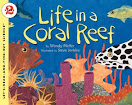
The students I teach are very aware of The Great Barrier Reef because it is in Australia, it is in trouble and many of them have visited it. They marvel over books that show the life on the reef.

Look for these books in the library:


It might also be a good time to revisit Kim Michelle Toft's books. Her exquisite illustrations of North Queensland marine life are created by hand painting on silk.

Friday, February 28, 2025

1st March World Seagrass Day


World Seagrass Day occurs on March 1st
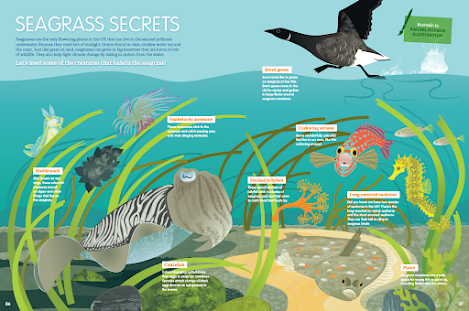
, becoming Seagrass Awareness Month.  Raising public awareness of the importance of seagrass is crucial to promoting biodiversity and the conversation of seagrass meadows. Unlike seaweeds, seagrass is a grasslike plant that lives in or close to the sea and forms dense meadows. Saving seagrass means saving our seas, as these areas host a myriad of animals species, including supplying 20% of the world's fisheries, sequestrating carbon, supporting communities by providing livelihood, and more. It's estimated that an area large as two football pitches is lost every hour globally.


Seagrasses are one of the most widespread marine ecosystems on Earth, covering around 300,000 square kilometres of seabed in 159 countries, including Australia.

Here are 10 facts about this essential plant.  

Observing this day is the result of a decision made by the UN General Assembly (UNGA)  on 23 May 2022. I haven't written about it before or thought much about it till yesterday when I saw that it was coming up and I then began to think about books that I could use to promote this day.


The CSIRO are well ahead of me, as in the last few years they have published some wonderful books, including The Great Southern Reef  by Paul Venzo, Prue Francis and Cate James and The Way of the Weedy Seadragon by Anne Morgan and Lois BuryWhile not only about seagrass, they do include sea ecosystems that children will want to know about. The authors of The Great Southern Reef, were also involved in putting together a comprehensive guide for primary school teachers, called Over and Under the Waves of the Great Southern Reef:Using children's literature to teach marine science in schools. This resource also focuses on  the following picture books:

  1. The Hidden Forest by Jeannie Baker (2005)

  2. The Underwater Forest by Rebecca Morris and Matt Howorth (2020)

  3. The Way of the Weedy Seadragon by Anne Morgan and Lois Bury (2021)

  4. With a Little Kelp from Our Friends by Mathew Bate and Liz Rowland (2021)

  5. Sea Country by Aunty Patsy Cameron and by Lisa Kennedy (2021)

  6. The Great Southern Reef by Paul Venzo, Prue Francis, and Cate James (2022)

  7. Giinagay Gaagal Hello Ocean by Melissa Greenwood (2023)

  8. Secrets of the Saltmarsh by Claire Saxby and Alicia Rogerson (2023) 


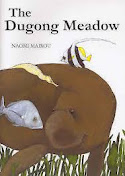
    Back to seagrass...the dugongs in Australian waters rely very heavily on the seagrass meadows so look for these books as well

    Dugong Meadow  by Naomi Mairou

    Dugong Dreams  by Deborah Kelly and Lisa Stewart

    Stay Close by Kerrie Uren and Leanne Argent

    Sea-grass Beds  by Kimberley Jane Prior 

    Seagrass Dreams by Kathleen Hanes and Chloe Bonfield