Tuesday, March 17, 2020

16th March Panda Day

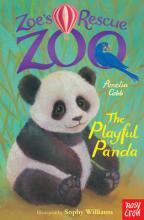
On March 16, conservationists and animal lovers alike spread the word about one of the world’s most endangered and adored animals. Panda Day brings together the efforts of an international community dedicated to protecting and restoring habitat for pandas. Pandas are very sensitive creatures and disruptions in their environment lead to issues with them reproducing. They do not reproduce readily in captivity so this makes ensuring their natural habitat remains even more pertinent.


Fortunately, children are besotted with pandas so any display of books we do in the library which features them, is very quickly depleted, even more so than polar bears. It is good that these two 'bear' days are so close together as it means we can quickly replace one display with the other. Our library has ample books to do this. See pandas here and polar bears here.


Mr Panda books are such a favourite with the preschoolers and Kindergarten students so these five books are never in the library. Once they have gone though, there is still plenty of fiction to go round. For the same age group there is Neil Gaiman's Chu and Sophy Henn's Pom Pom.


For older students who also like a series of picture books about the same character there is Jon J. Muth's series about Stillwater. These require a more sophisticated level of  reading and beg discussion so they are good to read with an adult.


If you then read through the large number of other narrative and expository texts, there's still some beginning chapter books to explore!


Every March 16th


Hashtag
#PandaDay
Tagged as
  1. Animals
Primis Player Placeholder

Watch our highlights channel


Tuesday, March 10, 2020

World Hand Hygiene Day and Global Handwashing Day


World Hand Hygiene Day takes place on May 05, 2020. The day is declared by the World Health Organization (WHO) and encoures patients and their family members to join health workers in their efforts to practice good hand hygiene. According to WHO, every year, hundreds of millions of patients around the world are affected by health care-associated infections. More than half of these infections could be prevented by caregivers properly cleaning their hands at key moments in patient care. 


October 15th is Global Handwashing Day! This year, the Global Handwashing Day theme focuses on the links between handwashing and food including food hygiene and nutrition. Handwashing is an important part of keeping food safe, preventing diseases, and helping children grow strong. Global Handwashing Day is an international handwashing promotion campaign to motivate and mobilise people around the world to improve their handwashing habits. Washing hands at critical points during the day and washing with soap are both important.  

Neither of these days are for quite a while yet, but I feel as if I spent a large part of today locating books in the library that would help teachers have a conversation with their students about why it is important to wash their hands well and often. As schools prepare for the impact of Covid 19 the conversations are also turning to germs and what they do. A prep student actually asked me yesterday for a book on viruses. I don't think he was panicked, but rather, curious. 

So now I have a list of books for the teachers and parents and have put these books on display. See:

• Wash Your Hands by Margaret McNamara and Mike Gordon (one of the Robin Hill School readers)
I Don't Want to Wash My Hands! by Tony Ross (one of the Little Princess titles)
Germs are not For Sharing by Elizabeth Verdick and Marieka Heinlen   


Atchoo! by Mij Kelly and Mary McQuillan
Germs Make Me Sick! by Melvin Berger and Marylin Hafner
Germs by Ross Collins
Sam's Science: I Know How to Fight Germs by Kate Rowan and Katharine McEwen
The Giant Book of Germs by Lorna Hendry


Friday, March 6, 2020

8th March International Women's Day

We always celebrate this day in our library and I have written about it on this blog several times before, but given the diatribe this week about children's picture books that was on a popular website I follow, I feel the need to recommend some picture books with female main characters that are certainly worth meeting. The posts were going on and on about how all the characters in the picture books for very young children, even if they were animals, were male, 'even the Gruffalo!' While I agree that, that may well be the case, and that 'he' is used more than 'she' in books, there is so much more available to children today than there used to be. The popularity of the series Little People Big Dreams by Maria Isabel Sanchez Vegara  proves that books about girls can be popular. They are among the most popular books borrowed from our Prep school library and many of the children have some copies of their own. Kate Pankhurst's Great Women series is also popular.

We keep popular series in boxes because Preschoolers want to be able to find their friends quickly. Most of the series do have male main characters, but there is Maisy and Angelina Ballerina (both mice),  Miffy, EloiseFancy Nancy and Pinkalicious and these are more popular than say, Pete the Cat; Splat the Cat; Scaredy Squirrel  and Grug.

For stand alone, any of these picture books have girls as the main character and are well worth searching out in your library. Happy International Women's Day!

One Word From Sophia by Jim Averback and Yasmeen Ismail (See Nothing! and I'm a Girl! by Yasmeen Ismail)


Pearl Power  by Mel Elliott (There are now three books about Pearl)


• Izzy Gizmo  by Pip Jones and Sara Ogilvie (There are now two books about Izzy)


• Dear Girl  by Amy Krouse Rosenthal and Paris Rosenthal (See Amy's Uni the Unicorn books as well for a strong female main character)


Where's Jamela? by Niki Daly (the five stories about Jamela who lives with her mother and grandmother give readers a very positive view of what women are capable of)


Saturday, February 29, 2020

CBCA Notables

Well the Children's Book Council judges have announced their list of twenty books for the 2020 Notables for the Early Childhood category. This means that the shortlist will come from this group and then ultimately the winners too. As an Early Childhood teacher/librarian, I am so often disappointed by what makes this list. The books often  either sell this age group short because they are for the very young end of this age group or they have no plot to hook children, but instead rely on rhyming doggerel. This year they are not for the very young. There's no lullabyes and there are some books with wonderful artwork.

I spend the whole of my teaching days with children between three and eight. They want and need a plot, quality artwork, good vocabulary and the books need to warrant revisiting.

This year in the lead up to Book Week I am tempted to create my own shortlist of Australian picture books to explore because four books I think should be on the list and which I know will work with my students, didn't even make the Notables. These four fabulous books are:


Dumazi and the Big Yellow Lion by Valanga Khoza and Matt Ottley. In this  story Dumazi is on her way to the waterhole when she encounters a lion caught in a trap. The lion wants her to set him free, but she knows that lions roaming free are dangerous. Written by Valanga Khoza who has lived in Africa, so set in Africa, accompanied by superb artwork and a CD of the story read by the author with outstanding music performed by the author and illustrator. The quintessential work of art!


Fly! by Jess McGeachin
Lucy finds a bird with a broken wing, which she is sure she can fix. But not everything that’s broken can be fixed. This story of determination highlights a beautiful daughter father relationship. It is a debut book and has so much depth and so many conversation starting points.


Leonard Doesn't Dance by Frances Watts and Judy Watson
The word play and vocabulary extension provided by this story about birds and dancing is more than enough, but there is also a theme worth exploring with children as well. Also take a look at Judy Watson's Pinterest page of bird drawings she did for the book.


Sarah's Two Nativities by Janine M. Fraser and Helene Magisson
At Christmas time, Sarah snuggles in each of her grandmothers' laps. Grandmother Azar tells Sarah stories from the Holy Koran and Grandmother Maria tells her stories from the Bible. She listens to two nativities stories about the birth of baby Jesus. They are the same in some ways, and different in others. What a perfect introduction for talking about Christmas in multicultural Australia.

Read these books, search out the teaching notes, look at the author and illustrator websites and then you will see how much fun you will have sharing them with classes. I'll probably add a couple more from the official list. I'll just wait and see what makes the shortlist. 

Thursday, February 20, 2020

18th February Pluto Day

Pluto Day is celebrated on the 18th February because this is the date on which it was first observed in 1930 by American astronomer, Clyde Tombaugh. Then it was considered to be the ninth planet from the Sun. It enjoyed the status of planet until 2006 when it was relabelled as a dwarf planet. For us 'older folk' this was a shock because it messed up our mnemonic for remembering the names of the planets... My Very Eager Mother Just Served Up Nine Pizzas which has apparently become My Very Educated Mother Just Served Us Nachos. What do the planets really have to do with food?

This aside many people felt sorry for Pluto and he has since become the subject of picture books that are not only about its discovery, naming and change of status, but they often include a theme about inclusion, exclusion, feelings etc which personifies Pluto.

Look for these books:
An empowering, inspiring--and accessible!--nonfiction picture book about the eleven-year-old girl who actually named the newly discovered Pluto in 1930. When Venetia Burney's grandfather reads aloud from the newspaper about a new discovery--a "ninth major planet" that has yet to be named--her eleven-year-old mind starts whirring. She is studying the planets in school and loves Roman mythology. "It might be called Pluto," she says, thinking of the dark underworld. Grandfather loves the idea and contacts his friend at London's Royal Astronomical Society, who writes to scientists at the Lowell Observatory in Massachusetts, where Pluto was discovered. After a vote, the scientists agree unanimously: Pluto is the perfect name for the dark, cold planet. 


Pluto is not pleased when he learns that astronomers have downgraded him from planet to dwarf planet. He embarks on a fun and out-of-this-world adventure across the solar system to visit Earth and reclaim his planetary status. It's a boy on Earth who makes him realise that, big or small, planet or not, he's still special! 


Pluto loves being a planet. That is, until the day he gets a call from some Earth scientists telling him he isn’t a planet anymore! You probably wanted to meet a real planet, huh? So, Pluto takes the reader on a hilarious and informative journey through the solar system to introduce the other planets and commiserate about his situation along the way.


Providing a history of the small, icy world from its discovery and naming to its recent reclassification, this book presents a fascinating look at how scientists organize and classify our solar system as they gain new insights into how it works and what types of things exist within it.


Pluto got the shock of his life when he was kicked out of the famous nine. His planet status was stripped away, leaving him lost and confused. Poor Pluto! On his quest to find a place where he belongs, he talks to comets, asteroids, and meteoroids. He doesn't fit in anywhere! But when Pluto is about to give up, he runs into a dwarf planet and finally finds his place in the solar system.


And if you haven't got time to celebrate Pluto now, wait till Pluto Demoted Day on August 24 which commemorates the day in 2006 when Pluto's status was downgraded from a full sized planet to a dwarf planet by the International Astronomical Union (IAU).

Tuesday, February 11, 2020

15th February Hippopotamus Day

Coming up is Hippo Day! A great day to celebrate in a library because  -
1. Hippos are in danger, and humans are their biggest enemy. So we need to know more about these 'water horses'.
2. Some of the best 'reads' for children  feature hippos.

One of my all time favourite serial reads with a class is The Twentyseventh Annual African Hippopotamus Race by Morris Lurie. It is such fun and yet at the same time has so much to discuss with students. Can hippos really swim? What should Edward do about Sebastian? What makes Edward a good friend? a good grandchild? a good swimmer and competitor? What does 'gosh' really mean? Great to read before a sports day, swimming carnival, when you want to discuss bullying or even just hippos and Africa.

A wonderful pourquoi story, Hot Hippo  by Mwenye Hadithi and Adrienne Kennaway explains for students why hippos don't actually swim, but spend a large part of their day in the water.

Another book that students love is Hippos are Huge! by Jonathan London and Matthew Trueman. This illustrated information book tells students about just how big and dangerous hippos are.

Hippos have even made it to the realm of 'true animal stories' since the December tsunami that swept baby hippo, Owen into the sea. Kenyan villagers worked to rescue Owen and he has now become best friend with Mzee, an elderly giant tortoise. Many books feature these two. See Owen and Mzee and its sequel by Isabella Hatkoff et al; A Mama for Owen by Marion Dane Bauer and Mama by Jeanette Winter.

Hippos can also be something that authors use for humour. Look at the popularity of the very long lasting series that started with There's a Hippopotamus on our Roof Eating Cake by Hazel Edwards and Deborah Niland. And more recently, Hippospotamus by Jeanne Willis and Tony Ross,  The Hippo-not-amus  by Tony and Jan Payne and Hippobottymus by Steve Smallman and Ada Grey.

And maybe because hippos can be cantankerous they often feature in children's books about feelings and behaviour. See  Greedy Grumpy Hippo; Big Bully HippoHurty Feelings; and  The Hippo who was Happy

For even more hippo books for your display, look at these.


.

Thursday, February 6, 2020

5th February Pondering Holes

I've just finished Week 2 of term1 at school and it has been both busy and interesting. In the library we catalogued a new book, Holes by Jonathan Litton. Here's the blurb

Delve into this fascinating book of holes to discover a world of 
burrows and boreholes, subways and sinkholes. From the 
mythical and mysterious to household and human holes,  
find out what makes a hole a hole and how they shape our world. 

It is quite a thick tome for our age group, but it is full of fascinating information, including a section about the philosophy of holes. This led to quite a lot of conversation and  laughter among the library staff and of course it led us off on to all sorts of tangents. Is there a day to celebrate 'holes'? Well, no not really. There is a 'My Bucket's Got a Hole Day' on 30th May, but not one that covers all sorts of holes. Maybe because the phrase 'whole day' is a common one.

There is an amazing number of picture books that feature the word 'hole' in their title though. Of course that started us off on a display. See here for the books the library has. You'll notice these books don't all have the word in the title because we then started thinking about what 'hole' means...'an opening through something' and other words for 'hole'...gap; aperture; cavity; dent; void; pit; cranny; burrow; crater; and even tunnel.

Some picture books for young children are about physical holes, things to  dig, carrying on from Ruth Krauss' classic A Hole is to Dig. Julia Donaldson's One Mole Digging a Hole and Mac Barnett's  Sam and Dave Dig a Hole do this, but books such as Kelly Canby's The Hole Story and Paul Bright's The Hole Story start to play with the meaning of the word 'hole'. Then books such as the very special The Hole  by Oyvind Torseter really start to get at the philosophy of holes.

I grew up besotted with stories about smuggling and caves, probably because of Enid Blyton and stories such as The Secret of Spiggy Holes. My own children grew up being readers who kept revisiting  Louis Sachar's novel, Holes, so obviously holes and their many incantations provide copious ideas for stories. And of course any display has to include books such as Alice in Wonderland which has a hole as a pivotal part of the plot.

Collect a whole lot of hole stories and go make a hole in your reading time!