Tuesday, February 18, 2025

1st March Pig Day


In the USA it is National Pig Day on the 1st March. Dick King Smith would be pleased, because as a pig farmer he thought all pigs were beautiful and wrote a book saying so. Even if you don't think they are beautiful  you do have to wonder why they are so endearing in so many children's books. Take the phenomena of Peppa PigThe three and four year olds that use the library just cannot get enough of her. The box that houses her books is always empty. Olivia, another well known pig who has a box to herself and then there's Wibbly Pig.  

Then the preschoolers start school and the boxes of Elephant and Piggie  become the new favourites.  

By Year 2 , a new series about pigs becomes a favourite - Mercy Watson by Kate DiCamillo. See, pigs everywhere! Year 2 also love Pigsticks and Harold, Wilbur  from Charlotte's Web  and Babe or The Sheep Pigfrom Dick King Smith's book.

Below are some examples of books from series that could be included in a library display. 

Peppa Pig

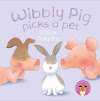
Wibbly Pig  by Mick Inkpen

Olivia  by Ian Falconer


If You Give a Pig ... by Laura Numeroff


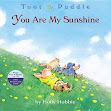
Toot and Puddle
 
by Hollie Hobbie


Rufus by Kim Griswell


Elephant and Piggie by Mo Willems


A Pig, A Fox... by Jonathan Fenske


A Pig in a Wig by Emma J. Virjan


Pigsticks and Harold  by Alex Milway


Mercy Watson by Kate DeCamillo


Then you can explore all the stand alone stories, the nonfiction about pigs, The Three Little Pigs  fairytale and all the spoofs that go with it and series for older readers like Pow Pow Pig and Nanny Piggins. See Pinterest board for more titles.


Friday, February 14, 2025

16th February World Whale Day


World Whale Day takes place on the third Sunday in February.

About 45 species of whales are found in the waters off Australia for part of each year, including the Blue Whale and the Southern Right Whale. Whales play a vital role in our marine ecosystem and serve as indicators of ocean health. Their presence indicates a thriving marine environment, and their absence can signal ecosystem imbalance.

Whales are popular with young children so whenever we do a  display of whale books they do not stay in the library very long. We have some very beautiful whale stories, but the nonfiction books are just as popular. 

Two very special nonfiction whale books have been published in the last couple of years, Whale Fall  by Melissa Stewart and Rob Dunlavey and Life After Whale by Lynn Brunelle and Jason Chin. Both have won major nonfiction book awards and both deal with the death of a whale and what happens to their body after their death.

Published in 2023.

Winner of the AAAS/Subaru Prize for Excellence 

When a whale dies, its massive body silently sinks down, down, through the inky darkness, finally coming to rest on the silty seafloor. For the whale, it’s the end of a 70-year-long life. But for a little-known community of deep-sea dwellers, it’s a new beginning. First come the hungry hagfish, which can smell the whale from miles around. Then the sleeper sharks begin their prowl, feasting on skin and blubber. After about six months, the meat is gone.


Published in 2024

Winner of the Robert F. Sibert Medal

All living things must one day die, and Earth’s largest creature, the majestic blue whale, is no exception. But in nature, death is never a true ending. When this whale closes her eyes for the last time in her 90-year life, a process known as whale fall is just beginning. Her body will float to the surface, then slowly sink through the deep; from inflated behemoth to clean-picked skeleton.


Both of these books have superb illustrations and detailed lyrical texts. They have been reviewed and written about by others more eloquent than me. Search them out and see for yourself.

While getting books off the shelves for the display it also struck me just how many of the stories were based on real whales.


Migaloo: The White Whale 
 by Mark Wilson. This is the children's favourite whale.

He is a white humpback whale, the first one to be documented.He was first sighted in 1991. He travels 12,000 kilometres each year from Antarctica up the eat coast of Australia to the Great Barrier Reef. He has a web page of his own.

Stranded  by Jan Ramage and Mark Wilson 

Tells the story of a whale rescue off Busselton in Western Australia. About 1500 people turned up to save 120 stranded false killer whales. Because of the phenomenal community support all but one whale survived.


Deepsea Rescue  by Jan Ramage and Mark Wilson 

Based on a true account, tells the story of a mother whale's courageous efforts to to care for her calf as killer whales attacked. Divers from a nearby launch who were watching this event realised that the mother whale also had another problem. She was entangled in nylon ropes.


Fluke  by Lesley Gibbes and Michelle Dawson

In 2012, a Southern right whale gave birth to a calf in Sydney Harbour. It was only the third time in recorded history that a Southern right whale had been born in the harbour. The mother and calf stayed in the sheltered waters of the city’s inlets and bays for several months before heading south to the Antarctic waters. The people of Sydney were entranced by the presence of these whales so close to the city.


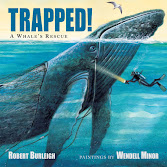
Trapped! A Whale's Rescue  by Robert Burleigh and Wendell Minor 

This story is based on an actual event. On 11th December, 2005 fishermen off the coast of California spotted a large humpback whale struggling to free itself from a network of ropes attached to crab traps. A group of divers saved the whale.


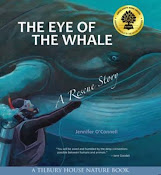
The Eye of the Whale: A Rescue Story  by Jennifer O'Connell

This story is based on the same actual event off the coast of California as the story above.


Wild Orca  by Brenda Peterson and Wendell Minor

Pays tribute to Granny, the world’s oldest-known orca whale who lived to be one hundred and five. Told from the perspective of young Mia and her family on a whale-watching excursion in the San Juan Islands,


Hope the Whale  by Laura Chamberlain

Follow Hope the blue whale on her epic journey across the oceans, in this uplifting tale, inspired by the story of the real Hope the whale - one of the Natural History Museum's most loved exhibits.


If you are looking for other picture books about whales see my Pinterest page here.

Thursday, February 13, 2025

12th February Darwin Day

Darwin Day is a celebration to commemorate the birthday of Charles Darwin  on 12 February1809. The day is used to highlight Darwin's contributions to science and to promote science in general. Darwin Day is celebrated around the world, but for Australians, Darwin has a special place as he visited in 1836 and it was Australian flora and fauna that got Darwin thinking about why our animals are so different.

Sydney was just one of many ports of call for the Beagle on its five-year round-the-world surveying voyage. Before departing the antipodes two months later, Darwin was to have a revelation that would eventually inform his grand theory of evolution by natural selection. Read this article

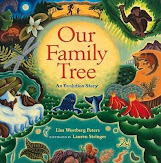
Talking about Charles Darwin with students always elicits much discussion about his work  and there are always requests for books so they can read more. These  books are a good start but there are many picture books on evolution that are easy enough for eight year olds to begin an interest in evolution.


What Mr Darwin Saw  by Mick Manning and Britta Branstrom

This book follows the journey of HMS Beagle, showing life on-board the ship for Darwin, the captain, crew and the expedition's artist. The reader sees Darwin discovering and observing insect life in Brazil, fossils in Argentina , earthquakes in Chile and turtles in the Galapagos Islands. The reader is therefore able to follow the steps which led to Darwin's inspired theory of evolution.


What Darwin Saw: The Journey that Changed the World  by Rosalyn Schanzer

In 1831 a 22-year-old naturalist named Charles Darwin stepped aboard the HMS Beagle as a traveling companion of an equally youthful sea captain called Robert FitzRoy. The Beagle's round-the-world surveying journey lasted five long years on the high seas. The young Darwin noticed everything, and proved himself an avid and detailed chronicler of daily events on the Beagle and onshore.


Charles Darwin's Around the World Adventure by Jennifer Thermes

In 1831, Charles Darwin embarked on his first voyage. Though he was a scientist by profession, he was an explorer at heart. While journeying around South America for the first time aboard a 90-foot-long ship named the Beagle, Charles collected insects, dug up bones, galloped with gauchos, encountered volcanoes and earthquakes, and even ate armadillo for breakfast! 


Charles Darwin's On the Origin of the Species  by Sabina Radeva

A picture book adaptation of Charles Darwin's groundbreaking On the Origin of Species, lushly illustrated and told in accessible and engaging easy-to-understand text for young readers.


Darwin & Hooker  by Alexandra Stewart and Joe Todd-Stanton

On 24th November 1859, Charles Darwin’s On the Origin of Species was first published, selling out almost immediately. Describing the now well known theory that humans evolved through a process called natural selection, it became an instant classic and cemented Darwin as one of the greatest biologists of all time. However, he couldn’t have done it without the support, encouragement and advice from those who believed in him. None more so than Joseph Hooker, his friend, confidant and fellow collector, who supported and helped Darwin when he didn’t dare ask anyone else. 


Biographies such as these and picture books that explain evolution in more simple ways for a young audience.


Tuesday, February 11, 2025

15th February Galileo Day


One of the most important figures to come out of the awakening world of the Renaissance was Galileo Galelei. Galileo was forever asking questions. Is it possible to measure heat? Can you weigh air? Does the earth stand still or does it move? How fast do objects fall to the earth? These questions, and his answers to them, led to some of the most important discoveries ever in astronomy, physics, mathematics, and the natural world.

Among his many accomplishments Galileo advanced the astronomical telescope and invented the compound microscope. He measured the rotation of the sun, invented the thermometer, a geometrical compass, and the pendulum clock.

Albert Einstein called Galileo “the father of modern science.” 

When my daughter was at school she was fascinated by Galileo and how he proved that the sun was at the centre of the solar system. She was fascinated that people once thought the earth was flat and that you could walk off the edge. She was very happy to read whatever she could about Galileo so I brought books home from the school library.

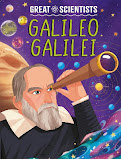
Galileo for Kids by Richard Panchyk
This book will inspire kids to be stargazers and future astronauts or scientists as they discover Galileo's life and work. Activities allow children to try some of his theories on their own, with experiments that include playing with gravity and motion, making a pendulum, observing the moon, and painting with light and shadow. Along with the scientific aspects of Galileo's life, his passion for music and art are discussed and exemplified by period engravings, maps, and prints. 


I, Galileo  by Bonnie Christiansen
Bonnie Christensen adopts the voice of Galileo and lets him tell his own tale in this outstanding picture book biography. The first person narration gives this book a friendly, personal feel that makes Galileo’s remarkable achievements and ideas completely accessible to young readers. 


Galileo's Leaning Tower Experiment  by Wendy Mcdonald and Paolo Rui
When the great scientist and professor Galileo meets a bright farm boy, Massimo, the teacher becomes the student. On an ordinary day, Galileo encounters Massimo dropping food from a bridge to his uncle passing below in his boat.


Starry Messenger  by Peter Sis 
In every age there are courageous people who break with tradition to explore new ideas and challenge accepted truths. Galileo Galilei was just such a man--a genius--and the first to turn the telescope to the skies to map the heavens. In doing so, he offered objective evidence that the earth was not the fixed center of the universe but that it and all the other planets revolved around the sun. Galileo kept careful notes and made beautiful drawings of all that he observed. Through his telescope he brought the starts down to earth for everyone to see. 


And some more recent books about Galileo and his discoveries:

Galileo Galilei (2023) by Jane Kent and Isabel Munoz
Meet Galileo Galilei and discover the story of his life and work in this engagingly illustrated biography - narrated by the scientist himself. Astronomer, physicist, and philosopher Galileo Galilei was referred to as "The Father of Modern Science," because of his groundbreaking research. Making observations about nature, and using mathematics to back them up, he proved the Copernican Theory true: the Sun, not the Earth, is the centre of the universe.


Galileo Galilei (2024) by Alexandra Badiu and Anna Baker 
Tells the story of 'the father of science' - covering his origins as the son of a musician through his work in astronomy and optics, his troubles with the Church and his enduring legacy today.


Thursday, February 6, 2025

10th February Umbrella Day


This day is set aside to honour the humble umbrella for its admirable duty of shielding us from the elements.

The word “umbrella” is derived from the Latin, “umbra”, meaning shade or shadow.

There is evidence of umbrellas in the ancient art and artefacts of Egypt, Assyria, Greece and China. From ancient times, umbrellas have had a place in our lives including playing an important part in religious ceremonies and rituals.

The Chinese are credited with being the first to use umbrellas to protect from the rain. To make their traditional paper parasols water resistant they applied a layer of wax and lacquer.

It wasn’t until the 18th century that umbrellas became popular amongst the nobility where it was as much a fashion accessory and a device to protect from the elements.

To read about the history of the umbrella search out Jonas Hanway's Scurrilous, Scandalous, Shockingly, Sensational Umbrella  by Josh Crute which is all about the real gentleman who introduced umbrellas to 1750's London society.


There are so many wonderful picture books that feature umbrellas and what is surprising about them, is that many use the umbrella as a means to something such as friendship, compassion, even a little magic.

Start with the very reassuring  Under the Love Umbrella  by Davina Bell and Allison Colpoys.


The Blue Umbrella  by Emily Ann Davison and Momoko Abe 


The Big Umbrella  by Amy June Bates and Juniper Bates


Umbrella  by Elena Arevalo Melville


The Elephant's Umbrella  by Laleh Jaffari and Ali Khodai


Zebra's Umbrella  by David 
Hernandez Sevillano and Anuska Allepuz


The Umbrella  by Beth Ferry and David Lichtenheld


The Umbrella Tree  by Bai Bing, Li Hongzhuan and Yijin Wert


Of course, there are other picture books about umbrellas, see here, but above I have shared my favourites. I hope you choose one to read on Umbrella Day.


Monday, February 3, 2025

3rd February Honey Badger Day


The honey badger is part of the weasel family, related to skunks, otters, ferrets, and other badgers. Its proper name is ratel, but it gets the common name honey badger from what seems to be its favorite food: honey. Yet what they are actually looking to eat are the bee larvae found in the honey! They are native to areas of Africa and Asia.They are omnivorous, have tiny ears and distinctive yellowish-brown fur on the upper side of their body, which isn't the case for most species of badgers.

Honey badgers do feature in quite a few nonfiction books for children, but they do not feature as the main character in many picture story books.


Today is the day to share Jan Brett's beautiful book Honey...Honey...Lion!