Showing posts with label rain. Show all posts

Sunday, July 20, 2025

29th July World Rain Day


Throughout human history, people and cultures around the world have celebrated rain and its life-giving power. All life depends on rain and rain keeps our world green and fresh. Rain Day celebrates all that is wet and beautiful.

Rainfall is the main way water gets to the ground, providing drinking water for animals and plants, replenishing groundwater, and filling our rivers and lakes. When you think about it from this perspective, you understand why rain is critical for our lives and why it should be appreciated and celebrated.
In the library it is very easy to celebrate. I put 'rain' in the title search of the catalogue and we have over 100 books without looking at books about weather, mud, hail, monsoons or any other things related to rain or water. That's enough books for a display! Some of them are beautiful and not borrowed that often.
Of course in Australia, how you feel about rain depends a lot upon where you live as droughts and floods seem to be occurring somewhere constantly.
The books below are some of the books that have 'rain' in their title. Often I put a question with a display to make the children think. It could be simple like 'What do all these books have in common?' or 'How do you feel about rain? Which book on display do you think will match your feelings about rain?'


Thursday, February 6, 2025

10th February Umbrella Day


This day is set aside to honour the humble umbrella for its admirable duty of shielding us from the elements.

The word “umbrella” is derived from the Latin, “umbra”, meaning shade or shadow.

There is evidence of umbrellas in the ancient art and artefacts of Egypt, Assyria, Greece and China. From ancient times, umbrellas have had a place in our lives including playing an important part in religious ceremonies and rituals.

The Chinese are credited with being the first to use umbrellas to protect from the rain. To make their traditional paper parasols water resistant they applied a layer of wax and lacquer.

It wasn’t until the 18th century that umbrellas became popular amongst the nobility where it was as much a fashion accessory and a device to protect from the elements.

To read about the history of the umbrella search out Jonas Hanway's Scurrilous, Scandalous, Shockingly, Sensational Umbrella  by Josh Crute which is all about the real gentleman who introduced umbrellas to 1750's London society.


There are so many wonderful picture books that feature umbrellas and what is surprising about them, is that many use the umbrella as a means to something such as friendship, compassion, even a little magic.

Start with the very reassuring  Under the Love Umbrella  by Davina Bell and Allison Colpoys.


The Blue Umbrella  by Emily Ann Davison and Momoko Abe 


The Big Umbrella  by Amy June Bates and Juniper Bates


Umbrella  by Elena Arevalo Melville


The Elephant's Umbrella  by Laleh Jaffari and Ali Khodai


Zebra's Umbrella  by David 
Hernandez Sevillano and Anuska Allepuz


The Umbrella  by Beth Ferry and David Lichtenheld


The Umbrella Tree  by Bai Bing, Li Hongzhuan and Yijin Wert


Of course, there are other picture books about umbrellas, see here, but above I have shared my favourites. I hope you choose one to read on Umbrella Day.


Friday, January 6, 2023

11th January National Step in a Puddle and Splash Your Friends Day

Today it is raining here in Sydney, again! A good day for jumping in puddles because it isn't cold just wet.  When my children were young they loved nothing more than putting on gumboots and playing in puddles. On the empty blocks near us they could find tadpoles, lots of mud and thinks to make mudpies. The Americans have a day set aside in the National calendar to do this...the 11th January. I'm not sure if it will be raining then, but I'm sure you can move this celebration to a day when there are puddles. 


Preschoolers love this topic. There is a teacher reference book for Early Childhood titled Puddles which is written by Dr Claire Warden and another called Muddy Boots by Liza Gardner Walsh.

There is a new nonfiction book that was published last year Hello Puddle!  by Anita Sanchez which  explores the deceptively simple but unexpectedly crucial resource for wildlife: puddles! This lyrical, gorgeously illustrated nonfiction picture book is perfect for young science learners and nature lovers.

There are many picture books you could use to talk about puddles and mud. Peppa Pig has at least three books about mud and puddles. See

• The Biggest Muddy Puddle in the World 

• Peppa Pig and the Muddy Puddles

• Peppa's Muddy Puddle Walk

Here's some others you can collect from a library:

• Puddles are forJumping by Kylie Dunstan

• Puddles  by Jonathan London and Brian Karas

• Puddle Hunters by Kirsty Murray and Karen Blair

• Watch Out for Muddy Puddles  by Ben Faulks and Ben Cort

• Puddle  by Hyewon Yum

• Puddle  by Richard Jackson and Chris Raschka 

• Puddling  by Emma Perry and Claire Alexander

• Rain!  by Linda Ashman and Christian Robinson

• Red Rubber Boot Day  by Mary Lynn Ray and Lauren Stringer

• Bridie's Boots  by Phil Cummings and Sara Acton

• Worm Weather by Jean Taft and Matt Hunt

• A Good Day for Ducks by Jane Whittingham and Noel Tuazon

Now off you go, put on your boots and raincoat, grab some plastic boats or rubber duckies and go splash in some puddles. It is the perfect way to relieve stress. Oh and you might like to take some children with you but they are not a prerequisite.


Tuesday, March 1, 2022

Floods, floods and more floods.


Well it's very wet here in Sydney and we are all sick of wet weather duty and being inside. Yesterday I put a collection of books out on display for my Kindergarten and Year 1 library classes. They all featured floods and rain. I was very surprised to see most of them were borrowed! Some of them were old favourites that haven't left the library for a long time. Even The Useless Donkeys by Lydia Pender, and Running Away From Home   by Nigel Gary which I love were borrowed. If you are looking for books on floods in your library, look for these.

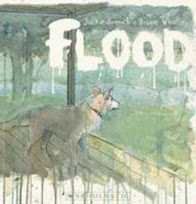
• Flood  by Jackie French & Bruce Whatley

• Flood by Alvaro F. Villa

• Flood by Gillian McClure

• Flood by Mary Calhoun

• The Flood  by Nigel Grey & Elise Hurst

• Frog is a Hero  by Max Velthuijs

• Elmer and the Flood by David McKee

• The Moomins and the Great Flood by Tove Jansson

• Juliet, Nearly a Vet: The Big Flood  by Rebecca Johnson

• Pattan's Pumpkin by Chitra Soundar & Frane Lessac

• Flood Warning  by Katharine Kenah

• River Friendly, River Wild by Jane Kurtz & Neil Brennan

• When the Rain Comes  by Alma Fullarton & Kim La Fave

• The Flute  by Rachna Gilmore

• Soshu's Call by Meshack Asare

• Children on the Yangzte River  by Otto S. Sven

• Limpopo Lullaby  by Jane Jolly & Dee Huxley

• Big Rain Coming by Katrina Germein & Bronwyn Bancroft

• The Story of Rosy Dock  by Jeannie Baker

I have  just looked to see if I have written about floods before and of course I have, here.


Tuesday, March 23, 2021

23rd March Rain and Floods

So much of the east coast of Australia is experiencing heavy rainfall and we have been stuck in classrooms now for over a week. Australian children are not used to being outside in all weather. They do not have good wet weather gear so instead they stay inside and go 'crazy'. In the library I've had a lot of fun supplying students with books about rain and floods. They are preoccupied with it, especially the boys. There is not a flood book left in the library and once I looked I was surprised just how many we did have.

My favourite flood story is The Useless Donkeys by Lydia Pender and Judith Cowell. Of course its out of print, but the artwork showing the continuous rain is so good. It is set on a farm where the family keep two  donkeys, that the children love but dad wants to get rid of. When the floodwaters rise the donkeys end up on an island in the paddock. The oldest two children row to the   island to rescue the donkeys.

Another favourite that is also out of print is Children of the Yangtze River by Sven Otto S. In this story children need to vacate their school because the river is rising. They move animals and families to higher ground and once the river abates they help rebuild a village. 


Here's some other books about floods that are in the library and more easily sourced:

• Flood by Jackie French and Bruce Whatley

• Flood  by Alvaro F. Villa

• Flood  by Gillian McClure

• Flood Warning  by Katharine Kenah and Amy Schimler Safford

• Elmer and the Flood by David McKee

And some that just highlight incessant rain without a flood:

• Rain School by James Rumford

• Home in the Rain  by Bob Graham                                                                

• The Rhythm of the Rain by Grahame Baker-Smith

• Rain by Sam Usher

• Singing in the Rain by Tim Hopgood

• Rain!  by Linda Ashman and Christian Robinson                                                

• Rain Rain Rivers by Uri Shulevitz

• Who Likes Rain? by Wong Herbert Yee

• This Beautiful Day by Richard Jackson and Suzy Lee

• Float by Daniel Miyares

And when a child asks where do the animals go when it rains?                                

• Where Do They Go When it Rains?  by Gerda Muller

• Where Does Kitty Go in the Rain?  by Harriet Ziefert and Brigette Barrager


And you'll need to share some poetry:

• It's Raining, It's Pouring by Peter, Paul and Mary and Christine Davenier

• Talking Like the Rain by X.J.  and Dorothy M. Kennedy and Jane Dyer

• Listen to the Rain by Bill Martin Jnr and John Archambault


Friday, March 24, 2017

Too Wet March

Well in February we sweltered because it was too hot. Now in March it is so wet and very often humid as well. The weather in Sydney has certainly been extreme. Just as well we have lots of books about 'rain'. Even without doing floods or any other extreme weather events we managed to find 30 books for a display. There are two exceptionally good new ones Rain by Sam Usher  and Watersong by Tim McCanna. Both of these are for very young children. They both feature stunning illustrations.
Watersong is a celebration of onomatopoeia. Rain is a narrative about Sam and his grandfather's adventure in the rain. If you are teaching preschool combine these with Who Likes Rain? by Herbert Yee. If you have older students revisit Bill Martin Jr and John Archambault's  beautiful word images in their poem Listen to the Rain. 


The children I teach often ask where do the animals go when it rains, so books such as Gerda Muller's  Where Do They Go in the Rain? and Harriet Ziefert's Where Does Kitty Go in the Rain? help address this question.

Just when the students start to whinge about not being able to go outside it is time to share Rain School by James Rumford and if you can find a copy, Children of the Yangtze River by Otto S. Svend because they will then appreciate their own school and ability to stay dry. These two stories show children as capable problem solvers, hard workers and useful in a time of difficulty.


Friday, January 18, 2013

Water (Part 2)

You certainly could travel the world while doing a unit of work on water using picture books. You could use a globe or world map and locate the places. The books also provide ample opportunities to use text-to-text and text-to-world activities. In this blog I want to highlight books that look at people and their relationship to water or a life-changing event that water features in.

First to Africa:
• Limpopo Lullaby by Jane Jolly and Dee Huxley. This very moving story, which is based on a real incident in Mozambique tells of how Josette, a mother has to climb a huge milkwood tree with her two young children during a flood caused when the Limpopo River bursts its banks.
• Rain School by James Rumerford tells the story of starting school at the beginning of the year and having to build the school, only to see it fall apart again when the rain comes.
• Bringing the Rain to Kapiti Plain by Verna Aardema and Beatriz Vidal is a cumulative tale that concentrates on breaking a drought.
• When the Rains Come  by Tom Pow and Malika Favre is really two stories. One is about how difficult life can be for some children in Africa and as they are cared for by Grandmother Rose she tells them the story of Tortoise and the Drought. Money from the sale of this book helps mothers in Malawi.
• The Day the Rains Fell by Anne Faundez and Karin Littlewood. This is a creation story set in Africa. Lindiwe takes her daughter to Earth to show her beauty but finds drought and thirsty animals so has to find a way to make the Earth well again.

Asia
• Children of the Yangtze River by Svend Otto S. This book is old but a gem. It should be republished. I have never shared this with a class without them being in total awe. Great for teaching empathy. It tells the story of Mei Mei who lives in China on the banks of the Yangtze River. The river breaks its banks and the whole village is involved in moving stock and belongings, but much was lost..."now all the houses and fields had disappeared...all the crops had washed away." As the river subsides Mei Mei and her family begin the massive clean up. The ending is joyous.
• Grandfather's Dream by Holly Keller is set in the delta of the Mekong delta in Vietnam, where canals built during the Vietnam War affected the wetlands and the natural flow of water. In this story a grandfather tells his granddaughter, Nam about the effects of this and about the loss of habitat for cranes. The library's copy of this book has been so well read it is about to fall apart.
• Monsoon by Uma Krishnaswami and Jamel Akib is like many of the books set in Australia. It tells of a family waiting for rain in India and then the pleasure that comes with it. There is an interesting afterword explaining monsoons and their role in South East Asia.
• Trishna and the Dream of Water by Carole Douglis and Adrienne Kennaway is also set in India. It is the time of Diwali and Trishna is sent to the well to get water. She dreams of living somewhere where there is water all year long.
• The Flute by Rachna Gilmore and Pilak Biwas. This story needs discussion. It is also set in India and it starts with a catastrophic flood that sweeps away Chandra's parents. She finds solace in her mother's flute music and never gives up hope that her life will improve. She is extremely resilient The endpapers are very special and should inspire some interesting artworks.

Europe
This was harder, I only could only think of one, the story of the boy who put his finger in the dike to stop his low-lying village in Holland from flooding. Here are two versions of the longer Mary Mapes Dodge's story that I know of:
• The Hole in the Dike by Norma B. Green and Eric Carle.
• The Boy Who Held Back the Sea by Thomas Locker and Lenny Hort.

America
• Come on, Rain! by Karen Hesse and Jon J. Muth. Like so many of the others, this is the story of a young girl who desperately wants it to rain and then it does and she celebrates by dancing with her friends... "wet slicking our arms and legs, we splash up the block, squealing and whooping in the steaming rain."
• Flood by Mary Calhoun and Erick Ingraham tells the story Sarajean who lives through the 1993 Midwest floods when the Mississippi damaged homes and sent inhabitants to higher land.
• Flood by Alvaro F. Villa This wordless book is new and I haven't yet seen it, so I have linked you where I learned of it. I have ordered it and I am waiting...a bit like waiting for rain!


Water (Part 1)

Given the bushfires, extreme heat, preparing for going back to school and doing the bulk loans for classes who are doing a unit of study on Water, I have got to thinking about the fine line between drought, bushfire and flood and how prevalent these are as topics in children's literature not only in the Southern hemisphere where they are prevalent now. Every culture seems to have stories based on the weather extremes experienced by people and animals. Today I want to highlight some Australian books that show these extremes and how people cope, and often develop a very strong community as a result.
Two books that look at the effects of drought are:
• Two Summers by John Heffernan and Freya Blackwood. The young male narrator here explains the differences in the farm a visiting friend will see this visit when there is drought compared to a previous visit without drought.
• Water Witcher by Jan Ormerod. Although set in the past, this story about Dougie and his family carting water and handfeeding animals shows the hardship and the stark environment drought causes.

Then there are books that show the pleasure and relief that rain brings when the drought breaks.
• Here Comes the Rain by Clare Good and David Cox. Here Grace watches and waits. her grandfather has told her all the signs of rain to look for. She watches the ants, horses and other animals looking for the signs.
• Rain Dance by Cathy Applegate and Dee Huxley. Here too, a young girl waits for rain, then ''the first drops beat out a hesitant rhythm on the corrugated-iron roof," and then the girl dances in pleasure..."the rain is so heavy, it almost hurts as it pelts my head and shoulders."
• Big Rain Coming by Katrina Germein and Bronwyn Bancroft. Once again we see people waiting for rain, looking for signs of rain and then celebrating when it finally arrives.

And, then what happens when the rain comes or it is too much.
• The Story of Rosy Dock by Jeannie Baker and Flood Fish by Robyn Eversole and Sheldon Greenberg both tell of what happens when the Finke River, which is usually just a dry river bed, floods in outback Northern territory on the edge of the Simpson Desert. The first tells of the ramifications in detail. The second recounts the fun a child has swimming with fish in water that isn't usually there.
• Flood by Jackie French and Bruce Whatley recounts the Brisbane floods of 20011 and the human drama that unfolded there. Whatley's illustrations 'make you feel the water and mud'.


While not all of these books are still in print, school libraries will have them and the visual imagery in all of these books is outstanding. You get to feel the hardship, the anguish, the horror, the joy and the suddenness of weather in parts of the harsh Australian environment.