Sunday, January 9, 2022

SDG 10 Reduced Inequalities


Goal 10 Reduce inequalities within and among countries.

Across the world there is still a lot of inequality to be found. What does inequality look like? For example, even in the richest countries, there are children who cannot afford lunch at school and go hungry, women who don’t get paid as much as their male coworkers for the same job, or people who are being treated differently because of their religion, age or where they are from.


Select a book from here.
My students certainly understand equality from maths and from personal forays with what they consider to be unfair or unequal, but whether or not they can clearly verbalise or visualise inequality is a different matter. They come from very comfortable middle class homes in a prosperous city. Demonstrating inequality will need to be personal or connected in someway to their life to start with. They will have all read and understood equal shares from reading a book such as The Doorbell Rang by Pat Hutchins, so I think I could read Four Feet Two Sandals to show that sharing and life for some children does not always work so equably.

 
Here's the blurb: 
When relief workers bring used clothing to the refugee camp, everyone scrambles to grab whatever they can. Ten-year-old Lina is thrilled when she finds a sandal that fits her foot perfectly, until she sees that another girl has the matching shoe. But soon Lina and Feroza meet and decide that it is better to share the sandals than for each to wear only one. 

Then maybe follow it up with something that talks about taking a stand, like Peter Reynold's Say Something!   

Here's the blurb:
The world needs your voice. If you have a brilliant idea... say something! If you see an injustice... say something! In this empowering picture book, author Peter H. Reynolds explores the many ways that a single voice can make a difference. Each of us, each and every day, have the chance to say something: with our actions, our words, and our voices. Perfect for kid activists everywhere, this timely story reminds readers of the undeniable importance and power of their voice especially when it comes to inequality.

This may also be the place to look at how disabled people, Indigenous people, people of other faiths are treated and whether it is equably.

These two books are suitable for very young readers and they will provide for lots of discussion post reading.

Two Mates  by Melanie and Maggie Prewett.    
Here's the blurb: 
Two Mates is the true story of the special mateship between two young boys who have grown up together in the coastal town of Broome in Australia's north-west. Jack is Indigenous and Raf is a non- Indigenous boy who has spina bifida. Jack and Raf take the reader on a journey of their daily life growing up in Broome. Together they search for hermit crabs, go hunting for barni, fish for salmon, explore the markets, eat satays and dress up as superheros. The fact that Raf is in a wheelchair is only revealed at the end of the story. 


Just Ask  by 
Sonia Sotomayor and Raphael Lopez
Here's the blurb:
Feeling different, especially as a kid, can be tough. But in the same way that different types of plants and flowers make a garden more beautiful and enjoyable, different types of people make our world more vibrant and wonderful. 

Just Ask,  celebrates the different abilities kids (and people of all ages) have. Using her own experience as a child who was diagnosed with diabetes, Justice Sotomayor writes about children with all sorts of challenges--and looks at the special powers those kids have as well. As the kids work together to build a community garden, asking questions of each other along the way, this book encourages readers to do the same- When we come across someone who is different from us but we're not sure why, all we have to do is Just Ask.


Booklet tasks:

• We know what equal means from maths, so we can work out what equality means, but what does inequality mean?


• We read...


• This story made me want to change how...


Saturday, January 8, 2022

SDG 9 Industries, Innovation & Infrastructure


Goal 9 - Build resilient infrastructure, promote inclusive and sustainable industrialisation and foster innovation.


Select a book from here.
Here is the chance to talk about all that helps people live their everyday lives, buildings, roads, bridges, technology, industry and how people make them happen. Of course there are questions about what is necessary, what is efficient, what can be sustained, but for children it is more a matter of what is there and how did it get there. A whole lot of pictures (photos) or a picture sort might be the way to start a discussion on infrastructure.

For younger readers who are always interested in trucks and construction perhaps start with building a road. Here's two, Road Builders by B. G. Hennessy and Simms Taback (old) and Road Crew Coming Through  by Sherry Duskey Rinker and A.G. Ford.

Here's the blurb:

Ever wonder how a road is built? First you'll meet the crew. Then you'll see all the trucks up close-cement mixers, bulldozers, dump trucks, graders, pavers-and learn what each one does. And finally, you'll watch a bustling new road come to life!


Here's the blurb:

The construction team is taking on their biggest challenge yet-building a brand-new superhighway! With the help of new rough-and-tough road-building machines, the crew gears up for an action-packed day of rolling, building, paving, painting, and all the jobs that go into making a strong new road. The process of putting a new road together is fascinating and involves a whole bunch of special vehicles, who help the original crew level, grade, flatten, pave, stripe, and open up a new road so that everyone can get home safe for bedtime!


For older students who know all about building roads and making things try How to Build a City by Isabel Otter and Harry Woodgate.


Here's the blurb:

From solar panels to sewers and from trams to tower blocks; follow our step-by-step guide and watch the city transform from a cluster of houses to a mega metropolis.
The picture book biography about urban planner, Jane Jacobs, Walking in the City with Jane by  Susan Hughes and Valerie Boivin is also worth reading.

Here's the blurb:

From the time she was a young girl, Jane Jacobs' curious mind made her a keen observer of everything around her. When she grew up, she moved to New York City, a place full of new wonders for her to explore. It was there she realised that, just like in nature, a city is an ecosystem. "It is made of different parts --- sidewalks, parks, stores, neighborhoods, City Hall . . . and people, of course. When they all work together, the city is healthy." So, when city planner Robert Moses proposed creating highways through the city that would destroy neighbourhoods and much of what made New York great, Jane decided she couldn't let it happen. She stood up to the officials and rallied her neighbors to stop the plans ---and even got arrested! Jane's bravery and ideas had a huge influence on urban planning that is still being felt today.

Booklet tasks:
Ask: Introduce the concept of infrastructure and what it means. • How did you get to school today? What infrastructure did you use to get there?

We read...

I think infrastructure is important because ...

Friday, January 7, 2022

9th January Word Nerd Day


My siblings think I'm a word nerd! The teachers at school think I'm a word nerd! So I guess I am. I prefer to say that words really interest me, their origins, purpose and power. I love picking up a picture book and reading sections to my colleague in the library. We both revel in great vocabulary and lyrical text. At the end of last year Britta Teckentrup's new book When I See Red  was being catalogued and we stopped to chat about it. I buy Britta's books because they never seem to disappoint. The illustrations are always stunning and we marvel at her output, but this book has an accompanying text which is also outstanding.


The heroine of this beautifully illustrated story feels her anger like a storm in a dark forest. It sweeps her away, and she thunders and howls. She pours down her emotions like sheets of rain; rage surges like a wind whipping angry waves. Her anger takes her on a wild ride.

The size of the font changes as her anger grows and abates. It is just so powerful. The words themselves tumble down the page, and their placement and size, as well as their meaning, effectively at generates the girl's spirit of rage and anger.


So many picture books have words that paint pictures just as much as the illustrations. I should make a bigger effort to record books that do this for me. I remember reading Ed and Rebecca Emberley's The Ant and the Grasshopper  and being astounded by the opening word image.

Somewhere on the boulevard of backyards an ant was struggling with the remnants of a picnic.

I doubt that many of my early readers would fully understand the meaning of the words 'boulevard' and 'remnants' within this context, but would I therefore not read the book to them, or worse still stop to explain what it means. Of course not. I would read the story and allow them to hear amazing vocabulary and maybe unpack it much later when we have enjoyed the story and the illustrations as a whole.

I have a box of 'word' books in the library for teachers and students to borrow for their reading and writing mentor lessons, but many of these books are more about collecting words and varying words than the beauty of them. See what is in the box here. This Pinterest page is obviously about more than just sharing picture book titles, but in amongst other things there are plenty of books to hunt out.

Among my favourites:

Phileas's Fortune  by Agnes de Lestrade and Valeria Docampo

The Word Wizard by Cathryn Falwell

The Word Collector  by Peter Reynolds 

One Word Pearl by Nicole Groeneweg and Hazel Mitchell


It is such a shame we are on holidays and I cannot do a display or plan a lesson. I would read 


One Word From Sophia
 by Jim Averbeck and Yasmeen Ismail.

What is the 'one word'?


SDG 8 Decent Work and Economic Growth


Goal 8  Promote inclusive and sustainable economic growth, employment and decent work for all.

Global unemployment has steadily decreased over the past two decades, from about 6.4% to 5.6%, but that does not guarantee that all jobs pay well, have safe work environments, or provide decent benefits for employees.


Here's the list of books to choose from.


The concept of 'work' is an interesting one for the students I teach, so I might start with a discussion of work and a picture book such as My Mum Goes to Work by Libby Gleeson.

When I ask the students what their mum or dad does for work, unless it is something with a label like 'lawyer', 'teacher' or 'architect' they usually do not know what they do. If you ask them where they work, at the moment they are likely to say 'at home', so really children under eight years old really do not know what 'work' is, let alone whether the work environment is safe or pays well. So probably here there needs to be some 'shock' factor to make them to think about work and what is fair. 

When I read My Rows and Piles of Coins by M. Tololwa Mollel  they are amazed that a child their age goes to work with his mother, that he doesn't have a bike and has to save up to get one, so reading the biography of Iqbal:A Brave Boy from Pakistan by Jeanette Winter might provide some shock factor.  Iqbal Masih spoke up against child labour in the carpet industry as recently as 1995. If you do read this story, please read the text before you read the 'foreword' or note from the author. You can read it depending upon the students' reaction to the book, knowing now that Iqbal was shot.  There is also a short novel about Iqbal written by Francesco D'Adamo.

Another book that deals with child labour is I Like, I Don't Like by Anna Baccelliere. It has minimal text and appears simple, but with an enabling adult this book allows for much discussion of perspectives of work, leisure, play, childhood.


Here's the blurb:

The UN Convention on the Rights of the Child states that every child in the world has the right to play. Unfortunately, that universal right is not always respected. I Like, I Don't Like presents this reality to readers by showing how children in varying circumstances can see the same object very differently. 

Children from more affluent circumstances are shown on one side of the double-page spreads, claiming they “like” objects that are fun and/or luxurious, while on the other side, the children who have to make and/or labour over those objects say they don’t like them. Some examples include a child playing with lego bricks on one side, and a kid having to cart piles of bricks on his head on the other. There are happy children eating rice juxtaposed with children having to plant and pick the rice. 

If you want a good book to show how work has changed and will continue to change given discussion of SDG 7 and renewable energy, read Town is By the Sea by Joanne Scwartz and Sydney Smith.


Here's the blurb:

A young boy wakes up to the sound of the sea, visits his grandfather's grave after lunch and comes home to a simple family dinner, but all the while his mind strays to his father digging for coal deep down under the sea. The illustrations show the striking contrast between a sparkling seaside day and the darkness underground where the miners dig. This beautifully understated and haunting story brings a piece of history to life. The ever-present ocean and inevitable pattern of life in a maritime mining town will enthral children.


In the booklet:

• What do your mum and dad do for work? Do you think they are safe at work? What would make a worker feel unsafe at work? Do you think children should work? What makes you think that?


• We read


• This story made me think work is


Thursday, January 6, 2022

SDG 7 Affordable and Clean Energy


Goal 7 Ensure access to affordable, reliable, sustainable and modern energy for all.

Now that the Sustainable Goals have become relatable to the environment, my students will have more to say. They have been looking at their impact on the environment since preschool where their teachers spend a large amount of time educating them about both their natural and built environment. They come to Kindergarten knowing about reducing their environmental footprint, including what to do to conserve energy at home and school so there is less reason to start at the beginning, but rather to leap in to a picture book that gives them 'food for thought'.


Here's the list of books to choose from.


Maybe start with an inspiring person who solved a problem for his environment, such as Iqbal or William Kamkwamba . These two books are truly inspiring.


Here's the blurb:

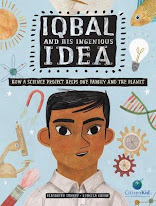
It's monsoon season in Bangladesh, which means Iqbal's mother must cook the family's meals indoors, over an open fire. The smoke from the fire makes breathing difficult for his mother and baby sister, and it's even making them sick. Hearing them coughing at night worries Iqbal. So when he learns that his school's upcoming science fair has the theme of sustainability, Iqbal comes up with the perfect idea for his entry: he'll design a stove that doesn't produce smoke! With help from his teacher, Iqbal learns all about solar energy cooking, which uses heat from the sun to cook --- ingenious! Has Iqbal found a way to win first prize in the science fair while providing cleaner air and better health for his family at the same time?


Here's the blurb:

When fourteen-year-old William Kamkwamba's Malawi village was hit by a drought, everyone's crops began to fail. Without enough money for food, let alone school, William spent his days in the library . . . and figured out how to bring electricity to his village. Persevering against the odds, William built a functioning windmill out of junkyard scraps, and thus became the local hero who harnessed the wind. 


If you do not have these and you have a book from Allan Drummond's series about places that have taken on a sustainable energy project read one of them.


And of course there is always Philip Bunting's Superpower which explains renewable energy"with a positive outlook and a generous dollop of humour. Superpower shows that using renewable energy and taking care of our environment can be both fun and rewarding". 


Provocation: 
If your house had no access to electricity, what would you not be able to do? 

We read:


This book makes me want to... 


Wednesday, January 5, 2022

SDG 6 Clean Water


Goal 6 - Ensure availability and sustainable water management of water and sanitation for all.

Water is essential for all life on Earth, and therefore key to sustainable development. A very large proportion of those living in poverty lack access to clean water and basic sanitation.


Select a picture book here.

My students know that everything needs water, but they do take water and tap-turning for granted. When we discuss the page about water in A Life Like Mine and look at how much water they use in a day compared to a child in Africa, they are amazed. Even more so when we show it as amounts in containers. This book, although old now and the statistics may be out of date, is an excellent way to show students how other children live. Alternatively use pages 44 and 45 in Water A Deep Dive of Discovery  for more up to date statistics.

So where to start a discussion about the importance of clean water? Gizo- Gizo!  by EmilyWilliams is the perfect place for very young students to experience what happens when water becomes unclean or scarce. My students love Chubbo's Pool  by Betsy Lewin and this book takes the idea to the next step where it is not just the sharing of water, but making sure the water is clean too.

Here's the blurb:

Gizo-Gizo the spider is a lazy, selfish fellow. So when he starts a gold mine that pollutes the Zongo Lagoon and makes other animals sick, naturally he ignores everyone else's concerns. ''Someday, when I am rich, I will buy this place,'' he tells them. ''I can do whatever I want!'' But when the fish groan with upset stomachs and the frogs wince from sore throats caused by the filthy water, Tortoise and Crab decide that things have gone too far. They come up with a clever plan to teach their friend Spider a lesson and make him clean up his mess. Originally written and drawn by students from Cape Coast, Ghana, this community-created, contemporary folktale examines environmental sustainability and personal responsibility.


For older students who can cope with a longer text, read We Are Water Protectors by Carole Lindstrom; The Water Princess  by  Susan Verde or Ryan and Jimmy and the Well in Africa that Brought Them Together by Herb Shoveller.


SDG Booklet tasks:

Before reading. Ask • Did you have a bath or shower yesterday? Did you have a drink at breakfast and lunch time? Where did the water come from? 


We read ....


This story made me wonder what ...


Tuesday, January 4, 2022

SDG 5 Gender Equality


Goal 5  Achieve gender equality and empower all women and girls 
While the emphasis with this goal is to ensure girls and women have as much opportunity to succeed as boys and men, at the age of the students I teach it is still important for boys to see and learn what is okay for them.


The boys I teach need to know that it is okay for them to play with dolls, that it is okay for the girls to play with trucks, that they can wear pink, go to ballet lessons and sing. The preschool teachers often come in search of read-alouds that address gender issues, so in the library we have made sure we have books that they can use. We sometimes also need to assure parents that there are not books for boys and books for girls!


So when choosing books from the list here, think about what it is you want to discuss. Many of the biographical books on the previous list (SDG 4) would be appropriate here as well. Perhaps read a book that promotes discussion of gender and stereotypes and then read a biography of a woman who was not confined by stereotypes, such as Margaret Knight, Madame Curie, Ada Lovelace, Katherine Johnson, Emmaline Pankhurst, Elizabeth Blackwell, Mary Fanning or Greta Thunberg and discuss what she needed to do to be successful at what she did.


I love I'm a Girl! by Yasmeen Ismail.

Here's the blurb:

The girl in this book likes to win, she likes to be spontaneous, fast and strong, and because she also likes to dress in t-shirt and shorts, she is forever getting mistaken for a boy. And when she meets a boy who likes wearing princess dresses and playing dolls, they both quickly discover that they share interests that are wide and varied.

I am a Girl! is a wonderful celebration of being who we are and not being pigeon-holed or restricted by gender stereotypes.


Every parent should read Want to Play Trucks?  by Ann Stott and Bob Graham because it is not the children who struggle with gender types but one of the mothers.


Here's the blurb:

Jack and Alex meet almost every morning in the sandbox at the playground. Jack likes trucks - big ones. Alex likes dolls - pink ones, with sparkles. And tutus. But Jack doesn't want to play dolls, and Alex doesn't want to play trucks. Luckily for Jack and Alex, the day is saved with a little bit of compromise and the easy acceptance that characterises true friendship... What about dolls who drive trucks? 


Then read about an exemplary female role model such as Greta or highlight a place where girls do not go to school such as is the case in Nasreen's Secret School by Jeanette Winter.  I have read this to Year 2 classes and stopped at the part where it says the girls were not allowed to go to school, and then separated the students into boys and girls. The boys were asked to discuss what they thought it would be like to have no girls in the class. The girls were asked to discuss what they thought it would be like to stay home from school every day. Very interesting discussion pursues. 

However if your school hasn't a large collection of picture book biographies, you have a K to 6 library or you are wondering which book to purchase, read Walking to Water by Susan Hughes and Nicole Miles because it covers gender and SDG 6 Clean Water.


Here is the blurb:
In this inspiring story of individual activism, a boy recognizes gender inequality when his sister must stop attending school --- and decides to do something about it. Victor is very close to his twin sister, Linesi. But now that they have turned eight years old, she no longer goes to school with him. Instead, Linesi, like the other older girls in their community, walks to the river to get water five times a day, to give their mother more time for farming. Victor knows this is the way it has always been. But he has begun learning about equality at school, and his teacher has asked the class to consider whether boys and girls are treated equally. Though he never thought about it before, Victor realizes they're not. And it's not fair to his sister. So Victor comes up with a plan to help. 


Don't forget it is International Women's Day on 8th March, and a  great time to put together a book display in your library that encourages students to think about female achievements.


There are three things to do in the booklet:

Before reading:
Ask: Can you think of a time when boys and girls are treated differently?

The book we read was...

I think boys and girls should ...