Showing posts with label Alain Serres. Show all posts

Sunday, January 16, 2022

SDG 17 Partnerships for the Goals


Goal 17 Strengthen the means of implementation and revitalise the global partnership for sustainable development.

The SDGs can only be realised with strong global partnerships and cooperation.

A successful development agenda requires inclusive partnerships — at the global, regional, national and local levels — built upon principles and values, and upon a shared vision and shared goals placing people and the planet at the centre.

This concept of a shared vision and placing people and the planet at the centre of decision making is the reason we need to start the thinking about, and concern for at a very young age. Children do have empathy, they are good problem solvers and are capable of critical thinking so we need to start reading picture books that encourage these. Don't alarm them but arm them.


Select books to read here.


Any book that encourages teamwork or working towards a common goal, while also allowing for informed dissent and questioning is a good place to start. I would probably also leave this goal to last so it can be examined in the light of the others and how all the goals need to be addressed in order to achieve the best results, especially when there is a 2030 timeframe.

If you follow up on children's rights then Alain Serres and Aurelia Fronty's I Have the Right to Save the Planet is a perfect place to start.

Here is the blurb:

All children have the right to learn about the world, to celebrate the water, air and sunshine, and to be curious about the animals and plants that live on our planet. All children also have the right to learn about endangered species, to be concerned about plastic in the ocean, and to understand what a changing climate means for our Earth.

Scientists tell us that every living thing is connected. When we cut down forests, we destroy animal habitats. When we throw plastic in the garbage, it never really goes away. When we spray pesticides on our fruit and vegetables, we poison the earth, animals and ourselves.

What can children do to help? All children can draw posters of endangered animals to raise awareness. All children can send a letter to the leader of their country, signed by every member of their family. All children can protest along with their parents. Children have the right to do all these things as proclaimed in the United Nations Convention on the Rights of the Child. All children have the right to try to help our Earth, in whatever ways they can.

This is an expensive book to buy, but it is read on epic! You could link it to David Attenborough's film clip How to Save Our Planet  if you haven't already shown it earlier in your Book Club sessions.

This book suggests things students can do -  children can draw posters of endangered animals to raise awareness. All children can send a letter to the leader of their country, signed by every member of their family. All children can protest along with their parents. Children have the right to do all these things as proclaimed in the United Nations Convention on the Rights of the Child.

So perhaps the next book to read should look at things children can do. Books such as these will give them ideas
• I Am One  by Peter H. Reynolds
• Dear Earth by Isabel Otter and Clara Anganuzzi
• The More We Get Together by Celeste Cortwright and Betania Zacarias
• Dear Earth...From Your Friends in Class 5 by Erin Dealey and Luisa Uribe
• Speak Up! by Miranda Paul and Ebony Green

Alternately, if your  students are older, this could be the place to use one of those books that reduces the numbers of people to a manageable number so that students get a better idea of the proportions involved. You could use 

If the World Were 100 People by Jackie McCann or It Takes a Village by David Smith


David Smith's book is online in several places and there are also many versions of teaching notes. This idea is also an animated filmclip.

And then follow these with Hillary Rodham Clinton's It Takes a Village  to bring the whole idea down to their own village.


From the booklet:

• We read...


Congratulations you have read 17 books and you now are very aware of the United Nations 17 Goals for Sustainable Development. You are well informed to think about the future of the world!


Before I read all of these books, I thought...


but now I think...


Saturday, January 15, 2022

SDG 16 Peace, Justice and Strong Institutions.


Goal 16 Promote peaceful and inclusive societies for sustainable development, provide access to justice for all and build effective, accountable and  inclusive institutions at all levels.

The number of people fleeing war, persecution and conflict exceeded 70 million in 2018, the highest level recorded by the UN refugee agency (UNHCR) in almost 70 years. 


Choose a book from here.


Where to start here? Peace, Justice or Institutions? Do students realise there is more to 'peace' than 'silence and no fighting'? Do they know what 'justice' is and when it is needed? Do they realise a school is an 'institution'? Do they understand what makes someone a refugee? All very big questions when you are under eight years old?

Maybe a good place to start with very young children is to look at the rights of a child and there are several picture books that you can use for this. In fact this could be a good place to start all the reading on the Sustainable Development Goals as there is no rule that says you have to start at Goal 1.

Our library has 

• I Have the Right to be a Child by Alain Serres and Aurelia Fronty
• We Are All Born Free by Amnesty International 
• For Every Child  by UNICEF


If you don't have these there is a short film clip that is good called 

I Have the Right to be a Child

https://www.youtube.com/watch?v=tOsq5MVXZzk

I would then read a book about a refugee child who is dealing with a situation which means that some of his/her rights have been denied. Fortunately, now there are so many really good picture books to choose from for this age group. You could use any of these to ask what right is the child being denied and /or how is this child being shown kindness or given hope?

• My Name is Not Refuge by Kate Milner

• Hello! a Counting Book of Kindnesses by Hollis Kurman and Stephane Barroux

• The Colour of Home by Mary Hoffman and Karin Littlewood

• A Child's Garden by Michael Foreman

And if you feel that your students are troubled by this, finish on a high note with 

Good People Everwhere by Lynea Gillen and Kristina Swarner.


Here's the blurb:

A colorful picture book that will warm the hearts of children and adults alike, each of its pages contain endearing examples and vibrant illustrations to inspire children to grow into grateful, caring, and giving people. It provides a wonderful way to calm children before sleep, ease their fears, and help them develop an appreciation for good work. Also included are activity pages to help children practice skills for creating gratitude, compassion, and beauty in daily life. 


From the booklet:

Ask • Do you think you are free? What makes you think that?


• We read...


• This story made me think that being free and safe means...


Saturday, October 23, 2010

25th October Pablo Picasso (1881 - 1973)


There seems too be so much written about the famous artist, Picasso and so much of it is in picture book format and accessible to young children. For this reason, I am always happy when a class in the Prep school choose to do an artist study on Picasso. The books start at the board book level with Painting With Picasso by Julie Merberg and Picasso For Kids by Margaret Hyde. Then there are picture story books such as Laurence Anholt's Picasso and the Girl With the Ponytail, P.I.Maltbie's Picasso and Minou, Nina Laden's When Pigasso Met Mootisse and Paris in the Spring With Picasso by Jean Yolleck.

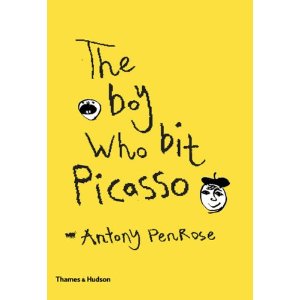
And amongst the many informative non-fiction titles these four stand out. There is the biographical The Boy Who Bit Picasso by Antony Penrose, My Little Picasso by Marie Sellier and the Adventures in Art title, A Day With Picasso by Susanne Pfleger, but the not-to-be-missed-by -anyone book is Alain Serres' And Picasso Painted Guernica. While the young children I teach see the absolute magnificence and horror of the painting, older children can follow the text and put the painting in a context and adults can revisit and learn more about the painting and the complex political events surrounding it. There is so much to contemplate here and French children's writer, Serres, whose birthday was on 21st October (1956) has produced a truly beautiful book, perfect for all audiences despite the context of the painting.