Showing posts with label Jerry Pinkney. Show all posts

Tuesday, June 5, 2012

4th June Aesop's Birthday

```````````````````````````````````````````````````````````````````````````````````````


Many websites say that today is Aesop's birthday. How they know given all the inconsistencies about everything else that is written about him I don't know. But it is a good excuse to tell you about favourite fable picture books.

Aesop was a fabulist or story teller credited with a number of fables now collectively known as Aesop's Fables. Although his existence remains uncertain and (if they ever existed) no writings by him survive, numerous tales credited to him were gathered across the centuries and in many languages in a storytelling tradition that continues to this day. In many of the tales, animals speak and have human characteristics.

Of all the fables The Hare and the Tortoise and The Lion and the Mouse are probably the two most well-known to children, probably because they are often used to produce beautiful picture books. There are a large number of beautiful anthologies of Aesop's fables, many with wonderful illustrations and just the right amount of text for each story, but here I want to share six picture books that I love sharing with children.

1. The Lion and the Mouse by Jerry Pinkney won the Caldecott Medal in 2010. The artwork is exquisite and it demands to be perused closely. In fact the story is textless and whether children know the story or not, they will still be able to 'read' the story here.

2. Mouse and Lion by Rand Burkert and Nancy Ekholm Burkert. This is the most recent version of this story and it too is made exquisite because of Nancy's illustrations. The fact that she collaborated with her son I think makes this a real work of love and commitment. The cover doesn't make it leap off the shelf but once you open it you will be enthralled.

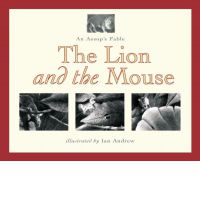
3. The Lion and the Mouse by A.J.Wood and Ian Andrew. This version too, is mainly illustrations. This time phenomenal lead pencil drawings with a lot of close-ups. You get to know the mouse in particular, intimately. My copy has a different cover from the one depicted here. It is old-fashioned red book material on the cover with just a tiny drawing of the mouse in the centre, so straight away you know that the book is 'old' and special.

4. The Hare and the Tortoise by Helen Ward. I like this version of the story because there are a lot of visual secrets for the reader in the illustrations and the children love discovering them. When the hippos make stepping stones to help the tortoise across a river the children love the fact that the hare has been tricked.

5. The Tortoise and the Hare by Angela McAllister and Jonathan Heale. This version has beautiful illustrations done with woodblocks which I can't resist. The children and I always have interesting discussions about why the tortoise comes first in the title of this book when it is usually the hare first.

6. The Fox and the Stork by Karl Ruhmann and Roberti Allesander. I have included this one not so much for its illustrations, but because it is a good retelling in picture book format of a fable that the children know less well, but enjoy. Also they easily ascertain the moral.

Friday, March 18, 2011

19th March National Quilting Day


National Quilting Day is celebrated on the th
ird Saturday in March in America. I'm not sure we have an equivalent here in Australia, but as there is a keen quilter working in the library with me, we have a wonderful collection of books that feature quilts and we often use her quilts as part of our displays. The stories that accompany the quilt books usually celebrate themes such as community, family, memories, sharing, kindness and giving so they make ideal discussion starters and often lead to a myriad of craft activities. Among the 'quilt' books in our library are the following picture books:
The Quiltmaker's Gift and The Quiltmaker's Journey by Jeff Brumbeau and Gail DeMarcken
The Patchwork Quilt by Valerie Flournoy and Jerry Pinkney
Granny's Quilt by Penny Ives
The Quilt Story by Tony Johnston and Tomie dePaola
The Quilt by Ann Jonas
The Keeping Quilt by Patricia Polacco
The Patchwork Path by Bettye Stroud and Erin Susanne Bennett
The Kindness Quilt by Nancy Elizabeth Wallace
And of course there are all those beautiful books of poems where the illustrations are quilts made by author/ illustrator Anna Grossnickle Hines. Her newest is poetry about peace called Peaceful Pieces.

Wednesday, January 26, 2011

27th January Lewis Carroll (1832 - 1898) Harry Allard (1928) Julius Lester (1939) Krista Bell (1950)


Reverend Charles Lutwidge Dodgson was better known by his pseudonym Lewis Carroll. He was an English mathematician, photographer and author, who was best known for the classic fantasy stories Alice's Adventures in Wonderland and its sequel Through the Looking Glass. In their day these books were considered children's literature, while today there are many who would debate this and say that they are novels in which children appear. Neither book is really accessible to my age group unless they read a very abridged version of the story or see it as a media text.

Harry Allard is the American author who together with the illustrator, James Marshall created the teacher Miss Nelson from the series that began with Miss Nelson is Missing.

Julius Lester is also an American author who worked closely with one particular illustrator, Jerry Pinkney to give American children books which showed Black American children living their lives and addressing the racial slurs of some children's books. Their book Sam and the Tigers is a retelling of Little Black Sambo and it is a means of addressing these issues. Another of his books Let's Talk About Race, is Lester's way of ensuring that children know that they are much more than their skin colour. Lester says, "I write because our lives are stories. If enough of these stories are told, then perhaps we will begin to see that our lives are the same story. The differences are merely in the details."

And Krista Bell is an Australian author who writes fiction and non-fiction, picture books, bridging novels and novels. Two of her newer books that are in my library are Peeking Ducks, a story set in China about three ducks and the importance of learning from parents. The other, Flying Feet, one of the Aussie Nibbles series is about Henry and tap dancing. A good book for convincing children that it is okay for boys to dance.


Monday, December 20, 2010

22nd December Jerry Pinkney (1939) Phil Cummings (1957) Jarrett J. Krosoczka (1977)


Jerry Pinkney is the American author illustrator who won the Caldecott Medal last year for his amazingly beautiful rendition of the fable The Lion and the Mouse. It is almost wordless and even if you didn't know the story the pictures are enough. He has won many awards and the opening words on his website tell you why. "I am a storyteller at heart. So each project begins with the question, 'Is this story worth telling? Is the manuscript an interesting read? Is it surprising and challenging? Will I, in the process of making pictures, learn something new?'" Looking at the detail in his illustrations and the amount of time spent even on the endpages (see Noah's Ark) you know that Jerry Pinkney loves his job and takes it very seriously.

Australian author, Phil Cummings on the other hand does not take his writing so seriously. Most of his books, especially his bridging novels are humorous and his picture book Boom Bah! with illustrations by Nina Rycroft is lots of fun (and noise) when shared with very young readers. I particularly like using his picture books Midge, Mum and the Neighbours and Marty and Mei-Ling (both out of print) with classes during units of work that require a community, school, families, multicultural-type focus or which deal with prejudice, identity or social interaction.

American author illustrator Jarrett J. Krosoczka is new to me, but I cannot wait to read Baghead with a class next year and make them! It may well be a one-hit wonder because books like this don't sustain many readings once you know the reason, but I can see librarians and teachers having fun with it.