Showing posts with label Ian Andrew. Show all posts

Wednesday, August 3, 2022

10th August World Lion Day


Lions – with the scientific name Panthera leo – are the second-largest cat in the world, just behind the Asian tiger.

Three million years ago, lions roamed all over Africa and the Eurasian supercontinent. But today, various ice ages and changes in the natural environment means that their range is reduced primarily to Africa and select parts of Asia. 

According to the International Union for the Conservation of Nature, lions are a “vulnerable” species, meaning that their numbers could and should be higher. Currently, researchers estimate that there are between 30,000 and 100,000 lions left on planet Earth. Without significant intervention, there is a chance that they could find themselves on the endangered list alongside other species most at risk of extinction.

World Lion Day,  has three objectives. The first is to raise awareness of the plight of the lion and the issues that the species face in the wild. The second is to find ways to protect the big cat’s natural environment, such as creating more national parks and reducing the areas in which people can settle. And the third is to educate people who live near wild cats on the dangers and how to protect themselves.

Lions are the only cats that regularly live in social groups and their groups are called prides. The size of a typical pride is usually between 10 to 15 animals but it can vary between 2 to 40 members. In a pride, females do most of the hunting and cub rearing and males defend the pride territory. While females live with the pride for life, males usually leave the pride when they are a few years old.

Lions are not as popular as tigers in the library or in picture books in general, but they do get borrowed and it is always worth doing a display. What the library has is here, but I do have some favourites, which are these:


Dumazi is a young savvy Zulu girl who encounters a yellow lion caught in a trap one day. Although compassionate, she instantly surmises the lion’s true nature and only after making a deal for her life, agrees to set him free. But can one really trust a hungry lion? And is Dumazi’s brazen bravery and quick thinking enough to save her life?


It tells the story of a lion who, bored by his rural life in the savannah, seeks excitement and opportunity in the city of light. On arrival in Paris the lion is disappointed to find that despite his size, people barely pay attention to him, not even when he lets out a ferocious roar on the busy Metro. Taking in the sights and sounds of Paris it successfully conveys the experience of being a stranger in a new city and the process of understanding our own identity. 


There are seven steps to becoming a proper lion, including Looking Fierce, Roaring, Prowling Around, and Pouncing. Our young hero, a rather meek and scrawny human boy, does his best to learn the necessary skills during his training with a master instructor (who just happens to be a real lion). After a grueling set of lessons, the boy discovers that that the final step--Looking Out for Your Friends--is the most important of all.


All the books in this series are good, but I really like this one about why lions don't have a home like most other animals.


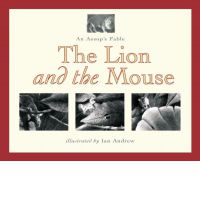
And I am especially fond of the fable The Lion and the Mouse and there are so many beautifully illustrated versions, but none are better than the pencil lion drawings in this one:


Tuesday, June 5, 2012

4th June Aesop's Birthday

```````````````````````````````````````````````````````````````````````````````````````


Many websites say that today is Aesop's birthday. How they know given all the inconsistencies about everything else that is written about him I don't know. But it is a good excuse to tell you about favourite fable picture books.

Aesop was a fabulist or story teller credited with a number of fables now collectively known as Aesop's Fables. Although his existence remains uncertain and (if they ever existed) no writings by him survive, numerous tales credited to him were gathered across the centuries and in many languages in a storytelling tradition that continues to this day. In many of the tales, animals speak and have human characteristics.

Of all the fables The Hare and the Tortoise and The Lion and the Mouse are probably the two most well-known to children, probably because they are often used to produce beautiful picture books. There are a large number of beautiful anthologies of Aesop's fables, many with wonderful illustrations and just the right amount of text for each story, but here I want to share six picture books that I love sharing with children.

1. The Lion and the Mouse by Jerry Pinkney won the Caldecott Medal in 2010. The artwork is exquisite and it demands to be perused closely. In fact the story is textless and whether children know the story or not, they will still be able to 'read' the story here.

2. Mouse and Lion by Rand Burkert and Nancy Ekholm Burkert. This is the most recent version of this story and it too is made exquisite because of Nancy's illustrations. The fact that she collaborated with her son I think makes this a real work of love and commitment. The cover doesn't make it leap off the shelf but once you open it you will be enthralled.

3. The Lion and the Mouse by A.J.Wood and Ian Andrew. This version too, is mainly illustrations. This time phenomenal lead pencil drawings with a lot of close-ups. You get to know the mouse in particular, intimately. My copy has a different cover from the one depicted here. It is old-fashioned red book material on the cover with just a tiny drawing of the mouse in the centre, so straight away you know that the book is 'old' and special.

4. The Hare and the Tortoise by Helen Ward. I like this version of the story because there are a lot of visual secrets for the reader in the illustrations and the children love discovering them. When the hippos make stepping stones to help the tortoise across a river the children love the fact that the hare has been tricked.

5. The Tortoise and the Hare by Angela McAllister and Jonathan Heale. This version has beautiful illustrations done with woodblocks which I can't resist. The children and I always have interesting discussions about why the tortoise comes first in the title of this book when it is usually the hare first.

6. The Fox and the Stork by Karl Ruhmann and Roberti Allesander. I have included this one not so much for its illustrations, but because it is a good retelling in picture book format of a fable that the children know less well, but enjoy. Also they easily ascertain the moral.