Showing posts with label Helen Ward. Show all posts

Tuesday, August 3, 2021

3rd August Beaks

My friend at Momotimetoread just wrote about Robin Page's new book The Beak Book and while she was doing this I was planning a lesson for Kindergarten on Busy Beaks, a book on the Early Childhood shortlist for Book of the Year. I  find it curious that one aspect of birds can provide so much interest from a reading and illustrating point of view. Two of my favourite picture books are The Best Beak of Boonaroo Bay by Narelle Oliver and King of the Birds by Helen Ward. In these two books the birds are having a competition and what they do with their beaks is considered.

Books about birds are abundant and it is often hard to know which ones to buy. In the library we also have these books with great illustrations

• Bring on the Birds and Bird Show by Susan Stockdale         

• Parrots Over Porto Rico by Susan L. Roth

• Birds of a Feather: Bowerbirds and Me  by Susan L. Roth

• Beaks! by Sneed B. Collard

• The Beaks of the Birds by Richard Konicek-Moran 

and then I have noticed two new ones are just about to come

• A Peek at Beaks by Sara Levine

• Beaks by Curt Hart


Saturday, March 13, 2021

14th March Folktales and Fables Week

The third week of March is always Folktales and Fables Week, a time to enjoy a new story or an old favourite from the folktale genre, stories which have universal appeal due to their simple storylines, talking animals and magical scenarios. The tales may differ from culture to culture but they have common characters, themes and morals. They are usually short, but do all the things that good stories do so they are ideal ways to teach story grammar, problem/solution, theme, conflict resolution, good versus evil, stereotype, tension and other literary devices such as symbolism, juxtaposition, satire and foreshadowing.

Of course, I have favourites among the plethora that are available. This week at school I have given each class a wrapped surprise parcel to read sometime during the week. I gave each class a fable, and yes they may know the story, but there are so many wonderful versions where the author or illustrator has added so much texture to the story and my aim first and foremost was to ensure that the message was 'reading is fun'. There are 13 classes to provide books for in the Prep School, but I had so many books to choose from that the difficult part was narrowing the books down to that number. I chose picture books which only had one story, no anthologies or themed collections.

Among them were these favourites:

• the three by Jerry Pinkney: The Lion and the Mouse; The Grasshopper and the Ants and The Tortoise and the Hare.  These for the superb illustrations that tell the story often without words.

• two by Brian Wildsmith: The Lion and the Rat and The Hare and the Tortoise. Who can resist Wildsmith art?

• two by Ed and Rebecca Emberley:  The Ant and the Grasshopper and The Crocodile and the Scorpion. As well as the quirky collaged illustrations these have vocabulary that heightens the experience for any reader.

•  Hare and the Tortoise  by Alison Murray. This takes this story to new heights. See the character's names, labelled illustration of each of the two competitors, the maps, instructions...

• The Hare and the Tortoise by Helen Ward. This is a long retelling of this story, but the additions mean there is even more to spot in the illustrations and talk about.

• The Tortoise and the Hare by Angela McAllister. The retelling is delightful but the woodcuts by Jonathan Heale are exquisite.

• Mouse and Lion  by Randy Burkert and Nancy Ekholm Burkert. This mother and son collaboration is outstanding.

• Lion and the Mouse by Jenny Broom. The paper engineering and die-cuts add a new dimension to this version.

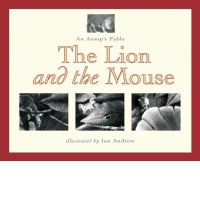
• The Lion and the Mouse  by A.J.Wood and Ian Andrew. This is my all time favourite and unfortunately out of print. The illustrations are rendered in lead pencil on white paper. The size of each frame differs depending upon the character's role in the story at that particular time and there is just so much here 'to soak up'.

• The Cardinal and the Crow by Michael Moniz. This thoughtful picture book, inspired by Aesop's fables, reminds us all that 'pride and foolishness often go hand in hand.' 

For a more comprehensive list of fables in the library see
here
.


Tuesday, April 23, 2019

4th May International Respect for Chickens Day

I read about this day online and thought how appropriate as it is a subject I have needed to source books on over the years. The preschoolers and Year 2 at school often have eggs in incubators as part of project based learning or a unit of inquiry that studies life cycles.  see my pinterest page for some of the myriad of books on this topic. Year 1 does a unit on fairy tales and to accompany this in the library we look at chicken and fox stereotypes in narratives.

Chickens are common characters in children's stories and they usually behave in common ways so they are easy to study and make generalisations about. The classic Rosie's Walk is well known to most children and because it is humorous they are very willing to come up with adjectives to describe the hen and the fox. It is the perfect book to start with. Then we look at the traditional story Chicken Licken, (also known as Henny Penny and Chicken Little). You must look at the Emberley's Chicken Little. The illustrations and language will make you smile all day. Which adjectives on our lists apply to the chicken and fox here? Then we compare this chicken with the chicken in The Cock the Mouse and the Little Red Hen. The illustrations and language in this story make the stereotypes very obvious and tap into how fairytales are about good versus evil. These stories also allow for discussion of why sometimes the hen dies and sometimes it doesn't and the same with the fox in the second story. The rich vocabulary allows for discussion of why sometimes the fox lives in a den, sometimes a lair or even a cave. Next I look at the story of Chaunticleer from Chaucer's Canterbury Tales by using Helen Ward's beautiful The Cockerel and the Fox. From here there are so many other stories where a gullible or enterprising chicken takes on a cunning fox.
See:


• Henry and the Fox by Chris Wormell
• Hattie and the Fox by Mem Fox
• Albert and Lila  by Rafik Schami
• A Very Proper Fox by Jan Fearnley
• The Chicken Thief by Beatrice Rodriguez

Friday, January 13, 2017

13th January Preparing for Chinese New Year

The movable celebration of Chinese New Year this year starts on  28th January and it is the Year of the Rooster. I began thinking about 'rooster' picture books. There's not a huge number, but what there is, have some very interesting roosters as characters. They don't all fit the Chinese rooster who is   "...very observant, hardworking, resourceful, courageous, and talented. Roosters are very confident in themselves", but they make interesting reading and should create lively discussions. There are books about the Chinese Zodiac which will include information about the rooster, but the best book is probably The Magical Rooster. This book is part of the series on the Chinese Zodiac animals by Li Jian. His books are beautiful, informative, bilingual and a big hit in my library with native Chinese speakers and Anglo children alike.

Then take a tangent and look at how roosters are portrayed in picture books. Could we use the same adjectives for these book characters? Start with the rooster in The Bremen Town Musicians who started off as a reject but ends up triumphant. The rooster and his friends were certainly resourceful and courageous.

The cockerel or rooster in Helen Ward's book The Rooster and the Fox (the book exists with two titles depending upon where it was published) is vain and self centred, but also triumphs by being courageous and resourceful. This is a beautiful book based on Chaucer's Chanticleer story.

Henry, the rooster in Chris Wormell's story, Henry and the Fox  cannot crow, is a squib and not at all confident, but with help manages to appear heroic. 

Eric Carle's rooster in Rooster's Off to See the World is adventurous and confident and keen to travel. He heads up an expedition with friends but makes no provisions for food or shelter so his friends leave him. What does he do then?

Rooster's Revenge  is part 3 of a series of wordless books by Beatrice Rodriguez which started with The Chicken Thief. Rooster and his friends leave the chicken to go home but get caught in a storm at sea. Which adjectives would you use to describe him?

The other titles below, Kip, Bob and  The Rooster Who Would Not Be Quiet all explore the noise that roosters make and whether it is appropriate for where they live. If you can find them in your library they are fun to read and make good readalouds with young children. Last year when Year 1 and I were looking at stereotypes in traditional stories with chickens and foxes we made lists of adjectives for characters and had a substantial list for roosters. Because in many traditional tales a rooster is referred to as a 'cock', one boy suddenly said "now I know where the word 'cocky' comes from". Most children had never heard the word so this comment started a whole new vocabulary discussion. It was impromptu, but fantastic and the students will remember the word 'cocky'.

Happy New Year. One more week and I'll be back at school... thinking about getting as many books off those shelves and into readers' hands as possible.


Wednesday, June 24, 2015

25th June Books Light Up Our World

The school holidays have begun, but my planning for next term has begun too. Next term we will celebrate Book Week in Australia and I am programming for lessons and planning the library displays. The theme is Books Light Up Our World. Initially I thought this was a hard theme to get across to under 8s, but the more I mind mapped and explored 'light' the more tangents I went off on. There were all the picture books that featured moonlight and the sun. There were folktales that featured the sun. There were fairytales such as Aladdin that had lamps. There were all the stories associated with festivals such as Divali, New Year, Hannukah, Easter and the Pascal candle. There were wonderful biographies about people such as Florence Nightingale and her lamp, Farnsworth and the invention of television, Edison and Franklin. There are hundreds of nonfiction possibilities to do with sources of light -  'light', 'fire', 'sun', 'stars' etc.

Our school's motto is 'Let Your Light Shine', so then I went off on all the possibilities to do with this and how students could read books that allowed them to follow up with actual practical acts of kindness, helpfulness or a display of their own talents.


Just where to go and how to keep it contained? While doing the bulk loans for classrooms I removed anything that remotely fitted the theme and ended up with piles and piles of books, some of which hadn't left the library for quite a while. I couldn't believe how many picture books had a 'torch' on the cover and even more with one inside!  (see my Pinterest page) Add to that all the First Discoveries Torchlight books and the new series of Shine-a-Light books by Carron Brown and I was really excited about the possibilities.

One of the picture books that I found was  Wonderful Life by Helen Ward. It had been borrowed only once so I sat and read it to find out why it hadn't been more popular. After all, the illustrations were glorious. This is the story of Snutt, a creature who is desperate to explore all worlds, see new things and travel more than any of his kind. It really is  a story that epitomises the theme! It is about creativity, friendship, the environment and following your dreams. I will certainly be promoting it. The vocabulary is worth discussing. What are 'euphoric florifors', tufters' and 'flewimols'? Illustrations such as this one would make a fantastic See Think Wonder discussion. 

Thursday, February 26, 2015

27th February Birds

Hard to believe we've been back at school already for over a month. The time has flown. There seems to be so much to do at the beginning of a school year. Over the last six months or so I seem to have bought so many picture books that feature birds and so many of them have simply outstanding illustrations. It got me thinking about how many books we already had in the library about birds so we decided to turn the library into an aviary to start the year's displays. It has been amazing. The teachers at school think it odd because they know I don't like birds, that is real birds. I'm quite scared of them since I had a magpie in the library and he couldn't get out. However I really like pictures of birds. They make for great illustrations, greeting cards, posters, sculptures etc so it was easy to decorate the library. I used some old books as my initial focus to sort out the wording to accompany the display -

• Have You Seen Birds?  by Joanne Oppenheim and Barbara Reid. Like all of Reid's books this uses wonderful plasticine collage for the illustrations but my children do not engage with the text.
• Birds, Birds and More Birds by Matt Cosgrove
• Birds  by Kevin Henkes and Laura Dronzek. My preschool teachers love this book.
• Birdsongs by Betsy Franco and Steve Jenkins. Perfect for having fun with the noises birds make.

I put out all the old favourites such as Edward the Emu; Edwina the Emu; Olga the Brolga; Enoch the Emu; Samantha Seagull's Sandal; Don't Let Pigeon Drive the Bus; Leonardo Pigeon of Siena; Pidge; Jeremy; Waddle Giggle Gargle; How the Birds Got their Colours; The Birdwatchers; Vuture's View; Condor's Egg; Owl Moon; Owl Babies; The Owl Who was afraid of the dark; Feathers for Phoebe; The Best Beak in Boonaroo Bay; Puffling; Little Owl Lost; Mozzie and Midgie and King of the Birds.

The library also has two beautiful biographies about two prominent bird lovers which we featured:
• The Boy Who Drew Birds  by Jacqueline Davies and Melissa Sweet. This is the story of John James Audubon
• For the Birds by Peggy Thomas and Laura Jacques. This is the the story of Roger Tory Peterson

And then all the new ones. I have put All I Said Was by Michael Morpurgo first because it is a great book to start a discussion about birds and their characteristics because in this story a boy wishes he was a bird, becomes a pigeon and then experiences the consequences of the change.

Tuesday, June 5, 2012

4th June Aesop's Birthday

```````````````````````````````````````````````````````````````````````````````````````


Many websites say that today is Aesop's birthday. How they know given all the inconsistencies about everything else that is written about him I don't know. But it is a good excuse to tell you about favourite fable picture books.

Aesop was a fabulist or story teller credited with a number of fables now collectively known as Aesop's Fables. Although his existence remains uncertain and (if they ever existed) no writings by him survive, numerous tales credited to him were gathered across the centuries and in many languages in a storytelling tradition that continues to this day. In many of the tales, animals speak and have human characteristics.

Of all the fables The Hare and the Tortoise and The Lion and the Mouse are probably the two most well-known to children, probably because they are often used to produce beautiful picture books. There are a large number of beautiful anthologies of Aesop's fables, many with wonderful illustrations and just the right amount of text for each story, but here I want to share six picture books that I love sharing with children.

1. The Lion and the Mouse by Jerry Pinkney won the Caldecott Medal in 2010. The artwork is exquisite and it demands to be perused closely. In fact the story is textless and whether children know the story or not, they will still be able to 'read' the story here.

2. Mouse and Lion by Rand Burkert and Nancy Ekholm Burkert. This is the most recent version of this story and it too is made exquisite because of Nancy's illustrations. The fact that she collaborated with her son I think makes this a real work of love and commitment. The cover doesn't make it leap off the shelf but once you open it you will be enthralled.

3. The Lion and the Mouse by A.J.Wood and Ian Andrew. This version too, is mainly illustrations. This time phenomenal lead pencil drawings with a lot of close-ups. You get to know the mouse in particular, intimately. My copy has a different cover from the one depicted here. It is old-fashioned red book material on the cover with just a tiny drawing of the mouse in the centre, so straight away you know that the book is 'old' and special.

4. The Hare and the Tortoise by Helen Ward. I like this version of the story because there are a lot of visual secrets for the reader in the illustrations and the children love discovering them. When the hippos make stepping stones to help the tortoise across a river the children love the fact that the hare has been tricked.

5. The Tortoise and the Hare by Angela McAllister and Jonathan Heale. This version has beautiful illustrations done with woodblocks which I can't resist. The children and I always have interesting discussions about why the tortoise comes first in the title of this book when it is usually the hare first.

6. The Fox and the Stork by Karl Ruhmann and Roberti Allesander. I have included this one not so much for its illustrations, but because it is a good retelling in picture book format of a fable that the children know less well, but enjoy. Also they easily ascertain the moral.

Tuesday, June 15, 2010

15th June


No birthdays today that I know about so instead I want to write about two very special books by illustrators that I don't know the birthdays of. With Year 1 students this term we have been looking at stereotypes and in particular have looked at how foxes and chickens behave as characters in stories. We started by looking at traditional literature, such as Henny Penny or Chicken Licken and The Cock, The Mouse and the Little Red Hen, compared the foxes' behaviour here with contemporary stories such as Hattie and the Fox, Rosie's Walk and Albert and Lila. Towards the end of the unit, after having recorded their behaviours, listed describing words for each and made generalisations we read Helen Ward's The Rooster and the Fox and Beatrice Rodriguez's The Chicken Thief.

Helen Ward is an English author illustrator whose books are masterpieces of artwork. This story is a retelling of the French tale of Chanticleer and Pertelote which Chaucer includes in his Nun's Priest's Tale. We made predictions about the story from what was observed about the rooster and the fox on the cover of the book. I read stopping to closely examine and talk about the illustration on the page where Chanticleer dreams of a thing with "ears and nose and teeth...all sharply pointed." This illustration scared some of the children but they wanted to go on. In this story the fox flatters vain Chanticleer into crowing so that he is distracted enough for the fox to grab him. Later Chanticleer does the same to the fox, tricking him into letting go of his hold on his neck. The text is longer, the language more-demanding than many of the earlier books we read, but the children loved this story. You could hear a pin drop while I was reading, they were so engrossed. Helen's illustrations are meticulous and detailed and there is an appendix at the end of the story outlining the origins of the tale and giving details of the farmyard animals in the illustrations.

In contrast French illustratorBeatrice Rodriguez's The Chicken Thief is a wordless book, relying solely on evocative illustrations to convey the emotions and actions of the animals involved. Here too, we made predictions from the cover, firstly the front cover and then the whole cover, using observations and past knowledge from other stories, but the theme of this story is about how wrong our assumptions can be and it is in fact a love story, where the fox and chicken are in effect eloping. The children loved that they were wrong in their predictions and spent time looking back through the pictures for clues that they missed now that they had hindsight.

Both of these books proved to be great stimulus for very rewarding class lessons in the library.