Showing posts with label Rosemary Wells. Show all posts

Friday, January 15, 2021

16th January New School Year List 2: Separation Anxiety

As the school I work at has seven preschool classes as well as four classes of each of Kindergarten to Year 2, there is always a need at some time for books that address the worries that go with being separated from a parent while at school. Most teachers have their favourite 'go to' book for this purpose, but it is always good to have a few more at hand in case the specific one they want is on loan at the time. If you're a parent you might like to adopt the Willa Perlman idea of kisses in your pocket from the book Pocket Kisses.  


At one stage this was very popular in our preschool, but the library copy of the book fell apart and hasn't been replaced. Just looking though, I see that it is still available. 

Separation anxiety is a normal rite of passage for young children. It is common at drop-off time, but can occur anytime and with even the sturdiest of children on a 'bad' day. Picture books enable adults to address the angst of separation with humour and warmth and as many of them feature animals, there is a distance from the child which means they can smile at the animal's quandary. Most children just need reassurance that their parent will return to pick them up.


Below are some books from our library that I have recommended over the years. The beginning titles are usually all that is needed to reassure students that their parent will return. Often I send the book accompanied by a plush toy that accompanies the book so that the child has something to hold while the story is read and discussed. Chester  and Llama Llama Red Pajama,  but we have an owl baby and a duck which stands in for Puddle.

Most teachers know and use The Kissing Hand by Audrey Penn, but there are many others:


1. Oh My Baby, Little One by Kathi Appelt and Jane Dyer


2. Puddle's Big Step  by Amber Stewart and Layn Marlow


3. The Kiss Box  by Bonnie Verburg and Henry Cole


4. Llama Llama Misses Mama  by Anna Dewdney


5. Owl Babies by Martin Waddell and Patrick Benson


6. Wemberly Worried by Kevin Henkes


7. Will I Have a Friend?  by Mirriam Cohen and Lillian Hoban


8. First Day Jitters by Julie Danneberg and Judy Love


9. Love Waves  by Rosemary Wells


10. Mama Don't Go by Rosemary Wells


11. The Invisible String and The Invisible Web  by Patrice Karst and Joanne Lew-Vriethoff  (an earlier version of The Invisible String was illustrated by Geoff Stevenson)


12. Mum Goes to Work  by Libby Gleeson and Leila Rudge (earlier edition illustrated by Penny Azar)


If you do not have these or the child is older look for these:

Tomorrow I'll Be Brave  by Jessica Hische

My Strong Mind  by  Niels Van Hove

Parachute  by Danny Parker and Matt Ottley

That's Me Loving You by Amy Krouse Rosenthal


Tuesday, May 7, 2019

18th May International Learn to Swim Day

International Learn to Swim Day is the perfect opportunity to raise awareness about the importance of teaching children to 

International Learn to Swim Day in May is designed to draw attention to the fact that every child needs to know how to swim and it aims to  heighten awareness of the importance of learning to swim and be water-safe.

In Australia we are heading into Winter not Summer.  Though to be fair, many Australian children swim all year round as swimming squads do run through Winter and often occur in indoor pools. Drowning is the second leading cause of unintentional injury-related death for children.

Teaching children to swim is high on the list of things my parents ask for books on, especially the ones with preschoolers who don't like the water or those of children who are not careful around water. 

Lottie and Walter by Anna Walker  is a new book, but perfect for reading with a child who is reticent about swimming and or giving it a go.  Heather Fell in the Water by Doug MacLeod is perfect for the other extreme. Heather is continually falling in water and her parents decide she will need to wear waterings (floaties) all the time.

Below is a list of books  in the library which will help encourage learning to swim.
Two factual books
* Learning Swimming by Katrin Barth
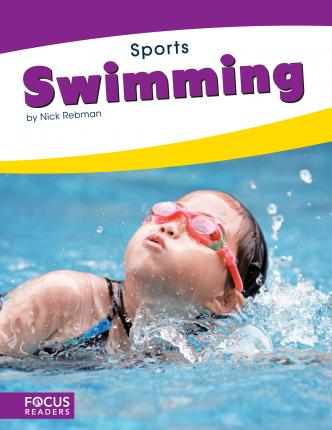
* Swimming  by Nick Rebman, and then lots of stories where children can see themselves, laugh at others and explore what to do next.

The Magic Moment  by Niall Breslin
* George Goes Swimming by Nicola Smee
* Peppa Goes Swimming
* Topsy and Tim Learn to Swim by Jean Adamson
* Maisie Learns to Swim by Lucy Cousins
Edward's First Swimming Party by Rosemary Wells
* Froggy Learns to Swim by Jonathan London
* Grug Learns to Swim  by Ted Prior
* Ruby Learns to Swim by Phillip Gwynne


* A Swim in the Sea by Sue Whiting
* Echidna Jim Went for a Swim by Phil Cummings
* Saturday is Swimming Day by Hyewon Yum
* Little by Little by Amber Stewart
* The Deep End  by Rebecca Patterson
* Clem Always Could by Sarah Watt
* Lollipop and Grandpa Go Swimming by Penelope Harper
* Grandpa's Big Adventure by Paul Newman
* The Deep by Tim Winton
* Mona the Champion by Sonia Holleyman


And some short chapter books to keep the swimmers interested
Horrid Henry's Swimming Lesson  by Francesca Simon
* The Deep End by Ursula Dubosarsky
* Ella and Olivia Little Lifesavers by Yvette Poshoglian
* Diary of a Super Swimmer by Shamini Flint
* Sporty Kids: Swimming by Felice Arena

Friday, December 21, 2018

Christmas Books for Under 6s


I have been really enjoying following quite a few bloggers who have been highlighting an advent book each day in the lead up to Christmas. Some have done one a day since the beginning of December. Others such as my friend at Momo Celebrating Time to Read have chosen twelve books. Two teacher friends with young children and another with grandchildren have been enjoying opening a book parcel each day during advent for a shared reading experience. This got me thinking about which books I would put on an advent list or wrap for my advent reading. As the teacher librarian in a school I find myself constantly thinking about what to read to whom. When I read to my preschool and Kindergarten classes in Term 4 as a lead up to Christmas, I read from these books. All have been very successful. You will notice how many of them are either very well known or are by authors who write prolifically for this age group.


1. The Christmas Book by Dick Bruna. I chose this one because it tells the Nativity story chronologically and simply but uses lovely language and is illustrated in the typical Bruna manner, that the children recognise from the Miffy books.

2. How Many Sleeps Till Christmas? by Mark Sperring and Sebastien Braun. This is about waiting patiently, not something children find easy to do at this time of the year. The title question is one that children ask every day as they are counting down.

3. What Do You Wish For? by Jane Godwin and Anna Walker. This book is especially pertinent to Australian children as it depicts a summer Christmas and a typical Australian child's street. Ruby needs to write a wish, but she struggles to decide upon one. Such a good thing to be talking to children about at this time of giving as well as receiving.

4. Max's Christmas by Rosemary Wells. I chose this one because I am the mother of a Max and a Ruby. My children loved this and all the Max and Ruby stories. Max's droll questions make everyone laugh. I also like this story because Santa appears in it, but without a huge emphasis on presents.

5. Angel Mae and the Christmas Baby by Shirley Hughes. This is the story of many children under six. Mae's mother is pregnant and tired. Her brother wants the baby to be a boy and Mae wants a girl, so squabbles ensue. It also features the school nativity play which is something most children will experience at some point in their schooling.

6. The Gift of Christmas  by Christine Leeson and Gaby Hansen. I have two copies of this story in the library. They have different titles, but are the same text and illustrations. The Very Special Christmas came with flashing fairy lights on the tree in the book, so you can imagine how much the children like it when we get to the decorated tree at the end. Molly Mouse collects a variety of decorations for the tree and the lights finish it beautifully.

7. Jingle Bells by Nick Butterworth. This is not the Christmas carol. Lottie and Jack are mice and they are having problems with the cat. The bell is part of the solution. When I bought this book for the library it was tied closed by beautiful red satin ribbon which had two bells on the ends, which is extremely fitting when you know what Mrs Mackie finds addressed to the cat.

8. Threadbear by Mick Inkpen. A story about a well-loved toy bear whose squeaker does not work. The bear thinks Santa will be able to help him. It has large fold out pages that the children love, even if they don't wear well.

9. Baboushka (various available) or The Legend of Old Befana by Tomie DePaola. I would choose one of these because they are folktales specific to either the Russian or Italian Christmas tradition that relate the story of the Three Kings going to Bethlehem.

10. Dream Snow by Eric Carle. This one because none of the other stories have snow and as with many of Carle's books it has paper engineering and music, a novelty which will keep everyone interested.


Then 11. and 12. would come from:
Wombat Divine by Mem Fox and Kerry Argent; Doing Christmas by Sarah Garland; The Snowman (show the filmclip) by Raymond Briggs; The Silver Christmas Tree by Pat Hutchins and Summer by June Factor and Alison Lester.


Thursday, April 2, 2015

3rd April Happy Easter

It's finally school holidays and I can fall in a heap. The family is all at home so the house is full. It's raining like it often is at Easter. We've eaten copious amounts of hot cross buns which I love and we are planning to cook kedgeree which is a family tradition for Good Friday.


The last week of school was very busy with Easter services and hat parades and an International Day, but in amongst all this in the last couple of weeks, I did have time to read some of my favourite Easter books, Muddy Footprints by Mary Small; Rechenka's Eggs by Patricia Polacco; Max's Chocolate Chicken by Rosemary Wells and The Smallest Bilby and the Easter Tale by Nette Hilton. But I have a new favourite, The Easter Bunny's Assistant  by Jan Thomas. This book is a real hoot. I read it to preschool classes with the assistance of their teacher. Like Mark Sommerset's Baa Baa Smart Sheep and Mo Willem's Elephant and Piggie  books this book is written for two speakers, the Easter bunny and his assistant, Skunk. Each class teacher and I hammed up the respective parts to make a wonderful reader's theatre rendition of the book. The students loved the fact that skunk smelled and joined in with the humour, holding their noses and warning the Easter bunny about what was going to happen. They even predicted the peg ending. An added bonus of the book is a well set out procedure for decorating and dying hard boiled eggs. This book is such good value all round!

Sunday, April 21, 2013

21st April Kindergarten Day Friedrich Froebel (1782 -1852)

Kindergarten Day is celebrated on the 21st April because this is the anniversary of the date when the founder of kindergartens, Friedrich Froebel was born in 1782. The first Kindergarten started in Germany in 1837. According to John Cech
"The school was built upon a series of innovative principles that used the innate curiosity and interests of children to guide them to see what Froebel believed to be the harmonious, interconnectedness of all things -- through song and play (which was unheard of in earlier schools); daily lessons in drawing, design, and other artistic activities; and learning through active doing and close contacts with the natural world -- many of the kindergartens actually had real gardens attached to them that the children tended and in doing so, Froebel believed, cultivated their own inner lives."

Many of the best kindergartens still do this and there has been a move more recently to reconnect children again with their natural worlds using gardens, visits to the bush and taking part in activities that use natural or found objects, such as sticks, stones and leaves. This move is because many kindergartens have "become simply smaller first grades, teaching numbers and letters and giving tests and homework." Children of this technological age do need to be reconnected to play, activity and creativity.


What better way to explore 'kindergarten' than through books and play. When I think of kindergarten I often think of Rosemary Wells and her stories about Timothy and Yoko starting school. Kindergarten is such a momentous occasion in a parent's life. Now that my children are adults I still remember vividly their Kindergarten classes and teachers. Hoewever, their schooling after that is becoming a bit blurred and it seemed to have gone very quickly.

For a comprehensive list of picture books about starting school look here.


Thursday, January 10, 2013

What's with the mice?

What is with the mice? So many children's novels for six to ten year olds have mice as characters. I have students who are addicted to Geronimo Stilton and will read any of the series of books that started with him. I have Year 2 students who 'just love' Emily Bearn's Tumtum and Nutmeg series, even boys. In a quest to stretch these good readers I bought some other titles with mice as main characters. Four that I bought were beautiful hardback books, 'ooh just like Despereaux' said one of my girls and readily embarked on Cynthia Voigt's Young Fredle. Back she came saying, 'this was good, what next?', so then she read Bless This Mouse  by Lois Lowry. Such good authors writing for younger children, what a joy! The other two were Secrets at Sea by Richard Peck and  A Nest For Celeste by Henry Cole, also good reads with quality black and white illustrations.


So you can imagine my joy recently when I saw a small hardback novel about a mouse written by Rosemary Wells and illustrated by the Redwall illustrator, Christopher Denise called Following Grandfather. I bought it and went home to read. It is not in the same category as the books above. In fact I am not sure who it is for.  What audience did Rosemary Wells have in mind? It is about a very close, warm relationship between Jenny and her grandfather. He seems to have raised Jenny because her parents are busy running a restaurant, but then he dies and Jenny is left 'searching' for him. So yes, it is a book about death and the severing of strong ties. Is this for all eight year olds or specifically for a child in need of reassurance after the death of a grandparent? It is set in Boston and draws on the history of Italian immigration to that area and this context, I think will be difficult for young Australian readers. Jenny is named for her grandmother, Jennie, so why change the spelling of the name?  It is a warm, well-written story and the opening paragraph kept me reading. It is also a lovely looking book with crisp white paper and appears to be the perfect size, but for me, it just falls short of hitting a target.

Sunday, April 10, 2011

10th April Eric Knight (1897 - 1943)


Author Eric Knight was born in Yorkshire, England but moved to the United States when he was fifteen as his mother had married an American. Although he wrote many novels in his short life, he is probably best remembered for Lassie Come Home, a story that made Lassie and collies famous and movie stars. He raised collies and other dogs with his wife on a property in Pennsylvania and wrote his Lassie story here in 1938. Unfortunately he was killed in an aircrash while working as a major in the U S Army.

Two stalwarts of children's literature, Rosemary Wells and Susan Jeffers have taken the original story of a Yorkshire boy and his collie, Lassie who is taken away but manages to find his way back to the boy hundreds of miles away, and turned it into a magnificent picture book. Noone my age can read it without a tear or fond memories of rerun after rerun of the movies on television, but for children who like adventure stories or dog stories it is still worth a read.

Friday, January 28, 2011

29th January Bill Peet (1915 - 2002) Rosemary Wells (1943) Allan Baillie (1943)


Bill Peet was a remarkable American illustrator who started drawing for Walt Disney and therefore was involved in many of their animated movies, but as well as this, he was the author illustrator of a large number of picture books for children. Most had animals as their characters and they behaved at various times like the animal they are drawn as, but often they are personified as well. Many of these titles are hard to find now, but those you can locate still have a lot to offer readers. My school library has Zella, Zack and Zodiac; Encore for Eleanor; Pamela Camel and Cyrus the Unsinkable Sea Serpent. Bill's books combine humour, good vocabulary and subtle lessons with comic drawings.

I know a person cannot be an icon, but for me American author illustrator Rosemary Wells is almost an icon. Children recognise her illustrations immediately. Rosemary has so much to offer children, parents and teachers through her work in the world of children's literature. Her website offers teachers and parents so much information about reading, how children learn to read and how best to share literature with children. And then on top of that she has a multitude of beautiful picture books to choose from. There is her series about Max and Ruby where sibling rabbits behave exactly as children do. Max and Ruby became so much part of our family life that my son used to come and say to me that his older sister was 'doing a Ruby' which meant she was telling him what to do. Last year one Year 2 at school got so involved in the McDuff series, which are illustrated by Susan Jeffers, that they wanted to write to Rosemary and tell her that they needed her to do more titles. The preschoolers like her Edward books because he is always doing something for the first time. And, we shouldn't forget all the Mother Goose books and the classics Noisy Nora, Timothy Goes to School and Morris's Disappearing Bag.

I am going to write about Australian author Allan Baillie tomorrow.

Saturday, April 3, 2010

5th April


The Easter break is just about over, but as there are no birthdays today, I thought I would write about picture books for Easter. My favourite Easter picture book is Muddy Footprints by Mary Small and Pat Reynolds. It is old and out of print, but I share it with Kindergarten every year in the week before Easter. It is ideal because being Australian, it depicts an Easter where
it is raining, it is Autumn and the outdoor egghunt is thwarted. The children relate instantly to Sam and Lucy because they have lived this experience!

Egghunts are the focus of two other picture books suitable for sharing with Kindergarten or preschool children. Firstly, Max's Chocolate Chicken by Rosemary Wells. Here Max sabotages bossy Ruby's carefully planned egghunt in his usual mischievous way. Children love watching the pictures tell another story from the one that Ruby and the text are telling. A similar idea is used in Olivier Dunrea's newest Gossie and Friends book, Ollie's Easter Eggs. Gossie, Gertie, BooBoo and Peedie are working hard while Ollie plays. Each of them collects, dyes and hides an egg, but Ollie moves them to other hiding places. As usual the crisp white pages have perfect ink and watercolour illustrations.