Showing posts with label Eric Carle. Show all posts

Saturday, July 15, 2023

20th July International Moon Day

International Moon Day marks the anniversary of the first landing by humans on the Moon as part of the Apollo 11 lunar mission. This is an important event to commemorate, but I have done a blog entry on it before. I want to look at how else the moon appears in children's picture books. It is often personified and the reader gets to hear how it feels. It is also often associated with magic and night mischief.

Today I want to look at three moon stories that I love sharing with students where the moon has a very different role from being a place that astronauts visit. Rather it is something awe-inspiring, magical and even endearing.

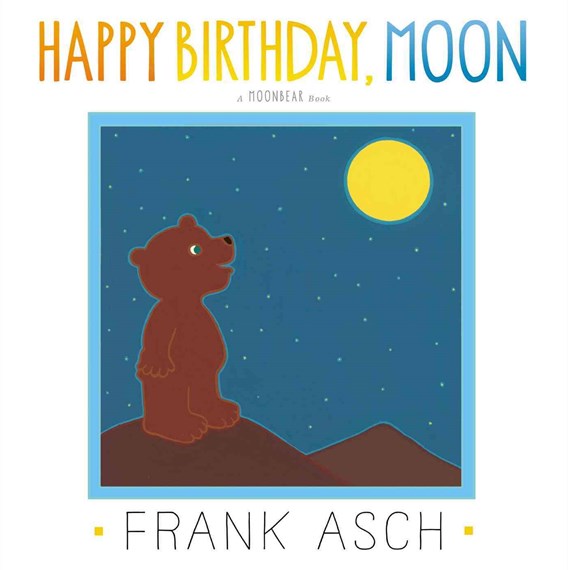
1. Happy Birthday, Moon  by Frank Asch. Students love the fact that they have knowledge that the main character, Moonbear does not have. Some even shout out while I am reading to tell you that Moonbear doesn't understand how the moon works. Then when it comes to the echoing parts they have even more to say. It is a good example of the reader having the power, not the author or the main character.


2. Papa, Please Get the Moon for Me by Eric Carle. It is Monica's wish to have the moon play with her and her papa tries to get it for her, not an easy task, but one a father tries in order to please his daughter. The paper engineering works with the suspense of the story and keeps the reader invested in the outcome. This book gets tatty in a library very quickly because of the pages that open outward and upward, but we replace it regularly so it can be loved all over again.


3. Ace Dragon Ltd by Russell Hoban and Quentin Blake. When I first read this book to a class, I had a small reader-size book which was mainly black and white, but nevertheless the story worked a treat. Years later  it was republished in a bigger format and with more colour. This made it even easier to maintain the students interest in the sword-wielding John and a dragon named Ace when they venture off into space. They land on the moon and have quite a quandary to solve.


Four well loved author illustrators, Frank Asch, Eric Carle, Russell Hoban and Quentin Blake, all with classic stories that have really gone the distance with young children!

Some other picture books where the moon holds magic for a young protagonist:

• Imani's Moon  by JaNay Brown-Wood and Hazel Mitchell

• Kiwi Moon  by Gavin Bishop

• The Moonkeeper  by Zosienka   (Zofia "Zosienka" Gibbs)

• Do You Speak English Moon?  by Francesca Simon and Ben Court


And if you do want to commemorate the moon landing, but from a slightly different viewpoint look for:

• A Kite for Moon by Jane Yolen, Heidi E. Y. Stemple and Matt Phelan

A young boy, seeing that Moon is lonely, sends up a kite to cheer her up, then after growing up and learning many things, he becomes the first human to visit her. Dedicated to Neil Armstrong and written in recognition of the fiftieth anniversary of the first U.S. moon landing.

• I Am the Moon by Nanae Aoyama and Satoe Tone 

The Moon finds that she is lonely and in need of a friend. She leaves her place in space and travels to Earth, in search of an astronaut who visited her many years ago.


Friday, June 30, 2023

Read Grow Inspire Book Week Slogan 2023 (Part 6) IMAGERY and SYMBOLISM

“You cannot transmit wisdom and insight to another person. The seed is already there. A good teacher touches the seed, allowing it to wake up, to sprout, and to grow.” ~
Nhat Hanh

Connotation, imagery and symbol enrich a text by making words and images mean more than one thing. They invite students to consider the habitual in terms of the new and so are important to creative and critical thought. Figurative language has social consequences as it influences the ways we conceptualise people, information and ideas. Critical analysis brings to light these associations and strands of meaning. (K -12 English)

READ GROW INSPIRE allows for figurative language and the exploration of connotation, imagery and symbol. Think of the growing process with plants: from seed to seedling, to sprouting to a sapling and then to a tree. It starts with a seed! Brainstorm how many well known sayings, adages, aphorisms, proverbs etc that you can think of that have the word 'seed' in them. When you have a list hand them out to groups of students and see if they can say what they mean.

So many well known authors even have quotes that refer to seeds attributed to them.

• “Before the seed there comes the thought of bloom.” ~ E. B. White

• “Don’t judge each day by the harvest you reap but by the seeds you plant.” — Robert Louis Stevenson

• “I know it may seem small and insignificant, but it’s not about what it is, it’s about what it can become. That’s not a seed, any more than you’re just a boy.” ~ Dr. Seuss

• “Nature varies the seed according to the variety of the things she desires to produce in the world.” ~ Leonardo da Vinci

• “Each day of my life I am sowing seeds that one day I will harvest.” ~ Gautama Buddha

• “Knowledge cultivates your seeds and does not sow in your seeds.” ~ Khalil Gibran

• “Your thoughts are seeds, and the harvest you reap will depend on the seeds you plant.” ~ Rhonda Byrne

• “Flowers and fruit are only the beginning. In the seed lies the life and the future.” ~ Marion Zimmer Bradley

Traditional symbolic meanings for 'seeds' include: Potential, Trust, Hope, Nourishment, Sacred, Earthiness, Initiation, Reproduction, Cycles, Time, Provision. Did you find these symbols in what you brainstormed?

Probably the most obvious seed as imagery or symbol story is the Parable of the Seeds from the bible. If you read the bible story or a picture book version of it such as The Tiny Seed by Katie Warner to your class you can explain that a parable is a type of narrative with an emotive or moral significance which initiates comparison.  If you then go on to read The Tiny Seed  by Eric Carle your astute students will recognise very quickly that this story is just like the parable. Seeds fall where it is difficult for them to grow.

One seed flies too close to the sun.

One lands in ice that never melts. 
Another seed falls into the ocean. 
A hot dry desert is too much for one seed. Meanwhile, the tiny seed is pushed on with the others. 
When the seeds fall to the ground, one is eaten, but not the tiny seed. It is so small. It isn't seen. If you stop here while reading, the students will be able to tell you what happens next.

Yes this story elucidates the plant cycle from seed to flower, but when compared to another book such as  A Seed Grows suchby Antionette Portis, it is easy to show your students how the imagery works. You could also compare it to It Starts with a Seed by Laura Knowles. 

If you read The Seedling that Didn't Want to Grow  by Britta Teckentrup you will see that it is early spring and below the earth's surface seeds are just starting to sprout. All except for one seedling, who isn't quite ready. As most of the seeds transform into strong flowers, they block out the sun from the one left behind. But the little seedling persists, twisting and turning until, with the help of bird and insect friends, it finds its own place to grow and blossom. This story about the resilience and the will to grow that exists in the natural world can be seen as a metaphor for late bloomers who blossom and thrive with the support and love of others.


If You Hold a Seed
 by Elly MacKay
As a young boy holds the seed, followed by sowing it in the ground, readers will not only journey through the rainy seasons of spring, the bright sunny days of summer, the windy days of fall, and the cold wait of winter, they will also visualise the growth from sprout to flourishing tree, and from little boy to young man. Two things compared once again and a good way to discuss comparison with students. 'Something magical can happen.' the text says. What is magic in this context? Did magic happen?


Miss Maple's Seeds by Eliza Wheeler                                   What happens to seeds that don't sprout? Fortunately, they have Miss Maple to look after them. Every year, she rescues orphan seeds, taking them to her cozy maple tree house. All winter long, she nurtures them and teaches them the ways of seeds and the paths by which they might find their new homes. And come spring, she sends them off to take root out in the wide world and to sprout into the wonderful plants she knows they'll become. Full of whimsical imagery and a positive message. There's activity sheets on Eliza Wheeler's website.

Thursday, June 30, 2022

4th July World Firefly Day

Scientists have carried out extensive studies on fireflies. Some have been relating to their unique feature of emitting energy in the form of light, while other studies revolve around the deteriorating population of fireflies. In 2022, the theme of the event is 'Watch Us, Don't Catch Us'. This is done to raise awareness about the depletion of the firefly population. Like other natural resources, the firefly can become extinct too. The event can be celebrated by taking care of fireflies, watching and admiring their beauty from afar, and building a better environment to sustain a firefly's life in the future.

There are more than 2,000 described species of Lampyridae fireflies, 25 of which are found in Australia. The fireflies, which are actually bioluminescent beetles,  inhabit the forests and mangroves of coastal New South Wales, Queensland, and the Northern Territory. The sole firefly species in the Sydney area is the Blue Mountains firefly (Atyphella lychnus). Not a lot of people are aware this country has fireflies, let alone two dozen different species, because they’re not in places commonly seen by the public and they are normally seen for only a short period during spring and summer.

We mightn't see real fireflies very often, but we certainly can read about them in books.

The library has these:

• The Very Lonely Firefly by Eric Carle

• Sam and the Firefly  by P.D. Eastman

• Fireflies!  by Julie Brinckloe

 • Fireflies in the Night  by Judy Hawes & Ellen Alexander

• Daddies Are for Catching Fireflies  by Harriet Ziefert and Cynthia Jabar

• Firefly Home  by Jane Clarke and Britta Teckentrup

• Follow the Firefly  by Bernardo Carvalho

• Among a Thousand Fireflies  by Helen Frost and Rick Lieder

• Fly Firefly!  by Shana Keller and Ramona Kaulitzki

• How the Firefly Got Its Light  by Pradyumna Kumar and Urvashi Butalia

• Good Night Firefly by Gabriel Alboroza

• Leo the Lightning Bug by Eric Drachman and James Muscarello

• Light the Sky, Firefly! by Sheri Bestor and Jonny Lambert

Others slightly off topic, but worth a look at or put out as part of a display

• Glowing with Electricity: Science Adventures with Glenda the Origami Firefly by Thomas Kingsley Troupe and James Robert Christoph

• Firefly July: A Year of Very Short Poems  by Paul B.Janeczko and Melissa Sweet 


Friday, December 21, 2018

Christmas Books for Under 6s


I have been really enjoying following quite a few bloggers who have been highlighting an advent book each day in the lead up to Christmas. Some have done one a day since the beginning of December. Others such as my friend at Momo Celebrating Time to Read have chosen twelve books. Two teacher friends with young children and another with grandchildren have been enjoying opening a book parcel each day during advent for a shared reading experience. This got me thinking about which books I would put on an advent list or wrap for my advent reading. As the teacher librarian in a school I find myself constantly thinking about what to read to whom. When I read to my preschool and Kindergarten classes in Term 4 as a lead up to Christmas, I read from these books. All have been very successful. You will notice how many of them are either very well known or are by authors who write prolifically for this age group.


1. The Christmas Book by Dick Bruna. I chose this one because it tells the Nativity story chronologically and simply but uses lovely language and is illustrated in the typical Bruna manner, that the children recognise from the Miffy books.

2. How Many Sleeps Till Christmas? by Mark Sperring and Sebastien Braun. This is about waiting patiently, not something children find easy to do at this time of the year. The title question is one that children ask every day as they are counting down.

3. What Do You Wish For? by Jane Godwin and Anna Walker. This book is especially pertinent to Australian children as it depicts a summer Christmas and a typical Australian child's street. Ruby needs to write a wish, but she struggles to decide upon one. Such a good thing to be talking to children about at this time of giving as well as receiving.

4. Max's Christmas by Rosemary Wells. I chose this one because I am the mother of a Max and a Ruby. My children loved this and all the Max and Ruby stories. Max's droll questions make everyone laugh. I also like this story because Santa appears in it, but without a huge emphasis on presents.

5. Angel Mae and the Christmas Baby by Shirley Hughes. This is the story of many children under six. Mae's mother is pregnant and tired. Her brother wants the baby to be a boy and Mae wants a girl, so squabbles ensue. It also features the school nativity play which is something most children will experience at some point in their schooling.

6. The Gift of Christmas  by Christine Leeson and Gaby Hansen. I have two copies of this story in the library. They have different titles, but are the same text and illustrations. The Very Special Christmas came with flashing fairy lights on the tree in the book, so you can imagine how much the children like it when we get to the decorated tree at the end. Molly Mouse collects a variety of decorations for the tree and the lights finish it beautifully.

7. Jingle Bells by Nick Butterworth. This is not the Christmas carol. Lottie and Jack are mice and they are having problems with the cat. The bell is part of the solution. When I bought this book for the library it was tied closed by beautiful red satin ribbon which had two bells on the ends, which is extremely fitting when you know what Mrs Mackie finds addressed to the cat.

8. Threadbear by Mick Inkpen. A story about a well-loved toy bear whose squeaker does not work. The bear thinks Santa will be able to help him. It has large fold out pages that the children love, even if they don't wear well.

9. Baboushka (various available) or The Legend of Old Befana by Tomie DePaola. I would choose one of these because they are folktales specific to either the Russian or Italian Christmas tradition that relate the story of the Three Kings going to Bethlehem.

10. Dream Snow by Eric Carle. This one because none of the other stories have snow and as with many of Carle's books it has paper engineering and music, a novelty which will keep everyone interested.


Then 11. and 12. would come from:
Wombat Divine by Mem Fox and Kerry Argent; Doing Christmas by Sarah Garland; The Snowman (show the filmclip) by Raymond Briggs; The Silver Christmas Tree by Pat Hutchins and Summer by June Factor and Alison Lester.


Friday, January 13, 2017

13th January Preparing for Chinese New Year

The movable celebration of Chinese New Year this year starts on  28th January and it is the Year of the Rooster. I began thinking about 'rooster' picture books. There's not a huge number, but what there is, have some very interesting roosters as characters. They don't all fit the Chinese rooster who is   "...very observant, hardworking, resourceful, courageous, and talented. Roosters are very confident in themselves", but they make interesting reading and should create lively discussions. There are books about the Chinese Zodiac which will include information about the rooster, but the best book is probably The Magical Rooster. This book is part of the series on the Chinese Zodiac animals by Li Jian. His books are beautiful, informative, bilingual and a big hit in my library with native Chinese speakers and Anglo children alike.

Then take a tangent and look at how roosters are portrayed in picture books. Could we use the same adjectives for these book characters? Start with the rooster in The Bremen Town Musicians who started off as a reject but ends up triumphant. The rooster and his friends were certainly resourceful and courageous.

The cockerel or rooster in Helen Ward's book The Rooster and the Fox (the book exists with two titles depending upon where it was published) is vain and self centred, but also triumphs by being courageous and resourceful. This is a beautiful book based on Chaucer's Chanticleer story.

Henry, the rooster in Chris Wormell's story, Henry and the Fox  cannot crow, is a squib and not at all confident, but with help manages to appear heroic. 

Eric Carle's rooster in Rooster's Off to See the World is adventurous and confident and keen to travel. He heads up an expedition with friends but makes no provisions for food or shelter so his friends leave him. What does he do then?

Rooster's Revenge  is part 3 of a series of wordless books by Beatrice Rodriguez which started with The Chicken Thief. Rooster and his friends leave the chicken to go home but get caught in a storm at sea. Which adjectives would you use to describe him?

The other titles below, Kip, Bob and  The Rooster Who Would Not Be Quiet all explore the noise that roosters make and whether it is appropriate for where they live. If you can find them in your library they are fun to read and make good readalouds with young children. Last year when Year 1 and I were looking at stereotypes in traditional stories with chickens and foxes we made lists of adjectives for characters and had a substantial list for roosters. Because in many traditional tales a rooster is referred to as a 'cock', one boy suddenly said "now I know where the word 'cocky' comes from". Most children had never heard the word so this comment started a whole new vocabulary discussion. It was impromptu, but fantastic and the students will remember the word 'cocky'.

Happy New Year. One more week and I'll be back at school... thinking about getting as many books off those shelves and into readers' hands as possible.


Monday, October 19, 2015

20th October International Sloth Day

October 20th, 2015 is International Sloth Day, so says this website. Other sites say that it is the third Saturday in October which means that it was last Saturday, 17th October. Whenever it is doesn't matter because there is so much fun to be had with young children and reading about sloths. There are so many picture books to explore, film clips to watch and toy sloths to hug. See the amazing sloths made by Andrea Vida among other more commercial ones. The books below are in our library. If these are not enough see pinterest page here.


Wednesday, March 12, 2014

11th March Fun with Snails

Year 1 at school are having fun studying minibeasts. They combine a science unit with an author study of Eric Carle focussing mostly on his wonderful minibeast books ... The Very Hungry Caterpillar; The Very Busy Spider; The Bad-tempered Ladybird (or The Grouchy Ladybug); The Very Lonely Firefly; The Very Clumsy Click Beetle;  The Very Quiet Cricket  and  The Honey Bee and the Robber.

They have spent a lot of time observing minibeasts and one class had a large collection of snails. On the weekend the snails escaped their 'container' and went exploring. While they were out they also must have been hungry because when the children arrived at school on Monday they found that the snails had eaten a substantial amount of paper in two books ... Clementine by Sebastian Loth and Snails  by Monica Hughes. The children thought it so funny that they had eaten only books about snails!

When I found out I dug out an old and tattered copy of Snail Mail by Hazel Edwards and Rod Clement for the teacher to share. In this story the snails in the mail box eat letters and this has actually happened in my mail box! When I have read it the children always say that couldn't happen. This class knows that it could!


Saturday, October 12, 2013

15th October National Grouch Day


I don't know the origin of this day and national means America, but some say it is in honour of Sesame Street's famous grouch Oscar. Whatever its origin this day is a day for grouches and they have an excuse to be grouchy all day long. A grouch's mission in life is to be miserable and as grouchy as possible and then to pass that feeling on to everyone else.

Perhaps the signature grouch in children's literature is the grouchy ladybug in Eric Carle's The Grouchy Ladybug. I get very cross when Americans change the title of Australian and English titles that they import and this is an example where we have done the same to an American title and renamed it The Bad-Tempered Ladybird. Why did we do this? Is 'grouchy' the same as 'bad-tempered'? I think not. Luckily there are both versions in my library. The American version is a larger picture book and better for sharing with classes. Looking up grouchy in three thesauruses, they listed 'ill-tempered' and 'short-tempered' but not 'bad tempered'. As well there were words such as, grumpy, grumbling, grizzly, crabby and cranky. Aren't they lovely sounding words, all the 'gr' and 'cr' sounds that we associate with crying and whining.

There are so many picture books to display for this day that I have been collecting them together over the last week in anticipation. There is:
• The Grunt and the Grouch by Tracey Corderoy and Lee Wildish   (There are four short chapter books about these two characters as well)
• Clifford and the Grouchy Neighbours by Norman Bridwell
• Maya was Grumpy by Courtney Pippin- Mathur
• Grumpy Bird  by Jeremy Tankard
• What Are You So Grumpy About?  by Tom Lichtenheld
•  Greedy Grumpy Hippo by Stuart Trotter
• Grumpy Cat by Britta Teckentrup
• Grumpy Little King by Michel Streich
• The Three Grumpies by Tamra Wight and Ross Collins
• Grumpy Badger's Christmas by Paul Bright and Jane Chapman
• Grumpy Goat by Brett Helquist
• Grumpy Gloria by Anna Dewdney
• Grizzly Dad by Joanna Harrison
• Gruff the Grump  by Steve Smallman and Cee Biscoe
• The Grump  by Sarah Garson
• Crabby Pants by Julie Gassman
• Olive's Bad Mood  by Tor Freeman
• The Very Cranky Bear by Nick Bland
• The Bad Mood! by Moritz Petz and Amelie Jackowski
• Big Rabbit's Bad Mood by Ramona Badescu
• Danny in the Toybox by Richard Tulloch and Armin Greder


Wednesday, June 23, 2010

25th June Eric Carle (1929)


Eric Carle is 81 today! I think it is wonderful that there are so many older respected authors still contributing to the world of children's books. You know that they are still committed to something they thought was worthwhile a long time ago when their first book was published and with Eric Carle it is obvious that the passion of The Very Hungry Caterpillar and Brown Bear Brown Bear is still there too. The colour, the paper engineering, the special effects and the plots make each of his books memorable and so different from other picture books published at the same time. Last year when he celebrated his 80th and The Very Hungry Caterpillar its 40th we had big birthday celebrations in the library. We did collage, I did an author study with Kindergarten and we had lunchtime activities based on his myriad of books. I was so inspired that I used some of my long service leave to go to the USA and to the Eric Carle Museum.