Showing posts with label lions. Show all posts

Wednesday, July 15, 2026

22nd July Lion's Share Day

 Lion's Share Day is celebrated on 22nd July.  In the 6th century BC, Aesop's Fables were written by a formerly enslaved Greek, and the phrase "the lion's share" was born. Its meaning refers to the biggest share or special treatment of something divided between different parties. Yet, the moral of the story is mostly seen as being cautious when dealing with someone much stronger! After all, the lion is the king of the jungle.


A "lion's share" is an idiom meaning "the largest part of something divided amongst other people." It comes from the fable The Lion's Share where a lion goes hunting with a fox, jackal, and wolf. After making a kill, the lion asserts his status, strength, and bravery to demand all four quarters of the stag for himself, leaving nothing for his partners. 


To celebrate this day read the original Aesop's fable which you will find in many fable anthologies. The library has a large collection. Last term I shared several fables with Year 1 students and they became very good at ascertaining the intended message and identifying idioms.  

The library also has these books which also illustrate the idiom.


• The Lion's Share  by Martha Lightfoot

Lion always wants more than everyone else, and he thinks it's only fair that he gets the most! But will he still want the Lion's share when all the fun is over?


• Lionel and the Lion's Share  by Lou Peacock & Lisa Sheehan

Lionel the lion does NOT like to share. After all, lions always get the lion's share. He buys all the best instruments from the music ship, all the smartest hats from the hat shop and all the brightest balloons from the balloon stall. But at Chloe's birthday party Lionel goes too far and eats ALL the cake. That's when Lionel's friends decide that enough is enough.


• The Lion's Share  by Said Salah Ahmed & Kelly Dupre

A Somali-English Bilingual Children's Picture Book. The hungry animals of the Somali forest have worked together to kill a big fat camel. Now they must decide how to divide it. Will the portions be equal? Not with the lion in charge! Read this popular Somali fable and see why, as the other animals come to understand, "the lion's share is not fair!"


• The Lion's Share by Matthew McElligott 

When Ant receives a special invitation to dine with Lion, she is ready to be on her best behavior. During dessert, the other guests do not mind their manners, and by the time the dessert cake reaches Ant, barely a crumb is left for her to share with the King! Baking a cake seems like the perfect way to make it up to him . . . until the other guests turn her kind gesture into a contest. Exactly how many cakes are fit for a king?


Sunday, December 8, 2024

Big Cats


Having just written about Cheetah Day and realising that although I have a Pinterest page for tigers and lions, I do not have one that features the other big cats. So here I plan to summarise all the days that are associated with Big Cats. There is not a combined day for all big cats.

The term "big cat" is typically used to refer to any of the five living members of the genus Panthera, namely the tiger, lion, jaguar, leopard, and snow leopard, as well as the non-pantherine cheetah and cougar. Wikipedia
Mass: Cougar: 53 – 72 kg, Tiger: 90 – 310 kg, Leopard: 31 kg · See more
Lifespan: Cougar: 8 – 13 years, Tiger: 10 – 15 years, Leopard: 12 – 17 years, Lion: 15 – 16 years, Jaguar: 12 – 15 years
Speed: Cougar: 64 – 80 km/h, Tiger: 49 – 65 km/h, Leopard: 58 km/h, Lion: 74 km/h, Jaguar: 80 km/h, Cheetah: 80 – 130 km/h

There is a celebratory day for each of the big cats!

So if you are planning your year you can have several displays. I would struggle to find enough books for Cougar Day, but the rest I have written about on this blog with book suggestions.

Leopards in May. (3rd)

Cougars in June. (12th)

Tigers in July.(29th)

Lions in August. (10th)

Snow Leopards in October. (23rd)

Jaguars in November (29th)  and 

Cheetahs in December (4th)


Friday, August 9, 2024

10th August World Lion Day


Why is World Lion Day important?

  • Lions are facing huge threat. The population of African lions, for example, has dropped by 43% since 200.
  • Lions are exploited. Thousands of lions are farmed around the world for their bones and other body parts.
  • Lions have empathy. Lions are social animals and they are able to empathise with other members of their pride.
  • Lions are intelligent. Like many other animals, lions are able to solve puzzles to obtain food.
I haven't written about Lion Day before and that surprises me, but if you're in a library looking for lion books there are lots to choose from. Look here for ideas and then go looking.

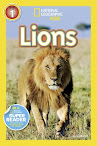
Some information books for young children.


Some fun stories:


Some traditional stories:


Wednesday, August 3, 2022

10th August World Lion Day


Lions – with the scientific name Panthera leo – are the second-largest cat in the world, just behind the Asian tiger.

Three million years ago, lions roamed all over Africa and the Eurasian supercontinent. But today, various ice ages and changes in the natural environment means that their range is reduced primarily to Africa and select parts of Asia. 

According to the International Union for the Conservation of Nature, lions are a “vulnerable” species, meaning that their numbers could and should be higher. Currently, researchers estimate that there are between 30,000 and 100,000 lions left on planet Earth. Without significant intervention, there is a chance that they could find themselves on the endangered list alongside other species most at risk of extinction.

World Lion Day,  has three objectives. The first is to raise awareness of the plight of the lion and the issues that the species face in the wild. The second is to find ways to protect the big cat’s natural environment, such as creating more national parks and reducing the areas in which people can settle. And the third is to educate people who live near wild cats on the dangers and how to protect themselves.

Lions are the only cats that regularly live in social groups and their groups are called prides. The size of a typical pride is usually between 10 to 15 animals but it can vary between 2 to 40 members. In a pride, females do most of the hunting and cub rearing and males defend the pride territory. While females live with the pride for life, males usually leave the pride when they are a few years old.

Lions are not as popular as tigers in the library or in picture books in general, but they do get borrowed and it is always worth doing a display. What the library has is here, but I do have some favourites, which are these:


Dumazi is a young savvy Zulu girl who encounters a yellow lion caught in a trap one day. Although compassionate, she instantly surmises the lion’s true nature and only after making a deal for her life, agrees to set him free. But can one really trust a hungry lion? And is Dumazi’s brazen bravery and quick thinking enough to save her life?


It tells the story of a lion who, bored by his rural life in the savannah, seeks excitement and opportunity in the city of light. On arrival in Paris the lion is disappointed to find that despite his size, people barely pay attention to him, not even when he lets out a ferocious roar on the busy Metro. Taking in the sights and sounds of Paris it successfully conveys the experience of being a stranger in a new city and the process of understanding our own identity. 


There are seven steps to becoming a proper lion, including Looking Fierce, Roaring, Prowling Around, and Pouncing. Our young hero, a rather meek and scrawny human boy, does his best to learn the necessary skills during his training with a master instructor (who just happens to be a real lion). After a grueling set of lessons, the boy discovers that that the final step--Looking Out for Your Friends--is the most important of all.


All the books in this series are good, but I really like this one about why lions don't have a home like most other animals.


And I am especially fond of the fable The Lion and the Mouse and there are so many beautifully illustrated versions, but none are better than the pencil lion drawings in this one: