Showing posts with label marsupials. Show all posts

Tuesday, October 28, 2025

1st November World Numbat Day


World Numbat Day is a day to appreciate this amazing yet threatened mammal and encourage the action to conserve the species.

A numbat is a small termite-eating marsupial that lives in Australia. It has a black and white striped back along with a bushy tail. A few other names for the numbat include the banded anteater, noombat, and walpurti. Its long, sticky tongue helps it capture underground termites. While numbats are considered marsupials, they don’t really have a pouch to carry their young. Instead, they have skinfolds that cover their babies while they drink milk from their mother.

The Numbat is Western Australia’s mammal emblem. Numbats have a very specialised diet almost exclusively of termites. They are diurnal, which means they feed during the day. During the day the sun heats up the upper layers soil, increases the temperature. The termites move in to a network of shallow tunnels and chambers just below the ground surface, making it easier to get a meal.

Numbats are under threat from habitat loss and introduced predators including foxes and feral cats. Their population is estimated at fewer than 1000 individuals and help is needed to protect the future of this unique marsupial.


There are not a large number of picture books about numbats, but what there is will give you insight into the unique qualities of this animal.

We have two very old books that I still use with students:

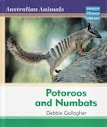
Potoroos and Numbats by Debbie Gallagher


Numbat, Run  by Jill Morris

This book includes a story, a poem, an interview with a scientist, and an indigenous numbat story.


Other books that are still available:


The Two-Hearted Numbat by Ambelin and Ezekiel Kwaymullina


Rufus the Numbat  by David Miller


Numby the Numbat  by Tim Faulkner


Tuesday, October 21, 2025

22nd October International Wombat Day


I have written about this day before, but given the CSIRO's new book Wombat Poos Are Square  has just arrived at our library, I felt I had to celebrate the day. While this humorous book is not strictly speaking about wombats, but rather explains the important role poo plays in our environment, it has an eye-catching cover that would look great in a display of wombat books.

Some other more recent books are Abi Cushman's Wombats Are Pretty Weird, John Lesley's Wombat, the stories Wurrtoo  by Tylissa Elisara and Beth Ferry's Wombats Go Wild for Words.


Of course there are other books about wombats. See Pinterest. But if you want to combine wombats and halloween, look for:


Monday, November 4, 2024

2nd November World Numbat Day


On the first Saturday in November it is  World Numbat Day, a day to show our appreciation for this amazing mammal. It's also a day to encourage action to help conserve these endangered animals. I know it's not the 2nd of November, but I thought I'd written before about Numbat Day so didn't do it on the 2nd and now I realise I haven't and there are some books to explore.


What's a numbat? The Numbat, also called the banded anteater, is a small endangered marsupial animal native to parts of Australia. They are one of the more unusual Australian marsupials because unlike most of other native species they're active during the day, are carnivorous, have an incredibly long tongue and their diet is almost exclusively termites.

Year 2 classes and I have had some very memorable teaching moments while sharing The Two-Hearted Numbat by Indigenous author illustrators, Amberlin and Ezekiel Kwaymullina. There is so much to talk about in this book and that conversation makes it easy for the students to identify the theme of the story. They love the illustrations and the glossy paper in the book too.


The Numbat by David Miller is an imaginative tale which challenges readers to wonder what would happen if animals infringed on the lives of humans. This lively picture book introduces young readers to the fragile relationship between humans and animals, as well as strong themes about respecting animal habitats and behaviours, the effect of humans encroaching on the habitats of our native animals and the place of animals in our ever-expanding built world. It too, has amazing illustrations made from paper sculptures.


Then if you look further, your library may have some of these:


Monday, October 23, 2023

22nd August International Wombat Day


Today we celebrate a small, burrowing marsupial that is native to Australia, known as the wombat. They are the largest burrowing mammals. They spend most of their time underground in their extensive burrows and emerge mainly at night. There are three species of wombats: the common or bare-nosed wombat, and the southern and northern hairy-nosed wombats.

Celebrating Wombat Day can be as simple as reading about your favourite wombat. For Australian children, that is probably Jackie French's Mothball, who made famous because he is the 'star' of the series of diaries about him. It started with Diary of a Wombat and now there are many sequels and even a prequel, The Diary of a Rescue Wombat which was published to celebrate the 20th anniversary of the first book. 

The children at my school still love the 'old favourite'  Sebastian Lives in a Hat  which tells the story of an orphaned four month old wombat joey who is nursed in the home of the author Thelma Catterwell and who sleeps in a hat, his pretend pouch. This book has had its 30th anniversary, but is still in print.


And thirdly, look for and then read Susannah Chambers' wombat stories, The Snow Wombat and The Beach Wombat.


There are many others in our library on display at the moment!


Saturday, September 10, 2022

18th September Quokka's Birthday

The birthday of the world's happiest animal, the quokka, will again be celebrated during the month of September at their home, Rottnest Island.

Quokkas are a part of the kangaroo and wallaby family also known as the Macropodidae. Interestingly enough, these adorable furry friends share similar characteristics to kangaroos, including the fact that they like to hop around and carry their offspring in a front pouch.

Quokkas are herbivores who primarily feed at night, meaning they are mainly nocturnal. They eat the leaves, stems, and bark of many plants in addition to grass. If necessary, they can survive for long periods of time without food or water by living off the fat stored in their tails.

If like me, you haven't been to Rottnest Island at dusk and had the opportunity to commune with these adorable teddy bear-sized balls of fur you will need to be content to find out about them from books!

See: (but be warned, not many of these books are Australian)


Quokkas  by Victoria Blakemore

This book covers the physical characteristics, habitat, family life, behavior, and conservation of quokkas.


• Meet the Quokkas by Caryn Jenner

Learn about where quokkas call home, how they raise their babies, what they love to eat, and much more!


• Quokkas and Quolls
 by Debbie Gallagher (Aus)


 • Not Cute
 by Philip Bunting (Aus)

Quokka did not like being cute. Not one bit. 
The romping, stomping, chomping tale of one stubbornly adorable marsupial. 


Clancy the Quokka  by Lili Wilkinson and Alison Mutton (Aus)

Clancy the Quokka is super cute, but also has a super cheeky habit of raiding picnic food, so when he spots a magnificent birthday cake, how can he resist? After the mayhem he creates, will Clancy learn his lesson?


• A Quokka for the Queen  by Huw Lewis Jones and Fred Blunt

This hilarious picture book tells the story of when the Queen gets a Quokka all the way from Australia for her birthday, and this small new arrival helps her discover the joy of giving gifts!


Saturday, November 4, 2017

4th November World Numbat Day

What is a numbat? It is a small marsupial that is now only native to Western Australia. It was once found across most of Southern Australia, but now it is in threat of extinction. So on World Numbat Day we celebrate Western Australia's unique mammal emblem and are encouraged to conserve the species. Like many of Australia's smaller marsupials it is threatened by foxes, feral cats and loss of habitat. Project Numbat works tirelessly to promote community awareness. Tomorrow in the library I will put these books out on display to remind the students about this interesting marsupial and its place in our unique fauna.