Showing posts with label picture book biographies. Show all posts

Monday, June 1, 2026

Book Week Planning for Symphony of Stories Part 7: What's left?

Opera

Opera is a dramatic theatrical genre within Western classical music where a story is told entirely through singing and orchestral music. The words of an opera is called the libretto (from the Latin term for “book”; a musical theatre libretto is called the book of the musical.) The music for the opera would be called the score. Operas and musical theatre first and foremost tell a story, so they are very fitting for a theme such as 'symphony of stories'.

Operas such as the stories of Hansel and Gretel and The Magic Flute are easy places to start, but there are picture books for Turandot  and La Traviata as well. The Music Storybook series is beautifully illustrated by recognised children's book artists. This unique series presents famous operas, ballets and suites in a picture book form. Each book also includes six supplementary pages with background information about the composer and the musical piece.


Ballet

A book such as this, introduces children to the music that accompanies many famous ballets -Swan Lake, Giselle, The Nutcracker, Spartacus, and The Firebird.

And this too introduces the stories of seven ballets.


Biographies of musicians not previously mentioned 


Teresa Carreno (1853 - 1917)  a Venezuelan pianist, composer, soprano, and conductor. 


Ethel Smyth
(1858 - 1944) English composer and suffragette. Her compositions include songs, works for piano, chamber music, orchestral works, choral works and operas.


Amy Beach (1867 - 1944) 
American composer and pianist. She was the first successful American female composer of large-scale art music. Her "Gaelic" Symphony, premiered by the Boston Symphony Orchestra in 1896, was the first symphony composed and published by an American woman. 


Elizabeth Cotten (1893 - 1987) an influential American folk and blues musician.


Marian Anderson (1897 - 1993) an American contralto who performed a wide range of music including opera.


George Gershwin (1898 - 1937) American composer and pianist whose compositions spanned jazz, popular and classical music. Famous for Rhapsody in Blue and folk opera Porgy and Bess.

Viola Smith (1912 - 2020) American drummer. She was one of the first professional female drummers.


Ishtak Perlman (1945 -  )  an Israeli-American violinist.


Pete Seeger (1919 -2014)  American folk singer, songwriter, musician and civil-rights activist. His best-known songs include “Where Have All the Flowers Gone?”, “If I Had a Hammer” and “Turn, Turn, Turn.”


Elton John
(1947 -   ) British singer and pianist.


Yo Yo Ma (1955 -   ) American celloist


Troy (Trombone Shorty) Andrews
. (1986 -  ) 
Trombone Shorty, is an American musician, most notably a trombone player, from New Orleans.


Recycled Orchestra of Cateura is a famous Paraguayan musical group made up of children from a slum built atop a massive landfill in Asunción. They play classical and popular music on instruments crafted entirely from scavenged trash. 

Friday, January 2, 2026

3rd January the International Year of Volunteers for Sustainable Development

The International Year of Volunteers for Sustainable Development is an idea too big and all-encompassing for the young students I teach, but the idea of volunteering or helping others is not. 

Below are some books that I would consider using over the year to talk about community, our role in community and what people do to help their community.


•  I Am We; A Book of Community  by Susan Verde & Peter Reynolds


•  It's Our Business to Make a Better World by Rebecca Hui & Anneli Bray


•  How to Make a Better World  by Kelly Swift & Jamie Margolin


• It Takes a Village  by Hillary Rodham Clinton & Marla Frazee


• Last Stop on Market Street by Matt de la Pena & Christian Robinson


• We'll Make Things Better  by Ben Gundersheimer & Dow Phumiruk


• Red Knit Cap Girl and the Reading Tree
 by Naoko Stoop


• Our Little Kitchen  by Jillian Tamaki


• Hey, Wall by Susan Verde & John Parra


•  Follow the Moon  by Philippe Cousteau, Deborah Hopkinson & Meilo So


These biographies introduce real people who definitely did volunteer for sustainable development:


• Maybe Something Beautiful: How Art Transformed a Neighbourhood  by Isabel Campoy & Rafael Lopez


• Food for Hope
 by Jeff Gottesfeld & Michelle Laurentia Agatha


• The Mangrove Tree  by Susan L. Roth & Cindy Trumbore


• Listen to the Wind  by Greg Mortensen & Susan L. Roth


• 111 Trees  by Rina Singh & Marianne Ferrer


• I Am Farmer  by Baptiste and Miranda Paul & Elizabeth Zunon


• Jose Feeds the World  by David Unger & Marta Alvarez Miguens


•  A Plate of Hope by Erin Frankel & Paola Escobar


While providing links for these books so that you can read the blurbs, I saw how expensive some of these books have become if you are shopping in Australia, but except for the last two these are not new books, we have them in our school library and you may well find them in your library.

Lots of Australian books could also be used for this topic and a good one to start with would be a book by Bob Graham, A Bus Called Heaven.


Saturday, March 8, 2025

8th March International Women's Day 15th March Hypatia Day

Every year in the library we do a display for IWD in which I highlight biographies of successful women. This year I decided to do mathematicians, starting with Hypatia who has her own day on 15th March. Each of these female mathematicians have at least one picture book biography about their life.


• Hypatia of Alexandria (370 -415 AD) the daughter of prominent Egyptian Mathematician Theon with whom she collaborated on several famous mathematical works. Since Hypatia was the daughter of an upper-class mathematician and philosopher, she received the same education as her male peers and it wasn’t long before she proved that she was a more accomplished mathematician than many, including even her father.

• Sophie Germein (1776 - 1831) was a French mathematician and physicist who, despite opposition from society (and her parents) due to her sex, persevered and went on to greatly contribute to maths. She proved to the people around her that their assumptions based on her sex were wrong and that females are incredible mathematicians


• Ada Lovelace (1815 -1852) was an English mathematician who is regarded as the world’s first computer programmer! Without the contributions of Ada Lovelace, the modern computer and associated algorithms that we take for granted may not exist.


• Sofia Kovalevskaya (1850 - 1891)  Russian mathematician was the first woman to obtain a doctorate in mathematics.


 • Emmy Noether (1882 -1935)  was born in Germany and is arguably the most influential women mathematician in history. She is best known for discovering Noether’s Theorem, which links mathematics and physics in an extremely important way. The theorem, which is named after her, relates the laws of nature and conservation to mathematical symmetry and how we understand the universe.


• Grace Hopper (1906 - 1992) was an American computer scientist, mathematician, and United States Navy rear admiral. She was a pioneer of computer programming.


• Dorothy Vaughn (1910 - 2008) Dorothy Vaughn is known for being a respected American high school maths teacher turned “human supercomputer” for NASA. She is a main character in the hit film Hidden Figures and was the first African American female supervisor at NASA.


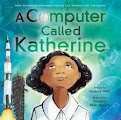
• Katherine Johnson (1918 - 2020) was responsible for calculating the trajectory for Project Mercury and the Apollo 11 flight to the moon, which means she helped the first spaceship and the first Americans reach the moon! 


• Raye Montague (1935 - 2018) was the groundbreaking engineer and ship designer who smashed both gender and racial barriers to revolutionise naval ship design and become the U.S. Navy's first female program manager of ships. Montague was the first person to ever design a ship on a computer.


• Margaret Hamilton (1936 - ) loved numbers, and to her, the best part of maths was when it could solve a problem in the real world! Her love of maths introduced her to computers, and then to a job at NASA, where they were planning a mission to the moon — and computers were going to be a part of it. Hamilton hand-wrote the code for the Apollo missions, and when a last-minute problem cropped up as Apollo 11 prepared for a lunar landing, it was Hamilton's forward-thinking code that saved the day!


• Maryam Mirzakhani (1977 - 2017) Iranian-born, professor at Stanford University and held a Ph.D from Harvard University. In 2014, she was the first woman, and first Iranian, to be awarded a Fields Medal (also known as the International Medal for Outstanding Discoveries in Mathematics).


When Dorothy Vaughn, Mary Jackson, Katherine Johnson and Christine Darden joined NASA, they were hired as "human computers" — their mathematical genius was put to use calculating launch trajectories for America's first trips to space. They overcame both racism and sexism, carved out careers in science, and participated in some of NASA's greatest triumphs. This book will allow you to see how these mathematicians worked together.