Every year in the library we do a display for IWD in which I highlight biographies of successful women. This year I decided to do mathematicians, starting with Hypatia who has her own day on 15th March. Each of these female mathematicians have at least one picture book biography about their life.
• Hypatia of Alexandria (370 -415 AD) the daughter of prominent Egyptian Mathematician Theon with whom she collaborated on several famous mathematical works. Since Hypatia was the daughter of an upper-class mathematician and philosopher, she received the same education as her male peers and it wasn’t long before she proved that she was a more accomplished mathematician than many, including even her father.

• Sophie Germein (1776 - 1831) was a French mathematician and physicist who, despite opposition from society (and her parents) due to her sex, persevered and went on to greatly contribute to maths. She proved to the people around her that their assumptions based on her sex were wrong and that females are incredible mathematicians

• Ada Lovelace (1815 -1852) was an English mathematician who is regarded as the world’s first computer programmer! Without the contributions of Ada Lovelace, the modern computer and associated algorithms that we take for granted may not exist.


• Sofia Kovalevskaya (1850 - 1891) Russian mathematician was the first woman to obtain a doctorate in mathematics.

• Emmy Noether (1882 -1935) was born in Germany and is arguably the most influential women mathematician in history. She is best known for discovering Noether’s Theorem, which links mathematics and physics in an extremely important way. The theorem, which is named after her, relates the laws of nature and conservation to mathematical symmetry and how we understand the universe.


• Grace Hopper (1906 - 1992) was an American computer scientist, mathematician, and United States Navy rear admiral. She was a pioneer of computer programming.

• Dorothy Vaughn (1910 - 2008) Dorothy Vaughn is known for being a respected American high school maths teacher turned “human supercomputer” for NASA. She is a main character in the hit film Hidden Figures and was the first African American female supervisor at NASA.

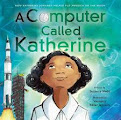
• Katherine Johnson (1918 - 2020) was responsible for calculating the trajectory for Project Mercury and the Apollo 11 flight to the moon, which means she helped the first spaceship and the first Americans reach the moon!


• Margaret Hamilton (1936 - ) loved numbers, and to her, the best part of maths was when it could solve a problem in the real world! Her love of maths introduced her to computers, and then to a job at NASA, where they were planning a mission to the moon — and computers were going to be a part of it. Hamilton hand-wrote the code for the Apollo missions, and when a last-minute problem cropped up as Apollo 11 prepared for a lunar landing, it was Hamilton's forward-thinking code that saved the day!

• Maryam Mirzakhani (1977 - 2017) Iranian-born, professor at Stanford University and held a Ph.D from Harvard University. In 2014, she was the first woman, and first Iranian, to be awarded a Fields Medal (also known as the International Medal for Outstanding Discoveries in Mathematics).


When Dorothy Vaughn, Mary Jackson, Katherine Johnson and Christine Darden joined NASA, they were hired as "human computers" — their mathematical genius was put to use calculating launch trajectories for America's first trips to space. They overcame both racism and sexism, carved out careers in science, and participated in some of NASA's greatest triumphs. This book will allow you to see how these mathematicians worked together.