Showing posts with label maths. Show all posts

Wednesday, March 12, 2025

14th March International Day of Mathematics, 26th March World Maths Day


Every day should be Maths Day, but there are so many specific days on the calendar. There is E-Day to celebrate Euler's Number (7.2.25); Pi Day (14.3.25); Square Root Day (5.5.25); Women in Mathematics Day (12.5.25); International Sudoku Day(9.9.25) and Fibonacci Day (23.11.25).

The International Day of Mathematics (IDM) is a worldwide celebration. Each year on March 14 all countries are invited to participate through activities for both students and the general public in schools, museums, libraries and other spaces. The theme for this year is Mathematics Art and Creativity. What fun!

If you look at the website, you will see lots of things to get you involved with the theme. This year’s creative challenge is constructing mathematical elements using everyday physical objects (such as household items, objects from nature, or even people). Use your artistry and creativity (this year’s theme!) to make sculptures that bring mathematics off the page and into the real world!

Often the preschool teachers will ask for books that show numbers and or patterns in nature or the environment. They will use a picture from one of these books as a provocation. These are some of the books I suggest.

• Growing Patterns and Mysterious Patterns  by Sarah Campbell

• Swirl by Swirl  by Joyce Sidman

• Flow Spin Grow  by Patchen Barss

• Pitter Pattern  by Joyce Hesselberth

• Wings, Waves and Webs  by Robin Mitchell Cranfield

• Magic Counting  by Nabeel Khan

• Shape Search  by Melissa Stewart


• Dreaming Up  by Christy Hale 

• Patterns in Australia  by Bronwyn Bancroft 

• Lots and Lots of Zebra Stripes  by Stephen Swinburne

• Patterns at the Museum  by Tracey Steffora

• The Art Garden  by Penny Harrison

• The Art of Clean Up  by Ursus Wehrli

• Searching for Treasure  by Johanna Bell

and look out for All About Patterns  by Elizabeth Rusch which is coming in April.


Saturday, March 8, 2025

8th March International Women's Day 15th March Hypatia Day

Every year in the library we do a display for IWD in which I highlight biographies of successful women. This year I decided to do mathematicians, starting with Hypatia who has her own day on 15th March. Each of these female mathematicians have at least one picture book biography about their life.


• Hypatia of Alexandria (370 -415 AD) the daughter of prominent Egyptian Mathematician Theon with whom she collaborated on several famous mathematical works. Since Hypatia was the daughter of an upper-class mathematician and philosopher, she received the same education as her male peers and it wasn’t long before she proved that she was a more accomplished mathematician than many, including even her father.

• Sophie Germein (1776 - 1831) was a French mathematician and physicist who, despite opposition from society (and her parents) due to her sex, persevered and went on to greatly contribute to maths. She proved to the people around her that their assumptions based on her sex were wrong and that females are incredible mathematicians


• Ada Lovelace (1815 -1852) was an English mathematician who is regarded as the world’s first computer programmer! Without the contributions of Ada Lovelace, the modern computer and associated algorithms that we take for granted may not exist.


• Sofia Kovalevskaya (1850 - 1891)  Russian mathematician was the first woman to obtain a doctorate in mathematics.


 • Emmy Noether (1882 -1935)  was born in Germany and is arguably the most influential women mathematician in history. She is best known for discovering Noether’s Theorem, which links mathematics and physics in an extremely important way. The theorem, which is named after her, relates the laws of nature and conservation to mathematical symmetry and how we understand the universe.


• Grace Hopper (1906 - 1992) was an American computer scientist, mathematician, and United States Navy rear admiral. She was a pioneer of computer programming.


• Dorothy Vaughn (1910 - 2008) Dorothy Vaughn is known for being a respected American high school maths teacher turned “human supercomputer” for NASA. She is a main character in the hit film Hidden Figures and was the first African American female supervisor at NASA.


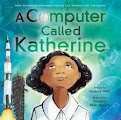
• Katherine Johnson (1918 - 2020) was responsible for calculating the trajectory for Project Mercury and the Apollo 11 flight to the moon, which means she helped the first spaceship and the first Americans reach the moon! 


• Raye Montague (1935 - 2018) was the groundbreaking engineer and ship designer who smashed both gender and racial barriers to revolutionise naval ship design and become the U.S. Navy's first female program manager of ships. Montague was the first person to ever design a ship on a computer.


• Margaret Hamilton (1936 - ) loved numbers, and to her, the best part of maths was when it could solve a problem in the real world! Her love of maths introduced her to computers, and then to a job at NASA, where they were planning a mission to the moon — and computers were going to be a part of it. Hamilton hand-wrote the code for the Apollo missions, and when a last-minute problem cropped up as Apollo 11 prepared for a lunar landing, it was Hamilton's forward-thinking code that saved the day!


• Maryam Mirzakhani (1977 - 2017) Iranian-born, professor at Stanford University and held a Ph.D from Harvard University. In 2014, she was the first woman, and first Iranian, to be awarded a Fields Medal (also known as the International Medal for Outstanding Discoveries in Mathematics).


When Dorothy Vaughn, Mary Jackson, Katherine Johnson and Christine Darden joined NASA, they were hired as "human computers" — their mathematical genius was put to use calculating launch trajectories for America's first trips to space. They overcame both racism and sexism, carved out careers in science, and participated in some of NASA's greatest triumphs. This book will allow you to see how these mathematicians worked together.

Monday, March 21, 2022

Harmony Week, World Poetry Day, World Maths Day, World Folktales and Fables Week.


Why are so many things worth celebrating at school all in the same week? The teachers and children at my school are overwhelmed. The teachers also have Parent Teacher meetings this week too. 


Harmony Week is Monday 21st to Sunday 27th March.

World Poetry Day is Monday 21st March.

World Maths Day is Wednesday 23rd March.

World Folktales and Fables Week is Sunday 20th March to Saturday 26th March.

We celebrated Harmony Day today with a variety of multicultural activities and lots of reading and craft.

We are celebrating Maths Day with another round of rotating activities for each grade. We have had very many successful Poetry days in the past but not this year and Folktales and Fables will get to shine in the library at another time.


Tuesday, May 4, 2021

5th May World Maths Day

 I always find it interesting when it comes to planning maths lessons at school. There are teachers who will always ask if there are books that will help with their topic, whether it is counting, measurement, shape or probability. Then there are teachers who would never think to 'use the library' when teaching maths which is sad because over the years I have worked hard on ensuring we have books that could be used during maths lessons. I always buy the books that win or are honour books on the Mathical list each year. The 2021 winners and honour books were announced in April and I have ordered the few that we didn't already have. There are lots of lists online to get you started on your own collection of maths books. See here and my Pinterest page here.

Below are some favourites to get you started on a maths reading session!


Sunday, August 4, 2013

5th August Fibonacci Day

Today is August, 5th 2013 which will be written on many school notebooks today as 5-8-13. This sequence of numbers is part of the Fibonacci sequence where the sum of the first two numbers adds to make the third number. The next Fibonacci Day would not occur till 8-13-21 and as we do not have thirteen months in a year it will not occur. How special then is today?

The 23rd November is often used to celebrate Fibonacci Day, but today is more special. Who was Fibonacci?  He was Leonardo da Pisa, born in Pisa in 1175AD, the son of a merchant who travelled widely as a customs officer in North Africa. He used the knowledge he gained on his travels to write and he introduced the Latin-speaking world to the decimal number system, and thus we too now use the  numbers 0 to 9 to make every other number we need.

I love patterns and have enjoyed teaching children to constantly be on the lookout for patterns both in maths and writing as well as in nature. My father was a maths teacher who also revelled in them and I have a daughter who uses them every day in her chosen career. My library has quite a collection of books that introduce students to the wonders of Fibonacci, so that they can then be inspired to count the petals on flowers, peas in pea pods, apply their new knowledge to the art of Leonardo da Vinci Here are just a few:

• Blockhead the Life of Fibonacci by Joseph D' Agnese and John O'Brien is a biography of Leonardo. It includes his childhood and how his peers treated him at school when he didn't think in the same was they did.

• Wild Fibonacci: Nature's Secret Code Revealed  by Joy N. Hulme and Carol Schwartz  looks at the places the Fibonacci sequence appears in nature.

• Growing Patterns  by Sarah C. Campbell does a similar thing but is perhaps simpler.

• Rabbits Rabbits Everywhere: A Fibonacci Tale  by Ann McCallum and Gideon Kendall embeds how quickly rabbits breed into a fun story and relates this to the Fibonacci sequence. You could read this alongside Emily Gravett's wonderful The Rabbit Problem.

• Fibonacci's Cows by Ray Galvin. This New Zealand title is a high interest easy read short novel, ideal for students who have an interest in maths.