Showing posts with label plastic. Show all posts

Friday, May 23, 2025

25th May International Plastic Free Day

It is International Plastic Free Day, introduced by Free The Ocean (FTO). The goal? Avoid using single plastic use for one day (at least). Don't buy it. Refuse it. Don't use it. As explained on the website, "If every person in the world stopped using one single-use piece of plastic for one day, we’d avoid over 7.6 BILLION items of plastic on that single day." The occurrence aims to make people aware of how much plastic they usually use and how much it is omnipresent in our lives. And hopefully, it will show them that not using plastic is doable!

This is different from International Plastic Bag Free Day which is observed every year on 3rd July or Skip the Straw Day which is held on the fourth Friday in February or Plastic Free July, all of which are days to remember the impact of single-use plastics and efforts to stem the tide of litter and waste.

At school we have Plastic Free days for lunches and students are encouraged to use lunch containers again and again, even the school canteen lunches come in non plastic containers that are returned to the canteen and washed. So the students at school are very aware of 'the concept of one-use plastic'. When they read books about ocean pollution they are horrified and come to talk to you about what they have read.

If you put the word 'plastic' in my blog Search bar, lots of entries will come up with suggestions of books to read. Here's just a selection of books you'll find in the library.


Thursday, January 13, 2022

SDG 14 Life Below Water


Goal 14 Conserve and sustainably use the oceans, seas and marine resources for sustainable development.

The ocean drives global systems that make the Earth habitable for humankind. Our rainwater, drinking water, weather, climate, coastlines, much of our food, and even the oxygen in the air we breathe, are all ultimately provided and regulated by the sea. 

Oceans are our planet’s life support as they provide water, food and help regulate the weather. Oceans also provide jobs for more than 3 billion people who depend on marine biodiversity for their livelihood. If we do not stop polluting our oceans, there will be severe problems that affect every person and living creature on the planet.

Choose a book from here.

This goal continues on well from the previous goal about climate because a lot of the climate action plans involve the oceans as well. The students at school know about rubbish in the oceans especially Kindergarten who do a unit of inquiry that looks at life in the sea. When they read about animals that live there or watch film clips about them they are often confronted by the threats things like, plastic, nets and oil are for these creatures. I thought if I started with the new book Saving Seal by Diana Jackson Hill and Craig Smith, the book would be new to everyone and therefore easy to talk about and relate back to other books the students already know that address the problem of plastic in the sea.

Here's the blurb:

Seal has made his home in the waters of a coastal village, but he often finds himself trapped and ensnared in the plastic rubbish filling the Bay. Fortunately, he is rescued by Lizzie and Grandpa Dave. 
Lizzie and Grandpa Dave are motivated to do something about cleaning up their Bay and saving the marine life who are being threatened more and more by the rubbish found in the Bay and on their beaches. They encourage the towns people to join them in their fight against plastic pollution devastating their beaches and harming marine life.

Where to next? You could choose another book about plastic in the ocean and compare and contrast the two books. Alba The One Hundred Year Old Fish by Lara Hawthorne would be a good one.


Here's the blurb:

Alba the fish has spent her entire life collecting precious objects that drift down to the ocean floor. From delicate shells to brightly coloured coral, each year on her birthday she gathers one more precious item. But over the years, Alba notices her collection is losing its sparkle and that the world is changing. What are these bits of plastic and metal? As the coral reef fades, Alba decides to leave her home behind. Can an old fish teach the world how to bring colour back to the ocean?  The One-Hundred-Year-Old Fish gently highlights the issue of pollution. 


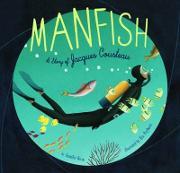
If you have older students, perhaps look at someone who works below the water by reading a biography about them. You could read about Jacques Cousteau, Sylvia Earle, Eugenie Clark or Curtis Ebbesmeyer. Here are some of the biographies, but there are others too.


 Dr Curtis Ebbesmeyer is the scientist who monitors the watery fate of human-made cargo that has spilled into the ocean. Remember all those stories about rubber ducks that have been spilled overboard off freighters and where they ended up.

From the booklet:

Ask • Can you think of ways we could spread the message about how important marine life is and why we need to protect it?


• We read...


• This story made me want to ...


Sunday, July 2, 2017

3rd July International Plastic Bag Free Day

Today needs to be a  Plastic Bag Free Day! My local council has designated the whole of July as a plastic free time in order to make each of us contemplate what plastic bags do to our environment.International Plastic 

This most popular of disposable carrying devices that  we pick up from retailers are used for an incredibly short time, usually under 25 minutes, and are then disposed of. They may pass out of our thinking then, but they do not pass out of our world. Plastic bags remain in the world for anywhere from 100-500 years before finally decaying completely, and have a profound impact upon our environment as a result.

Out in the great reaches of the ocean are massive reefs made up of all sorts of plastic waste, and plastic bags play heavily among them. Such is the magnitude of the problem that these great floating islands reach hundreds of miles, like great monuments to mankind’s wastefulness, and disregard for the world upon which we live. International Plastic Bag Free Day gives us an opportunity to remind ourselves, and others, that every action we take, and every bag we dispose of, effects the lives of everyone in the world for generations to come.

I find that the children I teach are very aware of plastic in the oceans, but not so aware of its ramifications elsewhere such as in landfill. Luckily there are some wonderful picture books that can be used to start any discussion on what happens to plastic when it is not disposed of responsibly. 


See:
One Plastic Bag  by Miranda Paul and Elizabeth Zunon tells the story of Isatou Ceesaya, a Gambian woman, 
 who came up with a way to recycle the plastic bags that had littered the landscape in her nation, an act that saved the environment and transformed her community.

Bag in the Wind by Ted Kooser and Barry Root. This story follows a plastic bag on its  journey from a landfill into a series of townspeople's lives. One cold morning in early spring, a bulldozer pushes a pile of garbage around a landfill and uncovers an empty plastic bag a perfectly good bag, the colour of the skin of a yellow onion, with two holes for handles that someone has thrown away. Just then, a puff of wind lifts the rolling, flapping bag over a chain-link fence and into the lives of several townsfolk a can-collecting girl, a homeless man, a store owner not that all of them notice.

Theo and the Giant Plastic Ball  by The United Nations Environment Program and Adrienne Kennaway tells of Theo and his quest to improve at football by making a ball out of discarded plastic bags. This then leads to clearing up his local environment and the realisation that by the community working together they could maintain a cleaner, more healthy environment.

Plastic Ahoy! Investigating the Great Pacific Garbage Patch by Patricia Newman and Anne Crawley tells of a team of scientists who explore the Great Pacific Garbage Patch, where millions of pieces of plastic have gathered, having drifted there from rivers, beaches, and ocean traffic all over the world.

The Adventures of a Plastic Bottle by Alison Inches and Pete Whitehead is the diary of a plastic bottle. It goes on a journey from the refinery plant, to the manufacturing line, to the store shelf, to a garbage can, and finally to a recycling plant where it emerges into its new life...as a fleece jacket!