Showing posts with label seals. Show all posts

Friday, March 21, 2025

22nd March International Seal Day

Today is International Seal Day, which is focused on celebrating and protecting these majestic marine mammals 🦭 While today is dedicated to seals, fittingly, this week is also Sustainable Seafood Week, which highlights an important action we can take to protect seals and marine life in the wild. Choosing MSC-certified seafood prevents the overfishing of our oceans and protects wild seals 🐟

This is from Instagram posted today from Taronga Zoo here in Sydney. They also had an article in the newspaper today about a sea lion pup that has been born at the zoo. I plan to use it with my Year 2 literacy group next week as we are looking at endangered Australian mammals and what can be done to ensure their futures. This is where I learned that it is International Seal Day.

Seals, whose scientific name is Pinnipedia, are found on every continent on Earth, principally in cold water environments. There are 33 different species alive today, from gigantic ones, such as the elephant seal, and small ones like the Baikal seal. These semi-aquatic marine mammals are thought to be close relatives to bears and the animal group that includes weasels and otters. 

While they look similar, sea lions are not seals. Belonging to the same suborder known as Pinnipedia, sea lions, seals, fur seals, and walruses share a common classification as 'pinnipeds', derived from the Latin words for fin or flipper-footed. Sea lions have little ears (seals only have ear holes), longer flippers and are generally a lot rowdier than their seal counterparts. International Sea Lion Day is on the 30th May.


The library doesn't have a lot of books about seals, but these have lovely illustrations and will give you information and a story.

See What a Seal Can Do  by Chris Butterworth
Lying about on the sand like a fat sunbather, seals might seem like slow, dozy creatures – but nothing compares with their grace and speed when they're underwater! Seals can dive like rockets and twist like a dancer. They can stay underwater for up to 15 minutes.


Elizabeth, Queen of the Seas  by Lynne Cox
is the incredible story of Elizabeth, a real-life elephant seal who made her home in the Avon River in the city of Christchurch, New Zealand. When Elizabeth decides to stretch out across a two-lane road, the citizens worry she might get hurt or cause traffic accidents, so a group of volunteers tows her out to sea. But Elizabeth swims all the way back to Christchurch. The volunteers catch her again and again—each time towing her farther, even hundreds of miles away—but, still, Elizabeth finds her way back home.

Saving Seal  by Diane Jackson Hill
Seal has made his home in the waters of a coastal village, but he often finds himself trapped and ensnared in the plastic rubbish filling the Bay. Fortunately, he is rescued by Lizzie and Grandpa Dave.
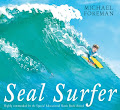


Seal Surfer  by Michael Foreman
A boy and his grandfather watch as a baby seal is born on the rocks near their home and from that day a special friendship is created between them. Despite his disability, the boy is a keen surfer, and he enjoys many afternoons surfing with the seals. One day, however, he gets into trouble in rough seas, and the young seal saves him.


The Seal on the Beach by Mara Bergman
Maggie is on holiday with her aunt and uncle. Meanwhile her mum waits for Maggie’s baby brother to come home from hospital. On a walk across the wild Norfolk shoreline, Maggie finds a seal pup stranded on the beach, all alone. She is the sweetest thing Maggie has ever seen. But without her mum, how will the seal survive? Who will rescue her and will she ever be returned to the sea, and find her family again?


Friday, March 31, 2023

23rd March International Day of the Seal


Oops, I missed this day. We have done seal displays in the library before, but it must have never been as a celebration of this day, but rather just as a popular topic with children. I have become fascinated by seals since I saw two a couple of weeks ago swimming in Sydney Harbour. They were very entertaining, really playing up to the bystanders filming them on their phones.

A seal is a type of animal called a pinniped, which is Latin for “fin-footed.” Other pinnipeds include the walrus and sea lion. What makes seals different from other pinnipeds is that they don’t really use their flippers to walk. When on land, they usually slide around on their bellies. In the water, their flippers help them swim really fast. Seals are also much quieter and smaller than their sea lion and walrus cousins.

This helped me to know the difference between seals and sea lions, who have their own days of celebration. World Sea Lion Day is 30th May and World Walrus Day is on 24th November.

Five seal stories to recommend:


Seal Surfer by Michael Foreman

A boy and his grandfather watch as a baby seal is born on the rocks near their home and from that day a special friendship is created between them.


Found  by Sam Usher

It's a warm summer's day, so Boy and his grandad pack up their provisions and head for the seaside.  There's so much to do, from exploring rock pools to building a magnificent sandcastle. But their day takes a different turn when they go for a swim and find a baby seal caught up in a net. Its rescue leads Boy and Grandad on a thrilling underwater adventure! 


Saving Seal  by Diane Jackson Hill and Craig Smith

Seal has made his home in the waters of a coastal village, but he often finds himself trapped and ensnared in the plastic rubbish filling the Bay. Fortunately, he is rescued by Lizzie and Grandpa Dave. 


Sydney the Seal Saves the Sea  by Andrea Reitmeyer

When Sydney meets a new buddy, they decide to embark on an adventure, exploring the ocean. During their journey, the two friends discover that their beautiful home is covered in litter. The two companions seek help from nearby humans, who vow to help keep the ocean clean for Sydney's animal family. 


Elizabeth, Queen of the Seas  by Lynne Cox and Brian Floca

Based on a true story about an elephant seal - an animal that normally prefers the wilds of the Southern Ocean - who defied the odds and gained fame when she persisted in returning to Christchurch's Avon River, time and again, to make herself at home on the banks of the river and to bask in the sun in the middle of busy roads. 


While these might be my picks, you will find more on my Pinterest.


Thursday, January 13, 2022

SDG 14 Life Below Water


Goal 14 Conserve and sustainably use the oceans, seas and marine resources for sustainable development.

The ocean drives global systems that make the Earth habitable for humankind. Our rainwater, drinking water, weather, climate, coastlines, much of our food, and even the oxygen in the air we breathe, are all ultimately provided and regulated by the sea. 

Oceans are our planet’s life support as they provide water, food and help regulate the weather. Oceans also provide jobs for more than 3 billion people who depend on marine biodiversity for their livelihood. If we do not stop polluting our oceans, there will be severe problems that affect every person and living creature on the planet.

Choose a book from here.

This goal continues on well from the previous goal about climate because a lot of the climate action plans involve the oceans as well. The students at school know about rubbish in the oceans especially Kindergarten who do a unit of inquiry that looks at life in the sea. When they read about animals that live there or watch film clips about them they are often confronted by the threats things like, plastic, nets and oil are for these creatures. I thought if I started with the new book Saving Seal by Diana Jackson Hill and Craig Smith, the book would be new to everyone and therefore easy to talk about and relate back to other books the students already know that address the problem of plastic in the sea.

Here's the blurb:

Seal has made his home in the waters of a coastal village, but he often finds himself trapped and ensnared in the plastic rubbish filling the Bay. Fortunately, he is rescued by Lizzie and Grandpa Dave. 
Lizzie and Grandpa Dave are motivated to do something about cleaning up their Bay and saving the marine life who are being threatened more and more by the rubbish found in the Bay and on their beaches. They encourage the towns people to join them in their fight against plastic pollution devastating their beaches and harming marine life.

Where to next? You could choose another book about plastic in the ocean and compare and contrast the two books. Alba The One Hundred Year Old Fish by Lara Hawthorne would be a good one.


Here's the blurb:

Alba the fish has spent her entire life collecting precious objects that drift down to the ocean floor. From delicate shells to brightly coloured coral, each year on her birthday she gathers one more precious item. But over the years, Alba notices her collection is losing its sparkle and that the world is changing. What are these bits of plastic and metal? As the coral reef fades, Alba decides to leave her home behind. Can an old fish teach the world how to bring colour back to the ocean?  The One-Hundred-Year-Old Fish gently highlights the issue of pollution. 


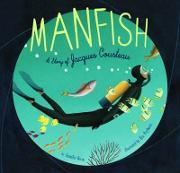
If you have older students, perhaps look at someone who works below the water by reading a biography about them. You could read about Jacques Cousteau, Sylvia Earle, Eugenie Clark or Curtis Ebbesmeyer. Here are some of the biographies, but there are others too.


 Dr Curtis Ebbesmeyer is the scientist who monitors the watery fate of human-made cargo that has spilled into the ocean. Remember all those stories about rubber ducks that have been spilled overboard off freighters and where they ended up.

From the booklet:

Ask • Can you think of ways we could spread the message about how important marine life is and why we need to protect it?


• We read...


• This story made me want to ...


Sunday, January 8, 2017

11th January Brian Floca

American author illustrator Brian Floca celebrates his birthday on the 11th January. He won the Caldecott Medal in 2014 for his detailed, but beautiful nonfiction book Locomotive. The books he both writes and illustrates seem to be about transport and things that he says he was interested in as a child, but he has also illustrated picture books for other authors. My favourite is Elizabeth, Queen of the Seas by Lynne Cox. This story is based on a true story about Elizabeth, an elephant seal who keeps coming ashore in Christchurch, New Zealand and lies on the road and no matter how far away the boats take her she keeps coming back. It makes me smile and the children I have read it to love it. And thirdly, he illustrates chapter books. This began while he was studying under illustrator, David Macaulay who introduced him to the author Avi. This led to Floca illustrating all six of the Poppy books, wonderful stories about Poppy, a mouse, and her friend, Ereth, a porcupine as well as other more recent books also written by Avi. There is a very informative interview with Brian here.


Look for picture books by Brian Floca:
• Moonshot
• Lightship
• The Racecar Alphabet
• Five Trucks

Picture books illustrated by Brian Floca:
• Elizabeth, Queen of the Seas  by Lynne Cox
• Ballet for Martha  by Jan Greenberg and Sandra Jordan
• The True Gift by Patricia MacLachlan

Chapter book series:
• Max and Mo a set of early readers by Patricia Lakin about two hamsters who live in the art room at a school.
• The Tales from Dimwood Forest  series of six books about a mouse called Poppy, and her family's problems with the owl Mr Ocax.
• Marty McGuire a series of books about third grade tomboy Marty written by Kate Messner and ideal for middle grade readers.