Showing posts with label Jacques Cousteau. Show all posts

Tuesday, June 10, 2025

11th June Cousteau Day

Cousteau Day is observed on 11th June. It was launched in 2010 by the Office of National Marine Sanctuaries (ONMS) to celebrate the birth date and singular life of Jacques Cousteau. Born in 1910, he was a French naval officer, explorer, and conservationist who studied the ocean and all forms of aquatic life. His many contributions to marine conservation include the production of over 120 documentaries, promoting environmental activism, and developing the science of scuba. 

Celebrate this day by reading about this trailblazer. The library has these books, but I am sure there would be others.


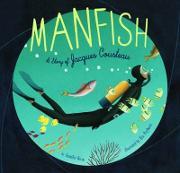
Manfish a Story of Jacques Cousteau by Jennifer Berne & Eric Puybaret

'Manfish' is the word Cousteau gave himself for how he felt when swimming underwater.


The Fantastic Undersea Life of Jacques Cousteau by Dan Yaccarino


Cousteau: An Unauthorized Biography   by Kevin Comber


Thursday, January 13, 2022

SDG 14 Life Below Water


Goal 14 Conserve and sustainably use the oceans, seas and marine resources for sustainable development.

The ocean drives global systems that make the Earth habitable for humankind. Our rainwater, drinking water, weather, climate, coastlines, much of our food, and even the oxygen in the air we breathe, are all ultimately provided and regulated by the sea. 

Oceans are our planet’s life support as they provide water, food and help regulate the weather. Oceans also provide jobs for more than 3 billion people who depend on marine biodiversity for their livelihood. If we do not stop polluting our oceans, there will be severe problems that affect every person and living creature on the planet.

Choose a book from here.

This goal continues on well from the previous goal about climate because a lot of the climate action plans involve the oceans as well. The students at school know about rubbish in the oceans especially Kindergarten who do a unit of inquiry that looks at life in the sea. When they read about animals that live there or watch film clips about them they are often confronted by the threats things like, plastic, nets and oil are for these creatures. I thought if I started with the new book Saving Seal by Diana Jackson Hill and Craig Smith, the book would be new to everyone and therefore easy to talk about and relate back to other books the students already know that address the problem of plastic in the sea.

Here's the blurb:

Seal has made his home in the waters of a coastal village, but he often finds himself trapped and ensnared in the plastic rubbish filling the Bay. Fortunately, he is rescued by Lizzie and Grandpa Dave. 
Lizzie and Grandpa Dave are motivated to do something about cleaning up their Bay and saving the marine life who are being threatened more and more by the rubbish found in the Bay and on their beaches. They encourage the towns people to join them in their fight against plastic pollution devastating their beaches and harming marine life.

Where to next? You could choose another book about plastic in the ocean and compare and contrast the two books. Alba The One Hundred Year Old Fish by Lara Hawthorne would be a good one.


Here's the blurb:

Alba the fish has spent her entire life collecting precious objects that drift down to the ocean floor. From delicate shells to brightly coloured coral, each year on her birthday she gathers one more precious item. But over the years, Alba notices her collection is losing its sparkle and that the world is changing. What are these bits of plastic and metal? As the coral reef fades, Alba decides to leave her home behind. Can an old fish teach the world how to bring colour back to the ocean?  The One-Hundred-Year-Old Fish gently highlights the issue of pollution. 


If you have older students, perhaps look at someone who works below the water by reading a biography about them. You could read about Jacques Cousteau, Sylvia Earle, Eugenie Clark or Curtis Ebbesmeyer. Here are some of the biographies, but there are others too.


 Dr Curtis Ebbesmeyer is the scientist who monitors the watery fate of human-made cargo that has spilled into the ocean. Remember all those stories about rubber ducks that have been spilled overboard off freighters and where they ended up.

From the booklet:

Ask • Can you think of ways we could spread the message about how important marine life is and why we need to protect it?


• We read...


• This story made me want to ...


Monday, May 20, 2013

20th May Dan Yaccarino (1965)

It is American author illustrator, Dan Yaccarino's birthday. To be honest I hadn't really noticed his work until I bought his book The Fantastic Undersea Life of Jacques Cousteau for the library. I loved it so much I then went looking for more of his work. And then lately two new books that are just so special and popular with my young audience who love 'robot books' arrived. They are Boy and Bot by Ame Dyckman and Dan and Doug Unplugged  by Dan Yaccarino alone. The illustrations in these two make robots seem so endearing, yet expressive and fun. He has been quoted as saying:

“The images in a picture book are the driving forces that tell the story. The words tell only what the pictures can’t.”  

And this is so true in his books. Look at the final almost textless pages of Boy and Bot to see the power of his pictures at work. Happy birthday Dan Yaccarino and may there be many more picture books for us to enjoy!


PS What a coincidence? Today someone asked to borrow Would I Ever Lie to You? which we don't have so I looked up the author and learned that it was Caralyn Buehner, and now I have just read on Anita Silvey's almanac that today is her birthday too. She was born in 1963. So now I need to research her books some more.

Sunday, June 10, 2012

11th June Jacques Cousteau (1910 - 1997)


Jacques Cousteau was a French naval officer who pioneered marine conservation, photographed under the sea and wrote about it. His contribution to diving and the general population's knowledge of under the sea is immense. It is fitting that today's children should know about his contribution so here are three books in our library that I would recommend.
Manfish by Jennifer Berne and Eric Puybaret
The Fantastic Undersea Life of Jacques Cousteau by Dan Yaccarino.
These two picture books are biographies of his life, the first emphasising Jacques curiosity as a very young boy.
Cousteau: an unauthorized biography by Kevin Comber is old and in our school it is in big book format. It was part of a series of big books put out by Era Publications and your school may well have a copy too. It is worth digging out! It has a lot of photographs in it and will give readers a sense of the time.

It is fitting that Jacques Cousteau's birthday is also the date that the Western world explorers, namely Captain James Cook discovered the Great Barrier Reef in 1770. He discovered it by accident when his ship, the Endeavour crashed into it and the coral ripped a hole in its bottom. Cook and his crew managed to stop the ship from sinking and made it to shore at what is now called Cooktown in the very north of Queensland. It took seven weeks to repair the ship and then their journey was resumed.

There are myriads of books about the Great Barrier Reef that show the wonder of coral and its underwater world. It is a pity though that so many of them are not Australian. It would be good to see some more Australian factual texts for very young children such as marine biologist Dr Mark Norman's The Great Barrier Reef Book: Solarpowered. For beautiful artwork and a sense of the wonder of the reef see Kim MichelleToft.