Showing posts with label war. Show all posts

Wednesday, June 11, 2025

12th June Anne Frank Day


On 12th June
, 1942 Anne Frank received a diary for her 13th birthday. She was a young Jewish girl who lived and died during the Holocaust. While she and her family were hiding from the Nazis for about two years, she kept writing about the horror of war and the daily problems of being a teenager. A month before the war ended, Anne died in a concentration camp, but her father survived. After he found her diary, he decided to publish The Diary of a Young Girl in 1947.

This memorable book is now accessible to much younger children as well as teens because of the number of biographies that have been written about her.


These show a different perspective of her life.

Martin and Anne  by Nancy Churnin

The uncanny parallels between Anne Frank and Martin Luther King who were born in the same year an ocean apart are explored in parallel biographies.


The Cat Who Lived With Anne Frank by David Lee Miller

Told from the perspective of the cat, Mouschi who actually lived with Anne Frank in the Amsterdam annex, this book paints a picture of a young girl who wistfully dreams of a better life for herself and her friends.


And not to be missed:

The House on the Canal  by Thomas Harding and Britta Teckentrup

In the middle of Amsterdam, stands a tall, narrow house on a canal. Over the course of four centuries the house has been a home to many – from poor families to wealthy couples, and those hiding from persecution. Like the family of a young Jewish girl who sought refuge in the annexe and wrote in her diary of the “old house on the canal”. The girl’s name was Anne Frank, and her diary became world famous.

The story of Anne Frank and her diary is one of the world's most important and well-known, but less is known about the woman who sheltered Anne and her family for years and, ultimately, rescued Anne's diary from Nazi clutches. Miep Gies was a woman who rose to bravery when humanity needed it and risked everything for her neighbors. It is because of Miep we know Anne Frank.


Miep and the Most Famous Diary  by Meeg Pincus 


Sunday, May 18, 2025

20th May Josephine Baker Day


Josephine Baker (1906–1975) was nineteen years old when she found herself in Paris for the first time in 1925. Overnight, the young American dancer became the idol of the Roaring Twenties, captivating Picasso, Cocteau, Le Corbusier, and Simenon.

In the liberating atmosphere of the 1930s, Baker rose to fame as the first black star on the world stage, from London to Vienna, Alexandria to Buenos Aires. After World War II, and her time in the French Resistance, Baker devoted herself to the struggle against racial segregation, publicly battling the humiliations she had for so long suffered personally. 

She led by example, and over the course of the 1950s adopted twelve orphans of different ethnic backgrounds: a veritable Rainbow Tribe. A victim of racism throughout her life, Josephine Baker would sing of love and liberty until the day she died.

There are quite a number of picture book biographies about Josephine Baker, so you will be able to find one for the age group you teach. The Little People Big Dreams version in the library is borrowed the most at the library.


Tuesday, June 4, 2024

8th June International Day of Action for Elephants in Zoos

International Day of Action for Elephants in Zoos  is  a worldwide event aimed at raising awareness about the condition of elephants in zoos. It was instigated by the IDA.

In Defense Of Animals (IDA) believes that elephants die prematurely in zoos and that “urban zoos simply do not have adequate space for these majestic, intelligent animals.”

In confinement, elephants have been deprived of everything that gives their lives significance. As a result of the inhumane conditions in which they are kept, many elephants become emotionally unstable, unhealthy, and aggressive.

Whatever you feel about elephants in zoos, you have to admit they are incredible animals and deserve the best care and environment.

Four books that I know about elephants in zoos, that are based on real events, do give readers quite an insight into the treatment of elephants:

Faithful Elephants: A True Story of Animals, People and War by Yukio Tsuchiy and Ted Lewin

A zookeeper recounts the story of John, Tonky, and Wanly, three performing elephants at the Ueno Zoo in Tokyo, whose turn it is to die, and of their keepers, who weep and pray that World War II will end so their beloved elephants might be saved.

Queenie: One Elephant's Story  by Corinne Fenton and Peter Gouldthorpe

There was a time when for tuppence you could ride on the back of an elephant at a zoo. Queenie was one such elephant. Until her death in 1945, she patiently carried up to 500 people a day at Melbourne Zoo.


How to Move a Zoo  by Kate Simpson and Owen Swan

The true story of how at the beginning of the 20th century Jessie the elephant walked from Moore Park Zoo to her spacious new home in the Taronga Zoological Park in Sydney.


The Secret Elephant: Inspired by a True Story of Friendship by Ellan Rankin

This picture book is inspired by a true story at the Belfast Zoo during World War II.  As bombs shake the ground and flashes of orange light burn across the sky, the solitary elephant grows more and more afraid and confused. And when it becomes impossible to stay in the enclosure, the keeper makes the daring choice to take the elephant home.


Many of the advocates of IDA want elephants to live in sanctuaries other than zoos, and these two books give this view:

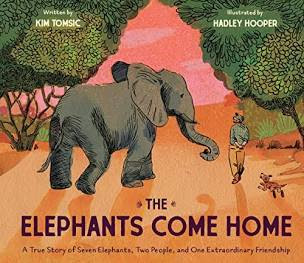
The Elephants Come Home  by Kim Tomsic and Hadley Hooper

One day in 1999, Lawrence Anthony and Françoise Malby hear that a herd of wild African elephants needs a new home. They welcome the elephants to their wildlife sanctuary—Thula Thula—with open arms. But the elephants are much less sure they want to stay. How will Lawrence prove to them that they are safe and loved?


Elephants of Thailand: The Smiling Elephant by Aston Heath and Kata Upama

A touching true story about Chang, a baby elephant, and his adventures as he is rescued from captivity. This book about elephants in Thailand takes the child through an elephant’s life, starting from the jungle, life in the tourist industry and then being rescued and taken to an elephant refuge park.

Another interesting book to look at would be: 

A Good Heart  by Lucy Melo and Sandra Severgnini
While this is not about elephants in a zoo, it is written by a zookeeper who has spent her working life with elephants at Taronga Zoo where she cared for two Asian elephants Jai Dee and Tukta.


Tuesday, April 2, 2024

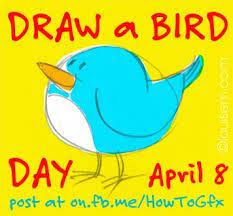
8th April Draw a Bird Day


I need to admit first up that I'm quite scared of birds and don't like them much, but I do think they make great artworks, greeting cards and drawings! So I see a lot of merit in celebrating this day. 

The history behind this day fascinates me. It occurs on the birthday of Doris Cooper, a young girl who in 1943 visited her uncle in hospital. She asked him to draw her a bird. She laughed at his efforts but the glee lifted the spirits of all the soldiers and thus each time she visited there was drawing competitions.

It would be nice to have your class draw a bird on that day or for the staff at school to each draw a bird and display them in the library for the students to see.

Our school library has a very large number of bird books for inspiration, but it might be better to find some drawing birds sources. There are so many to choose from on Youtube, but this one is doable with young children. We also have a few drawing animals books that include birds eg Drawing Animals  by Carolyn Scrace

Bridget Farmer draws wonderful birds. See The Bush Birds  and The Sea Birds

The beautiful illustrations are created from dry point etchings and hand coloured with watercolour paints.

Each book is an interactive treat. Featuring birdy riddles about Australia’s native birds, with interactive flaps that reveal the answers.


In Birdlife Pete Cromer draws birds using large colourful shapes that the students like to emulate.


Bronwyn Bancroft's Our Birds and other wildlife books of hers will also inspire students to draw birds.


When Sarah Allen's Busy Beaks  was shortlisted for the CBCA Book of the Year awards, my students created some great birds to display in the library.


And of course, there's always Bob and other drawing books by Marion Deuchars. Her books inspire children to draw!


Wednesday, December 20, 2023

21st December Anne and Samantha Day


Anne and Samantha Day
, celebrated on June 20 and December 21 every year, is a special tribute to celebrate both Anne Frank and Samantha Smith. Anne and Samantha Day takes place twice a year on the summer solstice and the winter solstice. This day is meant to let the world know about the pain, suffering, uproars, and revolution brought by these young women.

Who were Anne and Samantha? What was their contribution to the world?

Anne Frank was a Jewish girl whose writings in her diary — “The Diary of a Young Jewish Girl” — impacted generations. Frank was born in Frankfurt, Germany, on June 12, 1929, to Otto and Ruth Frank. The Frank family fled Nazi Germany and settled in Amsterdam, Netherlands. However, they were still not safe as the Nazis invaded Amsterdam in 1942 and the family needed to go into hiding behind a wall. Here she wrote her diary. Unfortunately the family was betrayed and Anne's father was the only family member who survived. He later found her diary.

Samantha Reed Smith was the daughter of  a social worker, Jane Goshorn Smith. She was born on June 29, 1972. When she was only ten years old, she wrote a letter to Yuri Andropov, who was the leader of the Soviet Union. She wanted to understand the Cold War between the USA and the Soviet Union.

In July 1983 Smith and her family spent two weeks in the Soviet Union, visiting Moscow, Leningrad, and Artek, a children’s camp on the Black Sea. After returning home, she gave numerous television interviews. In a December 1983 speech at the International Children’s Symposium in Kobe, Japan, she suggested that U.S. and Soviet leaders exchange granddaughters for two weeks every year, because a leader would not want to bomb a country that “his granddaughter was visiting.” On August 25, 1985, Smith and her father, Arthur were killed in a commuter plane crash.

These girls were young but very aware of the world they were living in just like so many of the young people today who also are very unhappy about what is happening in the world especially in relationship to the current conflicts and the number of civilian casualties.

Anne Frank and Samantha Smith deserve our recognition as positive influences on schoolchildren. Both of them understood that no matter how difficult the current circumstances are, it is important to strive towards a peaceful future for all nations.

What to do to celebrate this day? Learn more about the two girls, be inspired to do something that involves writing or read about conflict and how it affects children.

You could start with books such as these:

Anne Frank  by Isabel Sanchez Vegara

Behind the Bookcase by Barbara Lowell

The Woman who Rescued Anne's Diary  by Meet Pincus

Anne Frank by Josephine Poole

America's Youngest Ambassador  by Lena Nelson (This is not a book for children but it certainly gives adult readers plenty of food for thought)


Tuesday, June 20, 2023

20th June World Refugee Day

Refugee Week in Australia is always held from Sunday to Saturday of the week which includes 20 June (World Refugee Day). For 2023, it will be held from Sunday 18 June to Saturday 24 June. It is Australia’s peak annual activity to inform the public about refugees and celebrate positive contributions made by refugees to Australian society.  

There is always a theme for refugee Week and this year it is Finding Freedom.

It is always interesting having a discussion with the children under eight years old,  that I teach about what freedom is. They live very comfortable, safe lives and experience very little hardship so they have a view that being free means that you can do whatever you like...but        

What does it mean to be free?  

Are we all born free?


Using this page from this book might be a good place to start a discussion.


To live without the fear of war, to have your basic human rights upheld, to live in equality and without the fear of persecution are just some of the examples of what freedom can entail. Every day millions of people across the world embark on dangerous journeys for the sole purpose of finding safety and freedom. From Australia to nations across the globe, settling into a new environment after experiencing the perils of a refugee’s journey can also provide the opportunity to live, to love and to dream.   

Rightly so, young children here are generally shielded from the fear of war and persecution, but this doesn't mean that they cannot feel through literature some of the feelings that refugee children experience. There are Ukrainian children living temporarily in Sydney and our children may meet them at school, their sporting club or church. It is important that these privileged children see that refugee children are just like them, wanting to play, eat, learn...

There are so many picture books that can be shared to start conversations about what it is like to be a refugee. You can start with something subtle like Amira's Suitcase where it is inferred or you can look at life in a refugee camp where the children are busy playing as if it is in the school playground. 

The Refugee Council of Australia's website suggests picture books to read. Also look at this Pinterest page.

Tuesday, November 8, 2022

11th November Remembrance Day

Remembrance Day is observed in Australia on the 11th November to recall the date that World War 1 ended in 1918. In schools and public places at 11.00am on this day, a minute's silence is held and a bugler may play the Last Post. This pause in the day's bustle is to remember men and women who have died or suffered as the result of war. 

Our whole school observes Remembrance Day at 11.00am  and each class observes it in other ways too, usually by recalling the significance of poppies and making poppies to wear.

Although written in 2020, this is a good place to start. This video made by the Australian War Memorial is also suitable for young children.  This blog  entry from Bright Horizons will give you lots of ideas and a couple of poppy poems.

Britain, its allies Australia, New Zealand and Canada and America all fought in the first world war and that is why all have Remembrance Day, Armistice Day or Veteran's Day on the 11th November and why  it is often referred to in its literature for children.

In Scotland children may watch this video which is a good summary for all of us or read this book.

In Canada children might watch this video or read this book.

Last week I read Finding Winnie by Lindsay Mattick and Sophie Blackall to my Year 2 students and it starts with vet Harry Colebourn going off to World War 1 from Winnipeg in Canada. This sparked discussion about WW1 and who fought in it. Next week I will share The Year of the Perfect Christmas Tree by Gloria Houston and Barbara Cooney with the same classes and here Ruthie's father is off fighting in WW1 and he writes her a letter telling her that the war finished on 11th November and that he is coming home to America.

These stories are a good way to connect young children to history and WW1 without dwelling on the conflict and fighting that is inevitable in war. Of course, there are other books that do this too.

However if you do want some picture books that are more specifically about Remembrance Day look for these:

A Poppy for Pa by Rebecca Laing Zammit 

Lest We Forget by Kerry Brown

Australia Remembers by Allison Patterson

Reflection  by Rebecca Sharpe Shelberg

• Where the Poppies Now Grow by Hilary Robinson

Gallipoli by Kerry Greenwood

The Poppy Lady  by Barbara Walsh

These are stories that feature poppies (no war):

Poppy's Own Spot by Guido Van Genechten

Ava's Poppy  by Marcus Pfister

Poppy and the Blooms by Fiona Woodcock


Thursday, May 12, 2022

16th May International Day of Living Together in Peace


The International Day of Living Together in Peace is held on 16th May every year. The UN General Assembly, declared 16 May the International Day of Living Together in Peace, as a means of regularly mobilising the efforts of the international community to promote peace, tolerance, inclusion, understanding and solidarity. The day aims to uphold the desire to live and act together, united in differences and diversity, in order to build a sustainable world of peace, solidarity and harmony. 

Living together in peace is all about accepting differences and having the ability to listen to, recognise, respect and appreciate others, as well as living in a peaceful and united way.

Following the devastation of the Second World War, the United Nations was established to save succeeding generations from the scourge of war. One of its purposes is to achieve international cooperation in solving international problems, including by promoting and encouraging respect for human rights and for fundamental freedoms for all without distinction as to race, sex, language or religion.

The declaration came about as a result of the long-held and cherished concept — contained within the Constitution of UNESCO — that "since wars begin in the minds of men, it is in the minds of men that the defenses of peace must be constructed." The Declaration embraces the principle that peace is not merely the absence of conflict, but also requires a positive, dynamic participatory process, in which dialogue is encouraged and conflicts are resolved in a spirit of mutual understanding and cooperation.

Perhaps this year more than ever we need a day like this to focus on what we can do about the plight of Ukrainians. Australia has taken some Ukrainian refugees and so the children we teach may well meet refugee children. When I suggested at school that we did need to ensure that the children we teach had some understanding of what is happening in the world without necessarily scaring them, teachers said the children were too young to know, but I agree with this quote:

‘While children should never have to be in a war, to fail to teach them about the cruelty of warfare and its horrific consequences means that they will be less prepared to make decisions about the wars waged in the future and will be less likely to be empathetic to the innocent victims of war.’

The tricky part of teaching children about war and conflict, of course, is that you want to make sure that the material is not too ‘heavy’ for their age. It is difficult to find age-appropriate books about war for very young children. However, there are several really great books about PEACE that can be used to introduce some of the same concepts and there are picture books which allow young children to empathise with refugees.


If you too are looking, try these:


A simple and colourful book that gets preschoolers and kindergarteners thinking about what peace means in terms they can understand using examples from their daily life, such as, “Peace is sharing a meal.” “Peace is sharing a meal.” “Peace is making new friends.”


A unique book where the author asked children what peace feels like, looks like, sounds like, etc. Answers were gathered from a variety of children and are fun and interesting to read.  


At the beginning, the author ponders what needs to happen in order to bring peace to the world. Through successive pages, filled with poignant quotes from famous peacemakers, the story guides the reader to see how creating peace is a responsibility that we all share.


Like all great picture books, this one is an allegory that can be read on many levels. Superficially, it is about a child who finds a lone plant growing in a war-torn ruin and shows how he nurses it until it covers the barbed wire fence separating him from the other side. For young readers, we can emphasize the message of hope with the vision that one day war ends, and there can be peace. But only if we work at it.


A frog finds a beautiful flower and picks it for himself. When a mouse sees him with it, his jealousy overcomes him, and he swipes it. Frog’s friends come to his aid and chase the mouse away. But before the frogs can celebrate, Mouse’s friends return for a counter-attack. Before long the conflict has devolved into a full-scale frog-mouse war. By the end of it, all either side can ask is: why? This seemingly simple book tackles an important subject and will be an invaluable way to talk to young children about conflict and warfare. 


A young boy discusses the journey he is about to make with his mother. They will leave their town, she explains, and it will be sad but also a little bit exciting. They will have to say goodbye to friends and loved ones, and that will be difficult. They will have to walk and walk and walk, and although they will see many new and interesting things, it will be difficult at times too. A powerful and moving exploration that draws the young reader into each stage of the journey.


A compassionate counting book that captures the power of a welcoming community and teaches children about refugees and how each kindness can help them find a new home. 
More than half of the world's refugees are children fleeing scary situations in search of a safe place to live. 


Hassan feels out of place in a new cold, grey country. At school, he paints a picture showing his colourful Somalian home, covered with the harsh colours of war from which his family has fled. He tells his teacher about their voyage from Mogadishu to Mombasa, then to the refugee camp and on to England. But gradually things change. 


When a young girl has to travel to a new country and start at a new school, her Fear tells her to be alone and afraid. How can she hope to make friends if she doesn't understand their language? 


Thursday, April 24, 2014

25th April ANZAC Day


I have written about Anzac Day before here, but so many new picture books have been published since then that will help teachers and families share the significance of this day that I felt I should update my list. The new books probably have been initiated by publishers in readiness for next year, the 100th Anzac Day, but never the less many of them are memorable. A few weeks ago at a CBC event a publisher had the dummy for another book that is about to come out. I can't remember the title, author or illustrator, but the story made me cry. A young man goes off to war and is killed. His injured mate brings his coat home to his wife and as you can imagine she is shattered. I will find sharing this one very hard, but I have just read Lightning and another one about a horse that was in the battlefields and the two about dogs and I can see the students reading them and being moved by the love between the soldiers and their animals. See the list here on Pinterest and if you want an annotated list look here at Momo's list.

Wednesday, April 24, 2013

25th April Anzac Day


It is Anzac Day, a day when all Australians and New Zealanders remember their countrymen who have fought in wars, beginning with WW1. It is a holiday in Australia so any celebration done at school is usually before or after the actual day. This year it is right at the end of the school holidays so it will be afterwards. I have collected together all the picture books in my library ready for teachers and parents to borrow on Monday. Once it was hard to find books for early childhood aged children, but now there are so many wonderful picture books just right for sharing and discussing with young children.

Here's our collection:
• The Bantam and the Soldier by Jennifer Beck and Robyn Bolton
Lone Pine by Susie Brown and Margaret Warner  
Why Are You Marching, Daddy? by Di Burke
The Fair Dinkum War by David Cox
Memorial by Gary Crew and Shaun Tan
Anzac Biscuits by Phil Cummings and Owen Swan
Grandad's Medals by Tracy Duncan and Bruce Potter
A Day to Remember by Jackie French and Mark Wilson
The Donkey of Gallipoli by Mark Greenwood and Frane Lessac
The Red Poppy by David Hill and Fifi Colson
My Grandad Marches on Anzac Day by Catriona Hoy and Benjamin Johnson
Anzac Day Parade by Glenda Kane and Lisa Allen
In Flanders Fields by Norman Jorgensen and Brian Harrison-Lever
Harry and the Anzac Poppy by John Lockyer
My Mother's Eyes: The Story of an Australian Boy Soldier by Mark Wilson

Some of these are fairly new, such as Anzac Biscuits and Lone Pine which are particularly moving and provide plenty of food for thought. These books have been written about on many websites and many come with teaching notes.