Friday, January 7, 2022

SDG 8 Decent Work and Economic Growth


Goal 8  Promote inclusive and sustainable economic growth, employment and decent work for all.

Global unemployment has steadily decreased over the past two decades, from about 6.4% to 5.6%, but that does not guarantee that all jobs pay well, have safe work environments, or provide decent benefits for employees.


Here's the list of books to choose from.


The concept of 'work' is an interesting one for the students I teach, so I might start with a discussion of work and a picture book such as My Mum Goes to Work by Libby Gleeson.

When I ask the students what their mum or dad does for work, unless it is something with a label like 'lawyer', 'teacher' or 'architect' they usually do not know what they do. If you ask them where they work, at the moment they are likely to say 'at home', so really children under eight years old really do not know what 'work' is, let alone whether the work environment is safe or pays well. So probably here there needs to be some 'shock' factor to make them to think about work and what is fair. 

When I read My Rows and Piles of Coins by M. Tololwa Mollel  they are amazed that a child their age goes to work with his mother, that he doesn't have a bike and has to save up to get one, so reading the biography of Iqbal:A Brave Boy from Pakistan by Jeanette Winter might provide some shock factor.  Iqbal Masih spoke up against child labour in the carpet industry as recently as 1995. If you do read this story, please read the text before you read the 'foreword' or note from the author. You can read it depending upon the students' reaction to the book, knowing now that Iqbal was shot.  There is also a short novel about Iqbal written by Francesco D'Adamo.

Another book that deals with child labour is I Like, I Don't Like by Anna Baccelliere. It has minimal text and appears simple, but with an enabling adult this book allows for much discussion of perspectives of work, leisure, play, childhood.


Here's the blurb:

The UN Convention on the Rights of the Child states that every child in the world has the right to play. Unfortunately, that universal right is not always respected. I Like, I Don't Like presents this reality to readers by showing how children in varying circumstances can see the same object very differently. 

Children from more affluent circumstances are shown on one side of the double-page spreads, claiming they “like” objects that are fun and/or luxurious, while on the other side, the children who have to make and/or labour over those objects say they don’t like them. Some examples include a child playing with lego bricks on one side, and a kid having to cart piles of bricks on his head on the other. There are happy children eating rice juxtaposed with children having to plant and pick the rice. 

If you want a good book to show how work has changed and will continue to change given discussion of SDG 7 and renewable energy, read Town is By the Sea by Joanne Scwartz and Sydney Smith.


Here's the blurb:

A young boy wakes up to the sound of the sea, visits his grandfather's grave after lunch and comes home to a simple family dinner, but all the while his mind strays to his father digging for coal deep down under the sea. The illustrations show the striking contrast between a sparkling seaside day and the darkness underground where the miners dig. This beautifully understated and haunting story brings a piece of history to life. The ever-present ocean and inevitable pattern of life in a maritime mining town will enthral children.


In the booklet:

• What do your mum and dad do for work? Do you think they are safe at work? What would make a worker feel unsafe at work? Do you think children should work? What makes you think that?


• We read


• This story made me think work is


Thursday, January 6, 2022

SDG 7 Affordable and Clean Energy


Goal 7 Ensure access to affordable, reliable, sustainable and modern energy for all.

Now that the Sustainable Goals have become relatable to the environment, my students will have more to say. They have been looking at their impact on the environment since preschool where their teachers spend a large amount of time educating them about both their natural and built environment. They come to Kindergarten knowing about reducing their environmental footprint, including what to do to conserve energy at home and school so there is less reason to start at the beginning, but rather to leap in to a picture book that gives them 'food for thought'.


Here's the list of books to choose from.


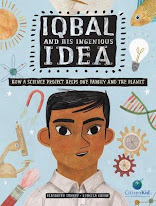
Maybe start with an inspiring person who solved a problem for his environment, such as Iqbal or William Kamkwamba . These two books are truly inspiring.


Here's the blurb:

It's monsoon season in Bangladesh, which means Iqbal's mother must cook the family's meals indoors, over an open fire. The smoke from the fire makes breathing difficult for his mother and baby sister, and it's even making them sick. Hearing them coughing at night worries Iqbal. So when he learns that his school's upcoming science fair has the theme of sustainability, Iqbal comes up with the perfect idea for his entry: he'll design a stove that doesn't produce smoke! With help from his teacher, Iqbal learns all about solar energy cooking, which uses heat from the sun to cook --- ingenious! Has Iqbal found a way to win first prize in the science fair while providing cleaner air and better health for his family at the same time?


Here's the blurb:

When fourteen-year-old William Kamkwamba's Malawi village was hit by a drought, everyone's crops began to fail. Without enough money for food, let alone school, William spent his days in the library . . . and figured out how to bring electricity to his village. Persevering against the odds, William built a functioning windmill out of junkyard scraps, and thus became the local hero who harnessed the wind. 


If you do not have these and you have a book from Allan Drummond's series about places that have taken on a sustainable energy project read one of them.


And of course there is always Philip Bunting's Superpower which explains renewable energy"with a positive outlook and a generous dollop of humour. Superpower shows that using renewable energy and taking care of our environment can be both fun and rewarding". 


Provocation: 
If your house had no access to electricity, what would you not be able to do? 

We read:


This book makes me want to... 


Wednesday, January 5, 2022

SDG 6 Clean Water


Goal 6 - Ensure availability and sustainable water management of water and sanitation for all.

Water is essential for all life on Earth, and therefore key to sustainable development. A very large proportion of those living in poverty lack access to clean water and basic sanitation.


Select a picture book here.

My students know that everything needs water, but they do take water and tap-turning for granted. When we discuss the page about water in A Life Like Mine and look at how much water they use in a day compared to a child in Africa, they are amazed. Even more so when we show it as amounts in containers. This book, although old now and the statistics may be out of date, is an excellent way to show students how other children live. Alternatively use pages 44 and 45 in Water A Deep Dive of Discovery  for more up to date statistics.

So where to start a discussion about the importance of clean water? Gizo- Gizo!  by EmilyWilliams is the perfect place for very young students to experience what happens when water becomes unclean or scarce. My students love Chubbo's Pool  by Betsy Lewin and this book takes the idea to the next step where it is not just the sharing of water, but making sure the water is clean too.

Here's the blurb:

Gizo-Gizo the spider is a lazy, selfish fellow. So when he starts a gold mine that pollutes the Zongo Lagoon and makes other animals sick, naturally he ignores everyone else's concerns. ''Someday, when I am rich, I will buy this place,'' he tells them. ''I can do whatever I want!'' But when the fish groan with upset stomachs and the frogs wince from sore throats caused by the filthy water, Tortoise and Crab decide that things have gone too far. They come up with a clever plan to teach their friend Spider a lesson and make him clean up his mess. Originally written and drawn by students from Cape Coast, Ghana, this community-created, contemporary folktale examines environmental sustainability and personal responsibility.


For older students who can cope with a longer text, read We Are Water Protectors by Carole Lindstrom; The Water Princess  by  Susan Verde or Ryan and Jimmy and the Well in Africa that Brought Them Together by Herb Shoveller.


SDG Booklet tasks:

Before reading. Ask • Did you have a bath or shower yesterday? Did you have a drink at breakfast and lunch time? Where did the water come from? 


We read ....


This story made me wonder what ...


Tuesday, January 4, 2022

SDG 5 Gender Equality


Goal 5  Achieve gender equality and empower all women and girls 
While the emphasis with this goal is to ensure girls and women have as much opportunity to succeed as boys and men, at the age of the students I teach it is still important for boys to see and learn what is okay for them.


The boys I teach need to know that it is okay for them to play with dolls, that it is okay for the girls to play with trucks, that they can wear pink, go to ballet lessons and sing. The preschool teachers often come in search of read-alouds that address gender issues, so in the library we have made sure we have books that they can use. We sometimes also need to assure parents that there are not books for boys and books for girls!


So when choosing books from the list here, think about what it is you want to discuss. Many of the biographical books on the previous list (SDG 4) would be appropriate here as well. Perhaps read a book that promotes discussion of gender and stereotypes and then read a biography of a woman who was not confined by stereotypes, such as Margaret Knight, Madame Curie, Ada Lovelace, Katherine Johnson, Emmaline Pankhurst, Elizabeth Blackwell, Mary Fanning or Greta Thunberg and discuss what she needed to do to be successful at what she did.


I love I'm a Girl! by Yasmeen Ismail.

Here's the blurb:

The girl in this book likes to win, she likes to be spontaneous, fast and strong, and because she also likes to dress in t-shirt and shorts, she is forever getting mistaken for a boy. And when she meets a boy who likes wearing princess dresses and playing dolls, they both quickly discover that they share interests that are wide and varied.

I am a Girl! is a wonderful celebration of being who we are and not being pigeon-holed or restricted by gender stereotypes.


Every parent should read Want to Play Trucks?  by Ann Stott and Bob Graham because it is not the children who struggle with gender types but one of the mothers.


Here's the blurb:

Jack and Alex meet almost every morning in the sandbox at the playground. Jack likes trucks - big ones. Alex likes dolls - pink ones, with sparkles. And tutus. But Jack doesn't want to play dolls, and Alex doesn't want to play trucks. Luckily for Jack and Alex, the day is saved with a little bit of compromise and the easy acceptance that characterises true friendship... What about dolls who drive trucks? 


Then read about an exemplary female role model such as Greta or highlight a place where girls do not go to school such as is the case in Nasreen's Secret School by Jeanette Winter.  I have read this to Year 2 classes and stopped at the part where it says the girls were not allowed to go to school, and then separated the students into boys and girls. The boys were asked to discuss what they thought it would be like to have no girls in the class. The girls were asked to discuss what they thought it would be like to stay home from school every day. Very interesting discussion pursues. 

However if your school hasn't a large collection of picture book biographies, you have a K to 6 library or you are wondering which book to purchase, read Walking to Water by Susan Hughes and Nicole Miles because it covers gender and SDG 6 Clean Water.


Here is the blurb:
In this inspiring story of individual activism, a boy recognizes gender inequality when his sister must stop attending school --- and decides to do something about it. Victor is very close to his twin sister, Linesi. But now that they have turned eight years old, she no longer goes to school with him. Instead, Linesi, like the other older girls in their community, walks to the river to get water five times a day, to give their mother more time for farming. Victor knows this is the way it has always been. But he has begun learning about equality at school, and his teacher has asked the class to consider whether boys and girls are treated equally. Though he never thought about it before, Victor realizes they're not. And it's not fair to his sister. So Victor comes up with a plan to help. 


Don't forget it is International Women's Day on 8th March, and a  great time to put together a book display in your library that encourages students to think about female achievements.


There are three things to do in the booklet:

Before reading:
Ask: Can you think of a time when boys and girls are treated differently?

The book we read was...

I think boys and girls should ...


Monday, January 3, 2022

SDG 4 Quality Education


Goal 4 Ensure inclusive and equitable education and promote lifelong learning opportunities for all.

There is so much we take for granted here in Australia when it comes to schooling and you read all the subgoals for this goal. We complain about dropping scores in global testing, in NAPLAN and lack of enough casual teachers, not the things listed here. Everyone in Australia has access to education that is safe, well-resourced and free so we should take advantage of it.


There are so many good books for this goal. Find some here.


If you just want to show very young children how different school can be from what they experience, read something like Rain School  by James Rumford or Elizabeti's School by Stephanie Stuve- Bodeen.

Here's the blurb:
It is the first day of school in Chad, Africa. Children are filling the road. "Will they give us a notebook?" Thomas asks. "Will they give us a pencil?" "Will I learn to read?" But when he and the other children arrive at the school yard, they find no classroom, no desks. Just a teacher. "We will build our school," she says. "This is our first lesson." James Rumford, who lived in Chad as a Peace Corps volunteer, fills these pages with the vibrant colours of Africa and the spare words of a poet to show how important learning is in a country where only a few children are able to go to school. 


Here's the blurb:
In this Tanzanian story it's the first day of school and Elizabeti can hardly wait. She puts on her new uniform and feels her shiny shoes. School must surely be a very special place!
Shortly after arriving at school, however, Elizabeti begins to miss her family. What if Mama needs help cleaning the rice? What if her baby sister wants to play? What if her little brother wants to go for a walk? But soon Elizabeti is making friends and learning her lessons. Best of all, she shares her experiences with her family that evening - and can apply what she has learned right away.


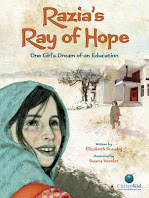
However, if you want students to know that school is not easily accessed for everyone, think about reading something more biographical, such as a book about Malala Yousafzai, Tererai Trent or Razia Jan.


There are three things to do:
Before reading ask:
How would you describe your school to someone who doesn't go to it? What is good about it?

Record the book you read
We read...

Finish this 
I wonder what education is like for ...


Sunday, January 2, 2022

SDG 3 Good Health and Well-Being


Goal 3 - Ensure healthy lives and promote well-being for all at all ages.


Ensuring healthy lives and promoting well-being at all ages is essential to sustainable development. Currently, the world is facing a global health crisis unlike any other — COVID-19 is spreading human suffering, destabilising the global economy and upending the lives of billions of people around the globe. 


Select a picture book from here.


While there are many picture books that have wellbeing as a theme, and many more that encourage young children to think about germs, hand washing and disease, maybe this is the place to ensure that young children are informed about the wonders of modern medicine, vaccines, hospitals and doctors so that they are not afraid of them. When school resumes I am sure that I will be asked by parents for a book about vaccination in preparation for their child being vaccinated. For many of my students they have not had a vaccination since they started school and their memory of it will have dimmed.

For that reason perhaps I would start with Peppa Gets a Vaccination. It is not a child pictured, but Peppa, someone the children like and admire. The story is simple, not too many details and positive as Peppa is rewarded for doing as she is asked.


Then perhaps follow up with Philip Bunting's Me, Microbes and I so that  students  realise that microbes are part of normal everyday life.


Here's the blurb:
You are covered in microbes - tiny living things so small that you can't see them without a microscope. 
Me, Microbes & I is full of fascinating and entertaining information about microbes, and provides young readers with a simple and fun guide to how things like bacteria and viruses work in the body. It is packed with handy tips on how to stay healthy, from enjoying fermented foods to taking care of your immune system, and also provides information on how to stop the spread of nasty viruses - including how to cough like a vampire, and the best way to wash your hands. 


In my booklet, there are just three things to do:

* Before reading: Ask: Do you like going to the doctor? What makes you give that answer?

* Write the title of the book you read. We read ...

* Complete this sentence: Three things I can do to make sure I stay healthy are  ...


Saturday, January 1, 2022

SDG 2 Zero Hunger


Goal 2 - End hunger, achieve food security and improved nutrition and promote sustainable farming.

A profound change of the global food and agriculture system is needed if we are to nourish the more than 690 million people who are hungry today – and the additional 2 billion people the world will have by 2050. Increasing agricultural productivity and sustainable food production are crucial to help alleviate the perils of hunger.


The list of picture books to choose from is here.


There are two picture books that highlight this goal very clearly. They are both based on real events. The first is shorter. The second is longer and suitable too for an older audience. There are teaching notes for The Good Garden 
http://www.citizenkidcentral.com/pdfs/GoodGardenThe_2105_teaching.pdf


Here is the blurb:
For a long time, the people of Hargigo, a village in the tiny African country of Eritrea, were living without enough food for themselves and their animals. The families were hungry, and their goats and sheep were hungry too. Then along came a scientist, Dr. Gordon Sato, who helped change their lives for the better. And it all started with some special trees.

These are the trees, 
Mangrove trees, 
That were planted by the sea.

With alternating verse and prose passages, The Mangrove Tree invites readers to discover how Dr. Sato's mangrove tree-planting project transformed an impoverished village into a self-sufficient community. 


Here is the blurb:
Based on the real story of farm transformation underway in Honduras and many other countries, this book offers children ways they can be part of the movement to grow "good gardens" and foster food security.
Eleven-year-old María Luz and her family live on a small farm. This year their crop is poor, and they may not have enough to eat or to sell for other essentials, such as health care, school uniforms and books. 
When María's father must leave home to find work, she is left in charge of their garden. Then a new teacher comes to María's school and introduces her to sustainable farming practices that yield good crops. As María begins to use the same methods at home, she too sees improvements.

In my booklet, there are just three things to do:

* Before reading: Ask: When was the last time you felt hungry? What did it feel like? How long did you have to wait for food?

* Write the title of the book you read.

* Complete this sentence: This story made me think about ...