Wednesday, June 21, 2023

22nd June World Rainforest Day

June 22 is World Rainforest Day, which is a “collaborative effort to raise awareness and encourage action to protect the world’s rainforests”.

Tropical rainforests have an outsized role in the world. Of the Earth’s ecosystems, rainforests support the largest variety of plants and animal species, house the majority of indigenous groups still living in isolation from the rest of humanity, and power the mightiest rivers. Rainforests lock up vast amounts of carbon, moderate local temperature, and influence rainfall and weather patterns at regional and planetary scales. 

The Amazon Rainforest makes up nearly a third of all the tropical rainforests left on Earth and it plays a vital role in sustaining life on the planet to help stabilise the climate. Yet, this vast, tropical wilderness and its inhabitants are losing the fight for survival.

It is important for children to know about the role of rainforests. In the library, the books we have concentrate on the joy and animals found in rainforests but as they get older things like deforestation become more important.

Whenever  Rainforest by Julia Groves is on display it is borrowed almost immediately. This simple book's cover illustration, its immediacy and the size and shape of the book make it so appealing.

Books in the library:

• Rainforest by Julia Groves

• Over and Under the Rainforest by Kate Messner and Christopher Silas Neal

• The Rainforest Book  by Charlotte Milner    

• The Really Old Forest by Cecil Kim and Elsa Huet

• We're Roaming in the Rainforest  by Laurie Krebs and Anne Wilson

• Secrets of the Rainforest by Carron Brown and Alyssa Nassner

• Going to the Rainforest by Black Dog Books

• Let's Visit the Rainforest  by Buffy Silverman

• Rainforest by Roger Priddy

• Creatures of the Rainforest by Warren Brim and Anna Eglitis

• Rainforest by Helen Cowcher

• The Tree of Wonder  by Kate Messner

I like to connect the students to people who have a passion for what we are talking about. I usually do this through a picture book biography or a film clip. These two biographies are perfect for this:

• Rainforest Warrior by Anita gainer and Margaux Carpentier

This is the story of Chico Mendez, a Brazilian rubber tapper in the Amazon rainforest who became an environmental activist who fought to save the Amazon.


• The Leaf Detective; How Margaret Lowman Uncovered Secrets in the Rainforest  by Heather Lang and Jana Christy.

This is the story of Meg Lowman who was a courageous explorer, who made amazing discoveries high in the forest canopy despite challenges such as males who thought a woman shouldn't be up in the trees and loggers who were clearing the forests. She became  a pioneer scientist in a discipline that demands exceptional imagination, courage, and physical rigour. But of equal importance, she has created an extraordinarily important branch of environmental and conservation research.


21st June World Giraffe Day


World Giraffe Day
is an annual event initiated by the Giraffe Conservation Federation to celebrate the longest-necked animal on the longest day of the year. I have blogged about it before but this time I want to highlight two biographies about Anne Innis Dagg, the first giraffologist and the new book by Nicola Davies and Emily Sutton, The Season of Giraffes.

When Anne Innis Dagg saw her first giraffe in a zoo she was entranced. So much so that a love for giraffes shaped her whole life. She decided at a young age that she would one day travel from her home in Canada to study giraffes in their natural environment in Africa. 

After overcoming obstacles based on her gender, Anne succeeded in fulfilling her dream in 1956 and became the world's leading scientific expert on giraffes and continues to be an advocate for giraffes in their natural environment through her foundation.

Her work is now accessible to child readers through these two books.


• Anne and her Tower of Giraffes (2022) by Karlin Gray and Apart Varma 

Read a review 

•The Girl Who Loved Giraffes and Became the World's First Giraffologist (2021)by Kathy Stinson and Francois Thisdale. See review here.


The Seasons of the Giraffes is an inspiring story of how giraffes have dealt with modern climate change. Here's the blurb:

In this powerful picture-book, bestselling children's author Nicola Davies writes in collaboration with conservationist Kisilu Musya to explain how one of the world's best-loved animals has dealt with the challenges of climate change. Giraffes were once a part of daily life in Niger – but after severe droughts one year, when the rains eventually return, the giraffes are nowhere to be seen. However, as award-winning artist Emily Sutton's magnificent illustrations capture, 
The Season of Giraffes ultimately has a hopeful, celebratory story to share ... and an important point to make about how human beings can change for the better.

Here's Nicola Davies blogging about this book.

Tuesday, June 20, 2023

20th June World Refugee Day

Refugee Week in Australia is always held from Sunday to Saturday of the week which includes 20 June (World Refugee Day). For 2023, it will be held from Sunday 18 June to Saturday 24 June. It is Australia’s peak annual activity to inform the public about refugees and celebrate positive contributions made by refugees to Australian society.  

There is always a theme for refugee Week and this year it is Finding Freedom.

It is always interesting having a discussion with the children under eight years old,  that I teach about what freedom is. They live very comfortable, safe lives and experience very little hardship so they have a view that being free means that you can do whatever you like...but        

What does it mean to be free?  

Are we all born free?


Using this page from this book might be a good place to start a discussion.


To live without the fear of war, to have your basic human rights upheld, to live in equality and without the fear of persecution are just some of the examples of what freedom can entail. Every day millions of people across the world embark on dangerous journeys for the sole purpose of finding safety and freedom. From Australia to nations across the globe, settling into a new environment after experiencing the perils of a refugee’s journey can also provide the opportunity to live, to love and to dream.   

Rightly so, young children here are generally shielded from the fear of war and persecution, but this doesn't mean that they cannot feel through literature some of the feelings that refugee children experience. There are Ukrainian children living temporarily in Sydney and our children may meet them at school, their sporting club or church. It is important that these privileged children see that refugee children are just like them, wanting to play, eat, learn...
There are so many picture books that can be shared to start conversations about what it is like to be a refugee. You can start with something subtle like Amira's Suitcase where it is inferred or you can look at life in a refugee camp where the children are busy playing as if it is in the school playground. 

The Refugee Council of Australia's website suggests picture books to read. Also look at this Pinterest page.

Sunday, June 18, 2023

19th June Gerald Rose (1935 -2023)


The English illustrator, Gerald Rose has three books that have played a huge role in my teaching career and  parenting life. I wrote about "Ahh!" Said Stork  yesterday and while looking for an image of the cover I read an obituary for Gerald Rose. He died on 5th May 2023. 


In his obituary I read that he was the youngest winner of the Kate Greenaway Medal which he won in 1960 when he was in his twenties and barely out of art school.

Back to his books:

The Tiger Skin Rug  seems to be his only picture book still in print. This is a good thing because it is such a good story. No class or child I have read it to has ever commented on its implausibility, but instead revels in the fact that the tiger is triumphant. 

Trouble in the Ark is the best book for teaching vocabulary, especially verbs. The cumulative plot where one act is the catalyst for the next introduces students to how many different actions there are words for. All the animals cooped up in the ark with Noah begin making loud noises at each other, and the result is chaos.

"Ahh!" Said Stork  is also a deceptively simple cumulative story but it is a great beginning reader because once a child reader knows the pattern they can use the pictures to work out what the words say.

In the library we also has copies of How St Francis Tamed the Wolf and Horrible Hair.  The first simply tells the story of St Francis and his love of animals, the second a bad hair day story but the expression Rose is able to add to his characters whether they are people or animals shines through here too.


Perhaps at some point in the future a publisher will deign to feel that many of his books are worthy of republishing!


17th June World Croc Day


How can there be so many things on 17th June? I didn't rush to write about crocodiles because I thought I had done it previously, but apparently I have not. I have written about Alligator Day and listed suitable books, but there are far more picture books about crocodiles than alligators. The young children I teach will always borrow a crocodile book when they are out on display.


Here's some favourites that are still in print. They are fun not particularly factual!

• The Enormous Crocodile  by Roald Dahl

• Lyle, Lyle Crocodile by Bernard Waber

• Princess Cora and the Crocodile by Laura Amy Schlitz

• Professional Crocodile  by Giovanna Zoboli

• If I Had a Crocodile  by Gabby Dawnay

• The Crocodile Who Didn't Like Water by Gemma Merino

• No Way Yirrikipayi!  by Alison Lester

• Strictly No Crocs by Heather Pindar

• Beware of the Crocodile by Martin Jenkins

• Crocodile Beat by Gail Jorgenson

And these that aren't in print but if they're in your library they worth borrowing.

• Guji Guji by Chih-Yuan Chen  

• "Ahhh!" Said Stork by Gerald Rose (my son loved this book. At three he could recite it off by heart)

• Crocodile Smile by Lois Ehlert


Need more, look here.


Saturday, June 17, 2023

17th June World Day to Combat Desertification


Every year on June 17th, the World Day to Combat Desertification and Drought highlights methods to prevent desertification. It’s also a day to focus on finding ways to recover from drought.

Desertification is the process by which fertile land becomes desert. This is usually a result of drought, deforestation, or inappropriate agriculture.

There are also ways to reverse land degradation. This includes planting trees, enriching the soil with nutrients, preventing soil erosion, and establishing seed banks.

It’s more important than ever to combat desertification and drought. This is because by the year 2050, there needs to be enough productive land to meet the demands of 10 billion people.

In Australia drought can be a major problem, as rainfall is not always the same every year. Indigenous Australians are very good at 'reading' country so a good place to start with children is to look at a book such as Country Tells Us When... by Taheena Cooper 

Some Australian picture books that help explain drought to children:

• Two Summers  by John Heffernan and Freya Blackwood

• It's a Miroocool! by Christine Harris and Ann James 

• All I Want for Christmas is Rain by Cori Brooke and Megan Forward

• When the Waterhole Dried Up by Kaye Baillie and Max Hamilton

• Big Rain Coming by Katrina Germein and Bronwyn Bancroft

• Mrs White and the Red Desert by Josie Boyle and Maggie Prewett

• Drought by Jackie French and Bruce Whatley

• The Story of Rosy Dock by Jeannie Baker

Deforestation is a much harder topic to show children using picture books, but the few I can think of are excellent:

• A Forest by Marc Martin

• Where's the Elephant by Barroux

• The Tree and the River by Aaron Becker

• The Great Kapok Tree  by Lynne Cherry

• Refugees  by David Miller

• Turtle Taxi by Guundie Kuchling

• Window  by Jeannie Baker

• The Tree  by Neal layton

To show students the power of planting trees share one of the excellent picture book biographies about Wangari Maathai planting trees in Kenya.

• Seeds of Change by Jen Cullerton Johnson

• Wangari's Trees of Peace  by Jeanette Winter

• Planting Peace  by Gwendolyn Hooks

• Mama Miti  by Donna Jo Napoli

• Wangari Maathai by Franck Prevot 

• Planting the trees of Kenya  by Claire Nivola

or something more general o trees like

• Trillions of Trees  by Kurt Cyrus

• Little Sap  by Jan Hughes

• It Starts with a Seed by Laura Knowles


Friday, June 16, 2023

17th June Eat Your Vegetables Day


The goal of  a day such as this is to have a vegetable with every meal, and to also have a vegetable as a snack during the day.

If you’re a parent, you might want to get your kids, particularly fussy-eater ones who baulk at their vegetables to help with preparing, cooking or buying some vegetables or even  doing some craft using food. 

Read Off to Market  by Alice Oehr before you make a shopping list.

Read Eating the Alphabet  or Growing Vegetable Soup by Lois Ehlert or a recipe book like Every Color Soup before you cook.


Look at books such as The Potato People , I Spy Food, and One Potato  and then have some fun with food.


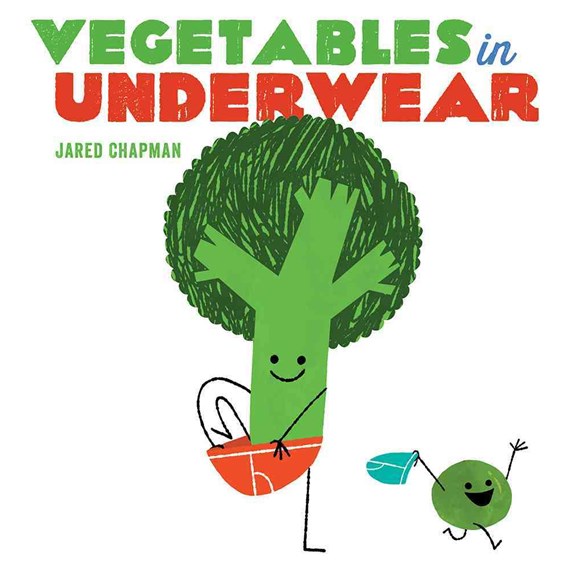
There are so many picture books now where foods are heroes and personified that reading about vegetables with children is easy. Have you seen the Supertato books by Sue Hendra and Paul Linnet, Runaway Pea by Kjartan Poskitt and Alex Wilmore, Dinosaur Juniors by Rob Biddulph, Vegetables in Underwear by Jared Chapman, the Peas Series by Keith Baker, Rot by Ben Clanton or the Food Group books by Jory John and Pete Oswald. In these books vegetables have fun! 


There are two series for beginning readers to read  themselves too... Cookie and Broccoli and Wedgieman. 


If you are looking for other books about vegetables look here.