Showing posts with label poetry. Show all posts

Thursday, January 1, 2026

2nd January Motivation and Inspiration Day


Motivation and Inspiration Day is celebrated on 2nd January in the United States of America. It is a day to sober up after all the festivities of New Year’s Eve and really get to work on resolutions. At the start of each new year, we all resolve that this is the year we will achieve our set goals and improve ourselves in general. So maybe, 2026 should also be the Year of Emotional Intelligence. After all, just as statistics show that people who read do better and earn more, statistics also show that people with high emotional intelligence do better and earn more after completing their education. Just as we teach reading as a subject at school, emotional intelligence can be taught.


This is the first four lines of a New Year poem by Jackie Kay. It is a perfect way to introduce what you think should be part of this year and your future.


Promise

by Jackie Kay

Remember, the time of year
when the future appears
like a blank sheet of paper
a clean calendar, a new chance.

From A Poem For Every Day Of The Year by Allie Esiri

Given the world extremes that students have been privy to recently, war, intolerance, racism, and the total disregard of others and their views, it is time to up the time spent on emotional intelligence, teaching empathy and about inclusion. The best way to do this is through circle time, class meetings, literature and strategies that enable students to understand different viewpoints.

The phrase 'a new year of kindness' has evolved from a hopeful sentiment into a structured intention for societal healing and emotional resilience. Unlike fleeting trends, it emphasises sustainable acts of care, inclusion, and active listening. It encourages individuals to reflect on how their words and actions impact others—not just during holidays but throughout the calendar year. What will you resolve to do with a clean calendar and a blank sheet of paper?

Emotional intelligence is not about being nice or kind all the time. It is about being self-aware enough to navigate discomfort and uncertainty, to connect without losing yourself. Vulnerability should not equate with weakness. 

At school we do a good job of ensuring students are in touch with their emotions and to know how to express them, but emotional intelligence is not about controlling emotions. It is about collaborating with them and using them to express empathy, to feel deeply and to make a difference for others.

There are five elements of Emotional Intelligence. One of them is empathy, but it is not enough on its own. There are many images online which provide a graphic for Emotional Intelligence. This is just one, but I like it  because it gives a brief detail about each of the elements.


Emotional Intelligence (EQ) plays an important role in mental health. It can help us build resilience, promote wellbeing, and develop emotional resilience.


Empathy and sympathy are not the same thing.


Happy people sitting on a lawn smiling


I am not saying 'empathy' is easy to teach, but I do think too many teachers put it in 'the-too-hard basket'. I find it very easy to read to and share books with my students that take them beyond their life and their comfort zone. Of course they may need scaffolding and I always ensure there is time for discussion. Questions I ask my students often are 'What is puzzling you?' and 'What are you wondering about?' as ways to understand what they are thinking about. 


The annual 
"Read for Empathy" booklist is announced in February by the non-profit EmpathyLab. I use these lists as research for my library shopping lists. I like the way it is divided into sections and age groups.

Similarly, Inclusive Books for Children provide wonderful annotated lists which will help teachers and teacher-librarians match their SEL (social-emotional learning) needs to the right books.

Book sites like these are extremely helpful as they mean teachers get to know what is new and appropriate. Otherwise there is a tendency to fall back on books they know from their own education and students miss out on what is new and pertinent.


Friday, November 8, 2024

12th November Michael Rosen Day


On  Tuesday 12th  November enjoy a day of poetry, stories and creativity to celebrate 50 years since Michael Rosen's first book.

We all know We're Going on a Bear Hunt , but there are so many other resources to explore. I had fun with Year 2 recently reading and hearing Michael's poetry, but next week I plan to share with other grades too.

I have put out a display of Michael's books in readiness and am hoping many of them will be borrowed. There is something for everyone.


Popular with the preschool and illustrated by Robert Sterling


There's the books about Rover that are illustrated by Neal Layton


There's the picture books illustrated by Bob Graham


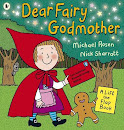
The books inspired by nursery rhymes and fairytales illustrated by Nick Sharratt and David Melling


Short novels for beginning readers


There's so many really good stand alone picture books:


And of course there's all the poetry anthologies. There's a new one coming in January.


Monday, March 21, 2022

Harmony Week, World Poetry Day, World Maths Day, World Folktales and Fables Week.


Why are so many things worth celebrating at school all in the same week? The teachers and children at my school are overwhelmed. The teachers also have Parent Teacher meetings this week too. 


Harmony Week is Monday 21st to Sunday 27th March.

World Poetry Day is Monday 21st March.

World Maths Day is Wednesday 23rd March.

World Folktales and Fables Week is Sunday 20th March to Saturday 26th March.

We celebrated Harmony Day today with a variety of multicultural activities and lots of reading and craft.

We are celebrating Maths Day with another round of rotating activities for each grade. We have had very many successful Poetry days in the past but not this year and Folktales and Fables will get to shine in the library at another time.


Monday, August 16, 2021

16th August Science Week

It is Science Week! If I was at school there would be a wonderful display of books for students to borrow, but we are home in lockdown. Today while planning lessons and locating poems that had a science focus, I thought of all the wonderful poetry books on the shelves at school that would have been helpful.

Here's a list:

* Spectacular Science by Lee Bennett Hopkins

* Our Big Home  by Linda Glaser and Elisa Kleven


* Thank You Earth by April Pulley Sayre 


* Volcano Wakes Up by Lisa Westberg Peters and Steve Jenkins


* Earthshake  by Lisa Westberg Peters and Cathie Felstead


* Ubiquitous by Joyce Sidman and Beckie Prange

* Red Sings from the Treetops by Joyce Sidman and Pamela Zagarenski

* Dark Emperor by Joyce Sidman and Rick Allen (in fact nearly anything by Joyce Sidman)


* Anything by Helen Frost and Rick Lieder


* Anything by Douglas Florian


* A Leaf Can Be
* Water Can Be
* A Rock Can Be  by Laura Salas


Sunday, November 25, 2018

24th November Fairy Bread Day

The 24th November is Fairy Bread Day everywhere, but it means more to Australians because fairy bread is native to Australia — something we can all be very proud of. 


Fairy bread is sliced white bread spread with margarine or butter and covered with hundreds and thousands, which adhere to the bread. It is typically cut into two triangles. It dates back to the 1920s in Australia, and is first recorded in The Hobart Mercury, which describes children consuming the food at a party. It continues to be popular at children's birthday parties and every Australian adult will have fond memories of fairy bread parties. A dear friend of mine actually has her birthday on the 24th November so I'm sure she'll be having fairy bread parties for quite some time yet. 

If you are reading a book set in Australia and a birthday is celebrated there may well be mention of fairy bread, but Ursula Dubosarsky took the iconic Australian party food and made it the focus of a whole book for beginning readers. Becky wants lots of fairy bread at her party, but there is too much. It is amazing all the things she thinks to do with it. For the readers in my library it is a favourite in the Nibbles series. 

Another beginning novel that is out of print but likely to be in many Australian school libraries is Bob the Builder and the Elves by Gillian Rubinstein. In this delightful story messy Bob has elves who clean for him and when they leave they leave him fairy bread to eat. He wants these elves gone from his house and enlists the help of his friendly neighbour, librarian Lily Sweet. Even some of the boys at school enjoy this story. Blake Education has teaching activities to go with this book.

There must be other Australian stories that feature fairy bread. Can you think of any? Interestingly the most iconic Australian book featuring food, Possum Magic doesn't feature it.

The name 'fairy bread' supposedly came about from a line in a poem, Scottish-born novelist  Robert Louis Stevenson published in 1885. It is poem 37 in 

A Child’s Garden of Verses and Underwoods. 
 1913.
  

37. Fairy Bread
COME up here, O dusty feet!
  Here is fairy bread to eat.
Here in my retiring room,
  Children, you may dine
On the golden smell of broom         
  And the shade of pine;
And when you have eaten well,
Fairy stories hear and tell.


Sunday, March 19, 2017

21st March World Poetry Day


A poet is, before anything else, a person who is passionately in love with language. W. H. Auden 


I try to share poetry on Tuesday 21st March every year, sometimes just with the classes I teach, sometimes in assembly or sometimes I organise a whole school celebration. At my school the whole school is involved in eSmart Week events so unfortunately poetry will come off second best. All the more reason why my lessons in the library this week will all involve sharing poetry.

Here are five newish books that are well worth adding to any collection:
• Daniel Finds a Poem by Micha Archer
This story celebrates poetry found in the world around us.  What is poetry? It is glistening morning dew. It is crisp leaves crunching. If you look and listen, it's all around you.
• All the World a Poem by  Gilles Tibo
Also for young children this is a tribute to poetry. Each poem is illustrated with paper collage art which is child-like and takes poetry to the level of the child.
•  A Great Big Cuddle Poems for the Very Young by Michael Rosen and Chris Riddell.
This wonderful book has just been shortlisted for the Kate Greenaway Award. Enough said.
• Macavity The Mystery Cat by T.S.Eliot and Arthur Robins
This is a picture book version of this great poem. Arthur Robins has now done four of the cat poems as picture books...see Mr Mistoffelees, Skimbleshanks and Jellicle Cats as well.
• A Poem for Every Night edited by Allie Esiri.
This is a magnificent collection of 366 poems for older children, one to share ever night of the year. The poems - together with introductory paragraphs - have a link to the date on which they appear.


Thursday, October 13, 2016

14th October Bob Dylan wins Nobel Prize

The first thing I heard on the news as I woke this morning was that Bob Dylan had won the Nobel Prize for Literature. As I like Dylan's songs and know so many of the lyrics I thought it was highly appropriate that he win for his poetry, but as I have listened to the radio today I see that not everyone agrees that he should win a prize for writing. Too bad, I say, because his words definitely are worth sharing and I will make sure that the students I teach know who Dylan is and some of what he has written. I will do this by sharing the picture books in our library that have his words accompanied by wonderful artwork.

Starting with this biography of his younger life, the children will discover that the American poet Bob Dylan was born Bob Zimmerman in rural Minnesota. He changed his surname to Dylan after his favourite poet, Dylan Thomas. He pursued his love of music in New York where he met and was mentored by Woody Guthrie.

Then we have four books which feature his words. They are:
* Blowin' in the Wind illustrated by Jon J. Muth.
* Man Gave Names to All the Animals illustrated by Jim Arnosky
* If Dogs Run Free  illustrated by Scott Campbell
* If Not For You  illustrated by David Walker


SaveSave

Friday, March 20, 2015

21st March World Poetry Day


Poetry reaffirms our common humanity by revealing to us that individuals, everywhere in the world, share the same questions and feelings.
Poetry is the mainstay of oral tradition and, over centuries, can communicate the innermost values of diverse cultures. 
In celebrating World Poetry Day, March 21, UNESCO recognizes the unique ability of poetry to capture the creative spirit of the human mind.


These are the first three paragraphs on the World Poetry Day website and these in themselves make it such a worthwhile day to commemorate. Unfortunately this is on a Saturday this year and we are not at school. We have had some great school celebrations on Poetry Day in the past. This year we have had a poetry book display in the library and I have encouraged the children in class time to borrow a poetry book by sharing a poem with each class. 

There are so many beautiful single poem poetry books. In fact it always surprises me how many books SCIS wants us to put in the poetry section of the library rather than in fiction, not that we always comply. There are also more and more very child friendly illustrated anthologies available. Below are some recent acquisitions, all anthologies that I love:


Thursday, May 29, 2014

28th May Maya Angelou (1928 - 2014)

Maya Angelou ' a warrior for equality, tolerance and peace'. The African-American author, poet and human rights activist has died. I heard about this sad event on the news tonight and then thought how strange, yet serendipitous, that today I had shared her children's book My Painted House My Friendly Chicken and Me with students at school. She is not known particularly for her children's books, but this beautiful photo journal tells the story of a young Ndebele girl who lives in South Africa. It is very colourful and designed in a way that invites close perusal.

Saturday, March 13, 2010

18th March Douglas Florian (1950)

The Sharks
Sharks can park
Wherever they wish.
They do not fear
The other fish.
Sharks can swim
Wherever they please.
On this each other
Fish agrees.

This is one of the fabulous sea creature poems that are in Douglas Florian's In the Swim.Young Australian children are fascinated by sharks and they will borrow shark books again and again, so a poster of this poem displayed in the library would be well read. American, Florian writes very quirky poems about all sorts of things and then illustrates the poems himself with equally unique paintings. His animal poetry anthologies such as Mammalabilia; Beast Feast and Insectopedia are fun to share with children. He writes about skinks, aardvarks, camels, flying fish, absolutely everything that you can think of. There is a very interesting interview explaining his unconventional work. His poems will be perfect for World Poetry Day on the 21st March!

PS. While researching for and collecting poems for Poetry Day I learned that Lillian Moore's birthday was yesterday and I didn't mention her. How remiss. She started her working life as a teacher so her poems appeal to young children. See her anthology I'm Small and Other Verse. Add her to your calendar. This poem of hers is very fitting for this moment!

I Left My Head

BY LILIAN MOORE

I left my head
somewhere
today.
Put it down for
just
a minute.
Under the
table?
On a chair?
Wish I were
able
to say
where.
Everything I need
is
in it!