Showing posts with label Jan Ormerod. Show all posts

Monday, December 16, 2019

16th December A Donkey's Christmas

This morning when I checked in at my friend's blog: Momo Celebrating Time to Read, I saw that she has written about the donkey's view of Christmas because of this lovely book The Little Donkey. This reminded me of the year at school where one of the Year 1 teacher's favourite Christmas book was that version of the nativity told from the point of view of the donkey. It started the library staff on a mission to find other donkey books and other nativity stories told in first person from an animal's point of view. We were surprised to find that we had quite a lot of both, so the Christmas display that year ended up being about the animals at the birth of Jesus. It looked wonderful with all the books and soft animal toys out to accompany them. As well as the many donkeys  there were cows, sheep,  a dog, (Room for a Little One),  a cat (Cat in the Manger), a camel (The Last Straw), a hare (Hare's Christmas Gift), and even birds (The Birds of Bethlehem) and spiders (Spider's Gift: A Christmas Story).

Today I had a catch up with the donkey-mad teacher and her two small girls and we talked about Christmas books as she is doing the 25 days till Christmas with her girls, unwrapping a book to read each night. She said that she had tried to buy the donkey book but it was out of print and then she wanted to know the name of a book to buy about the origin of tinsel and we had a chat about Cobweb Christmas  and the other versions of this story. There are just so many wonderful picture books about Christmas and it does seem such a shame that they only really get an airing (reading) at Christmas. Our school year finishes so early in December that for some books that means they're only read once.


Here's what the library has about donkeys that were present at Christmas:
• The Little Donkey by Gerda Scheidl and Bernadette Watts
• The Lion, the Unicorn and Me by Jeanette Winterson and Rosalind MacCurrach
• Ruby the Christmas Donkey by Mirabel Cecil and Christina Gascoigne
• Father Christmas and the Donkey by Elizabeth Clark and Jan Ormerod
• The Donkey's First Christmas by Susanne T. Schroder
• The Ox and the Donkey by Gunter Spang and Loek Koopmans
• Little Donkey's Wish by Udo Weigelt and Pirkko Vainio
• The Donkey's Dream by Barbara Helen Berger
and some newer ones still available to purchase
• Father Christmas and the Donkey by Elizabeth Clark and Ari Jokinen
(the same story as above but with new illustrations instead of Jan Ormerod's)
• The Christmas Story as Told by Assellus the Christmas Donkey by Janet Duggan and Catherine Robertson
• Mary's Little Donkey by Gunhild Sehlin and Helene Muller

And stories about the spider and the origins of tinsel
• Cobweb Christmas by Shirley Climo and Jane Manning
• The Christmas Spider's Miracle by Trinka Hakes Noble and Stephen Constanza
• The Spider's Gift: A Ukranian Christmas Story by Eric A. Kimmel and Katya Krenina


Sunday, August 17, 2014

18th August Book Week Connecting to Reading Part 1

It is Children's Book Week in Australia and the theme 'Connect to Reading' has meant some very insightful reading has been happening in my library. My 5  to 8 year olds have been reading from the Early Childhood and the Picture Book shortlists. We have been connecting these titles to other older books that they may not have known too.

We haven't done any art or craft activities yet. I am saving the Reading to Connect activities for fun in the library this week when we will draw with rainbow pencils and paint with mud, as Ann James does in I'm a Dirty Dinosaur, try to draw a duck in a minute inspired by Silver Buttons and make plastic bag parachutes to float our teddies off the second floor down onto the playground.

So far though we have made text-to-text connections between the two lullabies on the Early Childhood shortlist Baby Bedtime and Kissed by the Moon. We played lullaby music and lay down on the mat as I read.

We read The Swap and connected it to Pat Hutchins 1985 classic The Very Worst Monster which is also about sibling rivalry and the need to get rid of a sibling.

We read Banjo and Ruby Red  and connected it with many books Year1 and I had read last term when we looking at chickens and foxes in picture books and talking about stereotypes. The children thought it reminded them of Albert and Lila,  a chicken and pig story where they help each other to outwit a fox and The Chicken Thief  because 'the hen and fox become good friends'. This connection also led to us reconnecting with Bear and Chook the good friends in Lisa Shanahan's award-winning books.

And although we live near the beach, the concept of grommet was very new to my students, so to read Granny Grommet and Me  we first looked at some surfing books and the news report about granny grommets. One of my students connected this story with Olivia Learns to Surf because in it Olivia is taught to surf by her grandmother. We quickly visited it, but the children were much more interested in talking about sea dragons so that is where we went, off exploring them. The book Seahorses and Seadragons led us to connections of all kinds especially once the students discovered from the maps that they could be found in the sea off Sydney. Next we read another Australian picture book Seadragon Sea  by Margaret Spurling.

The shortlisted Early Childhood books were well received by Kindergarten and Year 1 students, but The Swap  and Banjo and Ruby Red  were the most popular by far when we pretended to be judges and voted, so for once the judges agreed with the children which often isn't the case. It is a fitting tribute to Jan Ormerod to have her last book achieve such an award!

Thursday, April 4, 2013

6th April International Pillow Fight Day

On Saturday April 6th 2013, there will be massive pillow fights in cities around the world, including here in Sydney. It looks to be lots of fun and perhaps that is why pillow fights seem to occur in children's picture books. Three books that immediately came to my mind were all Australian and by authors and illustrators who have won Children's Book Council awards.  Here they are, a Deborah Niland, a Catherine Jinks and Andrew McLean and a Jan Ormerod book, but I'm sure there must be more. Do you know a good pillow fight book?


Friday, February 22, 2013

18th February Barbara Firth (1928 - 2013)


Sad news this week, reading that Barbara Firth had died on 18th February, and so soon after Jan Ormerod. Two wonderful illustrators that we will not see any new illustrations from. Luckily so much of their work is well known and still in print.

Barbara Firth is  the English illustrator responsible for the wonderful Little Bear that Martin Wardell created, but she brought to life, firstly in Can't You Sleep, Little Bear? which won the Kate Greenaway Medal and the Smarties Prize in 1987. There were then four more titles and the series went on to sell more than seven million copies.

When I was a young teacher and mother, Can't You Sleep Little Bear? was new and a must read. Then Martin Waddell was in Australia and visited our school to talk to Year 1. The children were enthralled. His publisher left posters which we displayed in the library and all over the school. We had a small toy Little Bear that the children read with and ever since then I have felt the need to share these books because their gentle messages work so well with young children.

Currently, my parents and children are newly involved in the Premier's Reading Challenge and therefore are on a mission to only take books with red stickers on their spines. This means any book without a sticker is going to languish in the library for a couple of months until they have read their thirty books.

No matter, I was going to honour Barbara Firth and yesterday I got out all her books that we have in the library and put together a small display. A few had red stickers and they were gone by home time, but so had a few others...good, parents with taste who will hopefully come back looking for more now that they have been introduced to her work and the series of five books about Little Bear:
• Can't You Sleep, Little Bear?
• Let's Go Home, Little Bear
• Sleep Tight, Little Bear
• Well Done, Little Bear
• You and Me, Little Bear

 "I have always been biased toward illustrating natural history, so it was a joy to be able to draw pages and pages of bears," Barbara Firth says of her collaboration with Martin Waddell on Can't You Sleep, Little Bear?, the first of their classic Big and Little Bear series. As part of her research, she spent hours at a zoo, carefully watching and recording the movements and habits of bears. 


Barbara Firth has illustrated for other writers besides Martin Waddell and they too, show her aptitude for animals. See Karen Wallace's Bears in the Forest and Peter Hansard's  Wag Wag Wag, a book about dogs.


Friday, January 18, 2013

Water (Part 1)

Given the bushfires, extreme heat, preparing for going back to school and doing the bulk loans for classes who are doing a unit of study on Water, I have got to thinking about the fine line between drought, bushfire and flood and how prevalent these are as topics in children's literature not only in the Southern hemisphere where they are prevalent now. Every culture seems to have stories based on the weather extremes experienced by people and animals. Today I want to highlight some Australian books that show these extremes and how people cope, and often develop a very strong community as a result.
Two books that look at the effects of drought are:
• Two Summers by John Heffernan and Freya Blackwood. The young male narrator here explains the differences in the farm a visiting friend will see this visit when there is drought compared to a previous visit without drought.
• Water Witcher by Jan Ormerod. Although set in the past, this story about Dougie and his family carting water and handfeeding animals shows the hardship and the stark environment drought causes.

Then there are books that show the pleasure and relief that rain brings when the drought breaks.
• Here Comes the Rain by Clare Good and David Cox. Here Grace watches and waits. her grandfather has told her all the signs of rain to look for. She watches the ants, horses and other animals looking for the signs.
• Rain Dance by Cathy Applegate and Dee Huxley. Here too, a young girl waits for rain, then ''the first drops beat out a hesitant rhythm on the corrugated-iron roof," and then the girl dances in pleasure..."the rain is so heavy, it almost hurts as it pelts my head and shoulders."
• Big Rain Coming by Katrina Germein and Bronwyn Bancroft. Once again we see people waiting for rain, looking for signs of rain and then celebrating when it finally arrives.

And, then what happens when the rain comes or it is too much.
• The Story of Rosy Dock by Jeannie Baker and Flood Fish by Robyn Eversole and Sheldon Greenberg both tell of what happens when the Finke River, which is usually just a dry river bed, floods in outback Northern territory on the edge of the Simpson Desert. The first tells of the ramifications in detail. The second recounts the fun a child has swimming with fish in water that isn't usually there.
• Flood by Jackie French and Bruce Whatley recounts the Brisbane floods of 20011 and the human drama that unfolded there. Whatley's illustrations 'make you feel the water and mud'.


While not all of these books are still in print, school libraries will have them and the visual imagery in all of these books is outstanding. You get to feel the hardship, the anguish, the horror, the joy and the suddenness of weather in parts of the harsh Australian environment.

Thursday, December 23, 2010

24th December Noel Streatfield (1895 - 1986)


Now I know why Noel Streatfield was named Noel. Her sisters had more traditional names. When I was a child and in love with Ballet Shoes and her other books I thought she was a male and Noel was a boy's name. I did wonder why he wrote about ballet. I didn't have access to anything like the web or books that would give me any biographical details about authors. I think that was one of the reasons I was so fascinated by authors and then illustrators and chose to research them more when studying children's literature at uni. While Noel Streatfield's stories may have had a focus such as ballet or tennis, they were always family stories and the reader got involved in the characters' lives. The clientele of my library are not ready to read Ballet Shoes, but as a topic ballet is extremely popular as a reading focus. Books such as Patricia Lee Gauch's series about Tanya, Amy Young's series about Belinda, Jan Ormerod's Ballet Sisters about Sylvie and Bonnie and Adele Geras' books about Tilly will certainly ready my readers to tackle Noel Streatfield's books later in primary school.

Wednesday, September 22, 2010

23rd September Jan Ormerod (1946 - 2013) Gary Crew (1947)


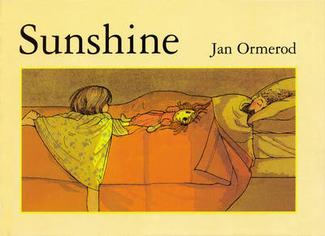
This is a change...an Australian day. Jan Ormerod is an Australian illustrator who lives in England, but who started her career as an art teacher in Western Australia and all Australians in the world of children's books like to think of her as one of us. As I write she is visiting Australia and I wish I could be in Canberra next week to see her at a local bookshop signing books. She has illustrated many well loved books such as Sunshine and Moonshine, textless books that tell the story of a child's day and evening. Many of Jan's early books were based on family life. Her later ones that she has written as well as illustrated such as Lizzie Nonsense and Water Witcher are set in an historical Australian context and her latest Shake a Leg which is written by Boori Monty Pryor brings Aboriginal dance and song to life. See the trailer. Most of her other books are written by English authors such as Lindsey Gardiner and Sarah Hayes.

Gary Crew is an Australian author who started his writing career while working as an English teacher and as such tends to write for adolescent audiences. He has won many awards for his novels and innovative picture books. Most of his picture books require mature and insightful reading but some of his books are suitable for my young clientele. In the library there are Tracks; Bright Star; First Light; In My Father's Room; Arno the Garbo and Memorial.