Sunday, January 27, 2019

1st February Wear Red Day

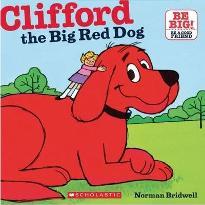
The first of February is Wear Red Day, a day to think about our hearts and the blood that makes them healthy, but to celebrate,  the books I recommend here have nothing to do with hearts and much more to do with the colour RED. School starts this week for the students I teach and the kindergarten teachers this week have been collecting books for their classroom libraries. Each of the classes has a colour, KRed, KYellow etc and each teacher has a small collection of books about that colour to read and talk about. Some colours are easier to find books about than others, but Red was easy. As well as The Red Book, Clifford, Little Red Riding Hood and The Little Red Hen, here's what I put in their box:


29th January 2019 Curmudgeon's Day

I love the word 'curmudgeon'. I 'm not so happy about what it implies, especially the references to 'old', but many definitions also say 'male' so maybe it is okay. Nevertheless I like the fact that there is a day for them. I have written about this day before here, but there is a new book about to arrive that has a title with more great words to discuss...The Unbudgeable Curmudgeon. It is about young siblings, not cantankerous oldies so it has more to discuss than just the wonderful vocabulary. Can't wait to buy it.


Saturday, January 19, 2019

23rd January Pie Day

It's Pie Day  and your chance to eat pie. Meat pies are popular in Australia, but there are lots of others to celebrate too, savoury and sweet.  As a child I enjoyed blackberry picking. It meant my mother would make apple and blackberry pies and I loved them, smothered with custard. As it's a national day in the USA, the pies they think of are generally of the sweet variety, be it lemon meringue, pumpkin, pecan or apple.

The library has so many books where pies are celebrated so I thought I'd list some good ones.


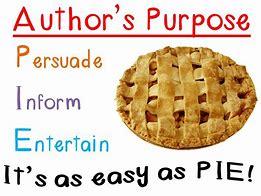
Maybe you could share some of these titles and look at author's purpose using the PIE mnemonic.


Thursday, January 17, 2019

18th January Thesaurus Day

Thesaurus Day is held on 18th January because that is the birthdate of Peter Roget the creator of Roget's Thesaurus. He was born in 1779, was a consummate list-maker by 8 years old and went on to be a physician after leaving school and studying medicine at University of Edinburgh. He retired in 1840 and dedicated himself to compiling his dictionary of synonyms that he had begun in 1805. This dictionary was first published in 1852. It was called 'Thesaurus of English Words and Phrases Classified and Arranged so as to Facilitate the Expression of Ideas and Assist in Literary Composition’. It was republished and republished and became very well known and thought of and despite Roget's other achievements it is for this that he is most remembered.

Jen Bryant and Melissa Sweet published a spectacular picture book biography of his life, titled The Right Word: Roget and his Thesaurus in 2014. It is the perfect way to learn about Roget and thesauruses. It also impresses upon readers the power of words and the joy of looking closely at them.

If you can't find this book and you want to look at synonyms through a fun read look for:
• Thesaurus Rex by Laya Steinberg and Debbie Harter

Thursday, January 10, 2019

11th January National Milk Day

It is National Milk Day in the US today. It is World Milk Day on he 1st June, it is World School Milk Day in the UK on 25th September and it is Chocolate Milk Day on 27th September. No matter which day you celebrate milk on, there are three different opportunities to do so. I have time to write now so I can prepare a list of books for a display in June when my students will be at school.

I dislike milk intensely and I'm sure it is because we were made to drink milk that had sat in the hot sun curdling, from when it was delivered until we drank it at morning tea time around 11 am. Milk was delivered free of charge to school children in NSW in an endeavour to make sure we all had a daily dose of goodness and calcium. There was no such thing then as flavoured milk and we weren't allowed to put Milo in it.

School children today have a much bigger choice when choosing a milk drink and it is not compulsory to drink it at school. Some of the five year olds I taught last year are such city children that they had no idea where milk even came from other than 'out of the carton'. That was quickly remedied by books, a film  and a visit to a farm where they each had a turn at trying to milk a cow. There were some hilarious photos of these attempts.

It is important for children to know about where there food comes from and to recognise milk as a global food. There is a large variety of non fiction books that do milk and dairy foods very well. Look for:
• Milk from Cow to Carton  by Aliki
• From Grass to Milk by Stacy Taus-Bolstad
• Journey of a Glass of Milk by John Malam
• • From Milk to Icecream  by Bridget Heos


There are fewer stories about milk but these are good ones to look for and they cover a range of ages, include humour and address empathy and point of view well:

• Milk and Cookies by Frank Asch
• Don't Spill the Milk by Stephen Davies and Christopher Carr
• Milk Goes to School by Terry Border
• Fortunately, the Milk  by Neil Gaiman and Chris Riddell
• Chocolate Milk, Por Favor by Maria Dismondy and Donna Farrell


Friday, December 21, 2018

Christmas books for Over 6s

Now for Advent Books to read to the over 6s. I love sharing these because there are so many opportunities to talk about the 'real meaning of Christmas', to consolidate work that classes have done in history units in class, to hark back to discussions in Circle Time and to draw on travel experiences.

1.  Cat in the Manger by Michael Foreman;  The Witness by Robert Westall;  Room For a Little One by Martin Waddell or any other nativity story where the point of view is changed. These three look at the story from the animals point of view. There are many others as well. The donkey's view also often appears in picture books. It is always interesting to be a bystander and report on an event and I enjoy asking students to do this themselves so these stories give them a starting point to form their own view. I read about a picture book this week that gives Joseph's view. How modern!

2.  Refuge by Anne Booth or Flight by Nadia Wheatley. While these two stories appear to tell the story of the journey to Bethlehem they also allow the reader to broaden the concept of Mary and Joseph's journey to encompass the plights of refugees in their journey in search of a safe place.

3. The Legend of the Poinsettia by Tomie DePaola. I have included this as a folktale that explains why poinsettias are part of the Christmas tradition. If you can't find this, look for Cobweb Christmas  by Shirley Climo or  The Spider's Gift by Eric Kimmel  which are folktales explaining why we have tinsel on trees.

4. The Christmas Caravan
 by Jennifer Beck is a lovely story about Simon who wants to enter a competition. This gives you many opportunities to discuss competitions, decorating homes at Christmas and what is required to really appreciate Christmas. It also looks at Southern hemisphere Christmas traditions. Perhaps pair it with The Boxing Day Test by Sharon Willis.

5. Stopping By the Woods on a Snowy Evening by Robert Frost and Susan Jeffers. While strictly speaking it is not a Christmas story it has snow and Susan Jeffers has used touches of red and green with the black and white of night and snow to evoke a very special setting in New England in Winter, when it is Christmas. The vellum cover on the book adds to the mystery and gives it the feeling of a present.

6. Silent Night  by Lara Hawthorne is a new book that brings this beautiful carol by Joseph Mohr to life by featuring the world's diversity as it moves through the lyrics. There are other versions though which highlight the origins of the carol. See Silent Night Holy Night which has beautiful Robert Ingpen illustrations and Silent Night which has Susan Jeffers' illustrations.

7. The Story Holly and Ivy by Rumer Godden. This story can just be read from the novel version, but I love the picture book edition illustrated by Barbara Cooney. I serialise it with my year 1 classes and right from the first sentence, 'This is a story about wishing.' they are hooked.

8. The Christmas Miracle of Jonathan Toomey by Susan Wojciechowski and P.J Lynch is another picture book which draws readers in, allows them to empathise with the characters and be surprised by the ending. The students love the foreshadowing and the lightening of the illustrations as the story progresses and Jonathan's demeanour changes.

9. The Year of the Perfect Christmas Tree by Gloria Houston and Barbara Cooney. I usually read this book to Year 2 in the week of  Remembrance Day in November. This makes the discussion of World War 1 and Ruthie's father's absence very pertinent. This is the nativity play story for older students. They revisit their nativity plays, the standing on chairs and the carol singing.

10. In Flander's Fields by Brian Harrison-Lever  and Norman Jorgenson tells the story of Christmas in the trenches during World War 1 when the fighting stopped, a robin is rescued and the soldiers sing Silent Night in English and German.


11. Fair's Fair  by Leon Garfield. This short chapter book has been published in many formats and with various illustrations. If you can't find the picture book version illustrated by Margaret Chamberlain read it to students without pictures and make them visualise for themselves because hers are so evocative that the rest pale to not be worth sharing.  This story about Jackson, an orphan is set in Victorian times and is told with such suspense that it is a bit scary but the ending is just what student readers require. A good friend found me a new copy of this at the Lifeline Book Fair, so you too could be lucky.

12. A Christmas Carol by Charles Dickens and Quentin Blake. I recommend this to parents of avid readers because when they share it their children make comparisons with Fair's Fair and other books they have read at school and they bring it back saying what great discussions the family had. I grew up with this story as my father had a record of someone reading it that we listened to every Christmas.

Others not to be missed:
Coming Home by Michael Morpurgo; The Polar Express by Chris van Allsburg; Manger by Lee Bennett Hopkins; and Cat on the Hill by Michael Foreman.

Merry Christmas and happy reading.


Christmas Books for Under 6s


I have been really enjoying following quite a few bloggers who have been highlighting an advent book each day in the lead up to Christmas. Some have done one a day since the beginning of December. Others such as my friend at Momo Celebrating Time to Read have chosen twelve books. Two teacher friends with young children and another with grandchildren have been enjoying opening a book parcel each day during advent for a shared reading experience. This got me thinking about which books I would put on an advent list or wrap for my advent reading. As the teacher librarian in a school I find myself constantly thinking about what to read to whom. When I read to my preschool and Kindergarten classes in Term 4 as a lead up to Christmas, I read from these books. All have been very successful. You will notice how many of them are either very well known or are by authors who write prolifically for this age group.


1. The Christmas Book by Dick Bruna. I chose this one because it tells the Nativity story chronologically and simply but uses lovely language and is illustrated in the typical Bruna manner, that the children recognise from the Miffy books.

2. How Many Sleeps Till Christmas? by Mark Sperring and Sebastien Braun. This is about waiting patiently, not something children find easy to do at this time of the year. The title question is one that children ask every day as they are counting down.

3. What Do You Wish For? by Jane Godwin and Anna Walker. This book is especially pertinent to Australian children as it depicts a summer Christmas and a typical Australian child's street. Ruby needs to write a wish, but she struggles to decide upon one. Such a good thing to be talking to children about at this time of giving as well as receiving.

4. Max's Christmas by Rosemary Wells. I chose this one because I am the mother of a Max and a Ruby. My children loved this and all the Max and Ruby stories. Max's droll questions make everyone laugh. I also like this story because Santa appears in it, but without a huge emphasis on presents.

5. Angel Mae and the Christmas Baby by Shirley Hughes. This is the story of many children under six. Mae's mother is pregnant and tired. Her brother wants the baby to be a boy and Mae wants a girl, so squabbles ensue. It also features the school nativity play which is something most children will experience at some point in their schooling.

6. The Gift of Christmas  by Christine Leeson and Gaby Hansen. I have two copies of this story in the library. They have different titles, but are the same text and illustrations. The Very Special Christmas came with flashing fairy lights on the tree in the book, so you can imagine how much the children like it when we get to the decorated tree at the end. Molly Mouse collects a variety of decorations for the tree and the lights finish it beautifully.

7. Jingle Bells by Nick Butterworth. This is not the Christmas carol. Lottie and Jack are mice and they are having problems with the cat. The bell is part of the solution. When I bought this book for the library it was tied closed by beautiful red satin ribbon which had two bells on the ends, which is extremely fitting when you know what Mrs Mackie finds addressed to the cat.

8. Threadbear by Mick Inkpen. A story about a well-loved toy bear whose squeaker does not work. The bear thinks Santa will be able to help him. It has large fold out pages that the children love, even if they don't wear well.

9. Baboushka (various available) or The Legend of Old Befana by Tomie DePaola. I would choose one of these because they are folktales specific to either the Russian or Italian Christmas tradition that relate the story of the Three Kings going to Bethlehem.

10. Dream Snow by Eric Carle. This one because none of the other stories have snow and as with many of Carle's books it has paper engineering and music, a novelty which will keep everyone interested.


Then 11. and 12. would come from:
Wombat Divine by Mem Fox and Kerry Argent; Doing Christmas by Sarah Garland; The Snowman (show the filmclip) by Raymond Briggs; The Silver Christmas Tree by Pat Hutchins and Summer by June Factor and Alison Lester.