Monday, July 10, 2023

14th July National Nude day

National Nude Day is an annual observance marked on July 14th every year. Although the day is trendy in the US, National Nude Day can be observed by anyone across the globe. 

Celebrate National Nude Day on July 14 by embracing your body and showing it some love! This holiday was created in the late 1990s to promote positive body image and self-love.The origin and history of the National Nude Day are unknown but it is believed that the day began  because of  All Black footballer, Marc Ellis  in New Zealand.

Today we can celebrate nudeness, nakedness, being in the nuddy, running free in all our original raw beauty, putting on our best birthday suit. See all those words for saying you have no clothes on. With the children I teach, discussions about being nude can go two ways. Some children let you know very quickly that you shouldn't be naked and it's rude. These are the children that are very loud and outspoken when we read The Emperor's New Clothes; Mr Archimedes' Bath or Mr McGee and the Biting Flea. Others don't even think it immodest to flash their undies or wee in the garden. It has a lot to do with parenting and there does need to be some happy medium as a school is a communal place. Our bodies should be part of a normal life, especially as there will need to be discussions at school about, health, safety, consent and what is expected.

When Kathy Stinson first published her book The Bare Naked Book in 1986 it was immediately popular and lasted on the shelves for a long time even having a 20 year anniversary edition, but now it has a new iteration. The text has been updated to reflect current understandings of gender and inclusion, which are also showcased in the brand-new, vibrant illustrations by Melissa Cho. It features a note from Kathy Stinson explaining the history of the book and the importance of this updated edition. 

We have a few books in the library so that parents and teachers, especially the preschool staff can initiate discussion.

Naked! by Michael Ian Black and Debbie Ridpath Ohi is about a small boy who shuns clothes.

Rudie Nudie by Emma Quay is a fun rhyming bath time story which makes every one smile.

Nuddy Ned by Kes Gray and Garry Parsons.  Ned is running riot - in the nuddy! What should you do?

Fred Gets Dressed by Peter Brown. Fred loves to be naked! He romps around his house naked and wild and free. Until he romps into his parents' bedroom and is inspired, finally, to get dressed. But there's so much in the wardrobe! What will Fred choose? 

Naked Mole Rat Gets Dressed  by Mo Willems. Naked mole rats are meant to be nude. Wilbur is different. He likes to wear clothes. The other naked mole rats are scandalised! Up in arms (not a sleeve in sight), they go to Grand-pah, the oldest, wisest and most naked naked mole rat, in the hope that he will restore Wilbur to sense - and nakedness. But Grand-pah's response surprises everyone... 

And a good one for families at home who need some help with thinking nudity is not rude

It Isn't Rude to be Nude by Rosie Caine


Saturday, July 8, 2023

7th July World Chocolate Day


I usually only think about chocolate at Easter. I rarely crave chocolate, but my mother did and it would have been her birthday today. The history of chocolate goes back to 2000 BC when the Olmecs, an ancient civilisation in Central America, first started cultivating cocoa beans. 

How to celebrate? You have permission to indulge. I'm going to go looking for my son's favourite chocolate picture books The Big Block of Chocolate  by Janet Slater Bottin; Looking After Chocolates by Ronda and David Armitage and Max's Chocolate Chicken  by Rosemary Wells. You might see the theme - greed and selfishness. If they are in okay condition I'll gift them to my sister to read to her grandchildren. 

If you want to read something newer, try these picture books:

The Story of Chocolate  by Robin Nelson                         

The (Ferocious) Chocolate Wolf by Lizzie  Finlay

Love Monster and the Last Chocolate by Rachel Bright


These short chapter books:

The Chocolate Monster by Jan Page

Daisy and the Trouble With Chocolate  by Kes Gray

The Chocolate Touch  by Patrick Skene Catling


There are even biographies:

On the Corner of Chocolate of Avenue  by Tziporah Cohen tells the story of Milton Hershey and milk chocolate in America.

• How the Cookie Crumbled by Gilbert Ford

Thursday, July 6, 2023

6th July International Kissing Day


International Kissing Day on July 6 celebrates the enjoyable activity of kissing, and the part it plays in cultures throughout the world. Does every culture 'kiss' with their lips?

Before people were able to write, an “X” would be signed. Then the signer would kiss the X as a pledge to honour the signature. Could this be where the “X” symbol came to represent a kiss?

Today I went to a second-hand Book Fair and while browsing the picture books, Samuel's Kisses by Karen Collum and Serena Geddes caught my eye. It is a book I have read to my preschool classes many times and their comments about Samuel's behaviour always makes me smile. Samuel sends kisses to bystanders while out shopping with his mother. We talk about what it means to 'blow a kiss' and how these people feel. I ask the students who they would like to blow a kiss to and we do it. Everyone is happy!


The young students I teach go a bit silly when someone mentions 'kissing'. They say they don't like being kissed, but secretly they do. Maura Finn's Oh, So Many Kisses  differentiates the type of kisses there might be...
a shy kiss, a bold kiss. A warm kiss, and a cold kiss... There are oh, so many kisses! Can you catch them all?

As Fathers Day approaches Kisses for Daddy  is always popular with my preschoolers. They laugh at the child's antics but love the ending...when a child's bedtime routine is transformed into a delightful game, Daddy imagines all the different sorts of kisses that other animal babies give their dads.


No More Kissing! by Emma Chichester Clark is a perfect read for children who do not like kissing... Momo doesn't approve of kissing. He especially doesn't like being kissed. So he sets out on a campaign to stop it. But then his brand new baby brother arrives.


Zou and the Box of 
Kisses is ideal when children are faced with being separated from their parents ... Zou is preparing to leave for a school camp. He doesn’t want to seem like a baby, but he knows that he will miss all his daily kisses: the bedtime kisses, the morning kisses, the no-reason-at-all kisses . . . But Zou needn’t worry. Mum and Dad have a solution. They make dozens of paper kisses and put them in a box for Zou to use whenever he feels a bit lonely.

So many good books to get this topic going...and it should be a fun celebration!


Tuesday, July 4, 2023

3rd July Kate Messner (1970 - )

Yesterday was Kate Messner's birthday and it is a long time since I have done a birthday blog.

I am always interested in what children's authors did before they became full-time writers. Before becoming a full-time writer, Kate was a TV news reporter as well as an educator who spent fifteen years teaching middle school English. Her website says

'New York Times bestselling author Kate Messner is passionately curious and writes books that encourage kids to wonder, too. Kate's titles include both fiction and nonfiction; she writes award-winning picture books, easy readers, chapter book series, and novels for young readers.'

Three series of hers that we have in the library are:

The Over and Under series of picture books which she does in collaboration with illustrator Christopher Silas Neal are amazing examples of how good a nonfiction picture book can be. There are six of them now.


The series of early readers about the mice Fergus and Zeke, one of whom is the classroom pet, the other a streetwise mouse from beyond the classroom. We don't have the whole series because their choice of topic is sometimes too American for our audience. We have the first three

Her series of chapter books that are also school and science based about Marty Maguire are just right for my able Year 2 readers who are looking for a book about a third grade girl who would rather get dirty digging worms or  playing in the water with frogs than to dress up and do 'girly' things.


The library has other stand alone picture books too including

Tree of Wonder illustrated by Simona Mullazzani

The Brilliant Deep illustrated by Matthew Forsyth (biography)

• Sea Monster and the Bossy Fish illustrated by Andy Rash

How to Read a Story  illustrated by Mark Siegel

I would have liked to have purchased her newest picture book

 Once Upon a Book illustrated by Grace Lin. Its blurb 

Alice loves to imagine herself in the magical pages of her favourite book. So when it flaps its pages and invites her in, she is swept away to a world of wonder and adventure, riding camels in the desert, swimming under the sea with colourful fish, floating in outer space, and more! But when her imaginative journey comes to an end, she yearns for the place she loves best of all...

tells me it would be perfect for the Book Week slogan READ GROW INSPIRE but given the cost of American hardback books for us at the moment, ordering it at is not going to happen. It is $39. The only good thing about all of this is that we need to make sure that the American hardbacks we have already are savoured. See the art work here.


Sunday, July 2, 2023

3rd July International Plastic Bag Free Day


The 3rd of July is International Plastic Bag Free Day, a global initiative to eliminate the use of plastic bags. Plastic bags may seem like a useful convenience for grocery purchasing, but they have a devastating impact on the environment. Plastic bags can take up to 500 years to decompose, so they make up a significant portion of what remains in our landfills and pollutes our waterways.

I have highlighted this day before here and here, but although our supermarkets and many other shops no longer have single use plastic bags, there is still a problem and more and more picture books for very young children seem to want to 'hammer' home the message. One of the library staff thinks we are scaring our preschoolers? Are we? I'd like to know what effect they have.

In the library we have:

Bag in the Wind  by Ted Kooser and Barry Root

One cold morning in early spring, a bulldozer pushes a pile of garbage around a landfill and uncovers an empty plastic bag — a perfectly good bag, the color of the skin of a yellow onion, with two holes for handles — that someone has thrown away. Just then, a puff of wind lifts the rolling, flapping bag over a chain-link fence and into the lives of several townsfolk — a can-collecting girl, a homeless man, a store owner — not that all of them notice.

Jelly-Boy  by Nicole Godwin and Christopher Nielsen

What happens when a jellyfish falls in love with a plastic bag she mistakes for a jelly-boy? Jelly-Boy is different. He is big and strong. And not as wobbly as the other Jelly-boys. By the time Jelly-Girl discovers the dangerous truth about her new friend, it may already be too late. 

Saving Seal  by Diane Jackson Hill and Craig Smith

Lizzie and Grandpa Dave are motivated to do something about cleaning up their Bay and saving the marine life who are being threatened more and more by the rubbish found in the Bay and on their beaches. They encourage the towns people to join them in their fight against plastic pollution devastating their beaches and harming marine life. 

Little Pago by Lauren Briggs

 Little Pago and his friends set out on an adventurous journey in search for food, but not everything floating in the ocean is safe for a baby turtle to eat. A plastic bag is easily mistaken for some of Little Pago's favourite food. Little Pago is a mascot for the welfare of all Australian sea turtles and shines a light on one of the critical threats that face sea turtles, plastic waste in our ocean. It encourages readers to challenge the way we live, so that collectively we can work towards preventing these majestic sea creatures becoming extinct.

Little Turtle and the Changing Sea by Becky Davies and Jennie Poh

Little Turtle loves the ocean with her whole heart. As the years pass, she repeats an incredible journey across the world to the beautiful coral reefs. But one day she finds that plastic has invaded her beloved ocean. Could Turtle's journey be over forever?

A Bag and a Bird by Pamela Allen

This is a story of a plastic bag and a bird - a cautionary tale about taking care of our environment as well as being a wonderful showcase of some of the famous sights of Sydney.

Somebody Swallowed Stanley by Sarah Roberts and Hannah Peck

Most jellyfish have dangly-gangly tentacles, but Stanley has two handles...

• One Plastic Bag: Isatou Ceesay and the recycling women of Gambia by Miranda Paul and Elizabeth Zunon

For years, plastic bags were a cheap and convenient option for carrying goods in Njau, Gambia. However, when these bags broke or were no longer needed, they were carelessly discarded, leading to an unsightly accumulation of plastic waste alongside roads. Isatou Ceesay decided to take action, and she began to collect the plastic bags and recycle them into something new. Her efforts not only helped to clean up the environment, but also provided income for women in her community who had been struggling to make ends meet.


Read Grow Inspire Book Week Slogan 2023 (Part 7) VOCABULARY


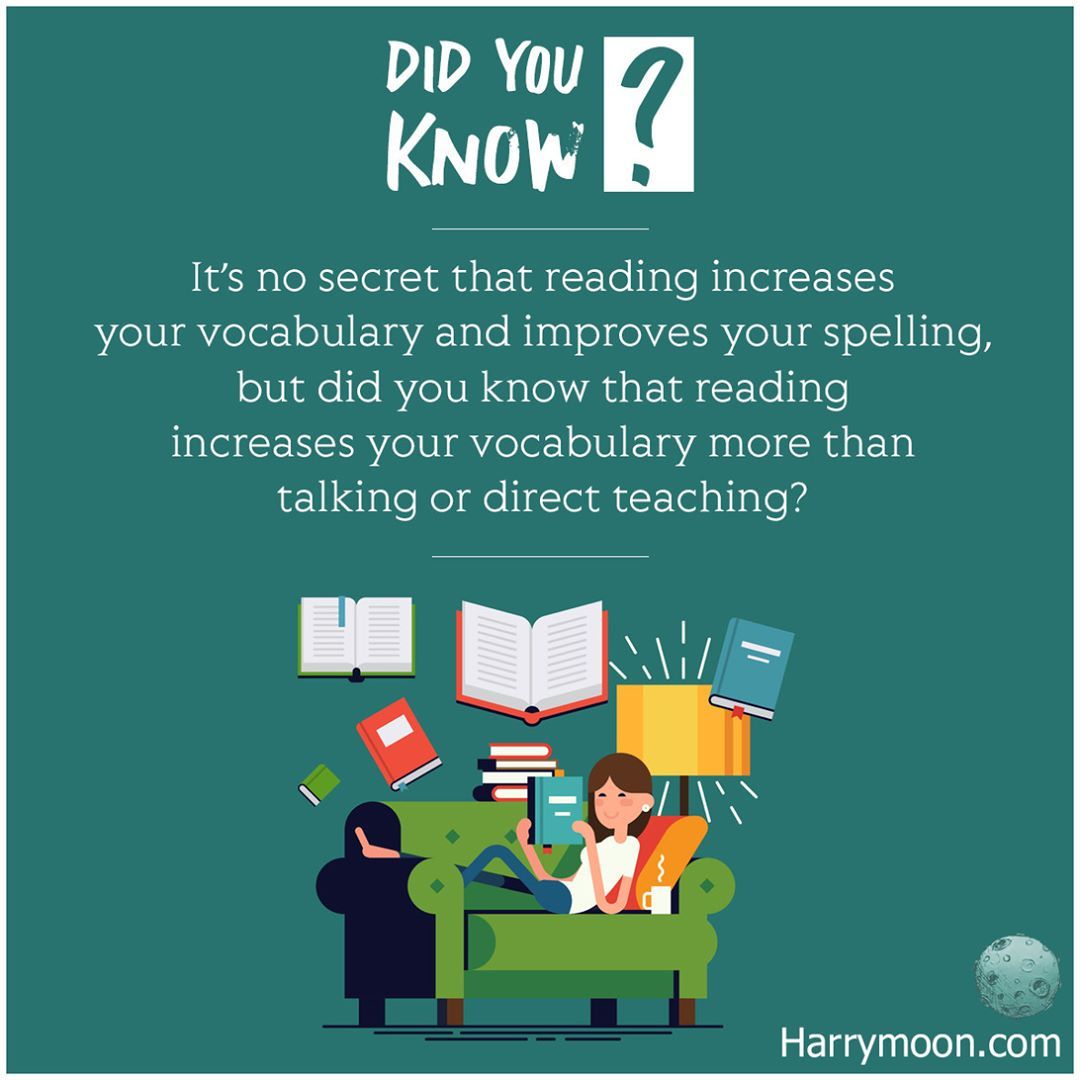
"Here is a fun tidbit that blows my mind every time I think about it. Research suggests that humans use the same three to 5 000 words in everyday conversation. Sound like a lot? Not when you consider there’s nearly 200 000 words in the English language. Books are like our gateway to this massive amount of words, and the more we understand their meanings and nuances, the more likely we are to speak or write them." 

Joanne Henderson-Klabe 

Broadening our vocabulary and thus the range of what we understand comes through repetition of seeing or hearing a word in context.

The Book Week slogan  allows for teaching wonderful vocabulary that children may not know through everyday speech. They are words associated with books, reading, science, procedure...Tier 2 and 3 words if we use English K -12  jargon. As teachers we are supposed to ask ourselves 

• How generally useful is the word?

• How does the word relate to other words, to the ideas that students know or have been learning?    

• What does the word bring to a text or situation?

Can't we just read quality literature and explain any word that students might ask or wonder about? How else do they come across new words, words to use in their own writing, words that just sound good and they want to use to impress? I want children and words to flourish hand in hand.

When the preschool classes grow seeds or seedlings, they borrow masses of books from the library and they don't just borrow the very simple ones. The teachers use vocabulary such as sprout; bloom; flower; stem; petals; roots; even germinate. They borrow the nonfiction books about parts of plants. They get very excited about watching sunflower or bean seeds grow. They look closely at Tilda's Seeds, an oversized book by Melanie Eclare which uses large photos to document the process involved in growing sunflowers. Yes, it is out of print and the clothing is dated but the planting and instructions are so vivid. It uses the word 'sprout'! They borrow Because of an Acorn  by Lola M Shafer and they  wander down the forest path to learn how every tree, flower, plant, and animal connect to one another in spiralling circles of life. An acorn is just the beginning. They are not limited by a 'published' unit that tells the teachers and students what to learn and how to learn it.

Year 1 used to do an author study of Eric Carle when they studied minibeasts. They became invested in his illustration process, his themes, especially change and how exciting and inspiring it can be. Using words like metamorphisis, chrysalis, cacoon, phosphorescence encourage students to explore new words, practise saying them and add them to their vocabulary.

This year while doing a See Think Wonder routine with a year two using a series of photos of hollows in trees, I was surprised how few of them used or knew the word 'hollow'. They knew the photos depicted 'holes in trees', but when we went on to explore A Hollow is a Home by Abbie Mitchell they took great pride in using the word 'hollow' appropriately. Next time I will also be able to use Life in a Hollow by David Gullan as well. When Year 2 look at trees and how large their role is in ecosystems there's a new set of words they need. Some haven't heard of seedlings or saplings, but if they had read stories such as Little Sap by Jan Hughes,  A Tree is a Home by Pamela Hickman or All About Trees  by Polly Cheeseman then when it comes to reading factual books such as A Hollow is a Home their background knowledge and vocabulary is already to use.

A new picture book, The Garden at the End of the World by Cassy Polimeni and Briony Stewart has just arrived in bookshops. It is about the  Global Seed Vault in Svalbard in Norway. 'Deep in the bowels of an icy mountain on an island above the Arctic Circle between Norway and the North Pole lies a resource of vital importance for the future of human­kind.' What a wonderful concept? But, we have a seed bank right here in Sydney too. It is at the Botanical Gardens at Mt Annan and is known as the Australian Plant Bank. It is well worth a visit, but even if you never go there, isn't it wonderful that our students can know that we are doing things to ensure all plants and seeds survive. 


Of course READ GROW INSPIRE hasn't been exhausted. There are so many 'rabbit holes' to go down, but this is probably enough for me, because just as I say a published unit and its chosen resources are only as good as the author's knowledge and experience, and that you need to 'own something' or 'have made it your own' to teach it well, it is time to do some planning of your own. Hopefully you will have access to some of these books. I realise the library I work in is not your average school library. The staff and students here are very well resourced. Sadly with the new more prescriptive syllabus, the library has become under utilised.

READ as many picture books as you can
GROW your reading skills, your vocabulary and your knowledge 
INSPIRE yourself to read more, grow more and do things a little differently!


Saturday, July 1, 2023

Read Grow Inspire Book Week Slogan 2023 (Part 6) IMAGERY and SYMBOLISM continued


Now for more of the ways the word 'seed' is used figuratively...


What do we mean when we say 'he sowed a seed of doubt' ? The Seed of Doubt  by Irene Brugnill and Richard Jones illustrates this adage very well. A little boy dreams of a world beyond the farm where he lives – a world full of mountain ranges, oceans and cities, where he could do anything. But one day he plants a seed from which doubts start to grow. Instead of thinking of all that he could do, he thinks more of what he could not. Can he overcome his fears and chase his dreams?


What are 'seeds of compassion'? In the book by His Holiness the Dalai Lama,  The Seed of Compassion he shares stories of his own childhood which highlight this concept. Once an ordinary child named Lhamo Thondup he grew up in a small village in Tibet where his mother taught him about compassion.


What are 'seeds of change'? We hear the saying 'Be the seed. Be the Change' and two books that demonstrate this are  Seeds of Change by Jen Cullerton Johnson and Sonia Lynn Sadler which tells the story of Nigerian Nobel Prize winner Wangari Maathai and next year Nina Laden's new book set in Madagascar, also called Seeds of Change  will look at this metaphor less figuratively as it is not about planting trees, but rather about having the courage and resilience to plant "seeds" that will improve ourselves and our community. It is very poetic


Sow seeds of strength

Ride out the storm.

Sow seeds of compassion 

Make hearts warm.

What about 'seeds of promise'? Teachers hear themselves saying this about a student or situation. In Little Seeds of Promise 
by Dana Raft and Reina Metallinou, Maya feels very lonely and lost when she moves to new country. Her grandmother has given her some seeds to plant when she gets there, but she wonders about whether to plant them and whether she will ever fit in. Can she risk planting them? 

The Seeds of Friendship  by Michael Foreman explores a similar situation through the eyes of a boy called Adam, yet the title likens seeds to friendship rather than promise.


Can a seed be personified? Read A Seed is Sleepy  by Dianna Hutts Aston and Sylvia Long; The Bad Seed by Jory John and Pete Oswald or Seed School  by Joan Holub  and Sakshi Mangal and your students will know that it can be.


You can teach figurative language without having to use the books suggested in the English K-2 units online! Their lists are only suggestions.