Showing posts with label Book Week Slogan 2023. Show all posts

Sunday, July 2, 2023

Read Grow Inspire Book Week Slogan 2023 (Part 7) VOCABULARY


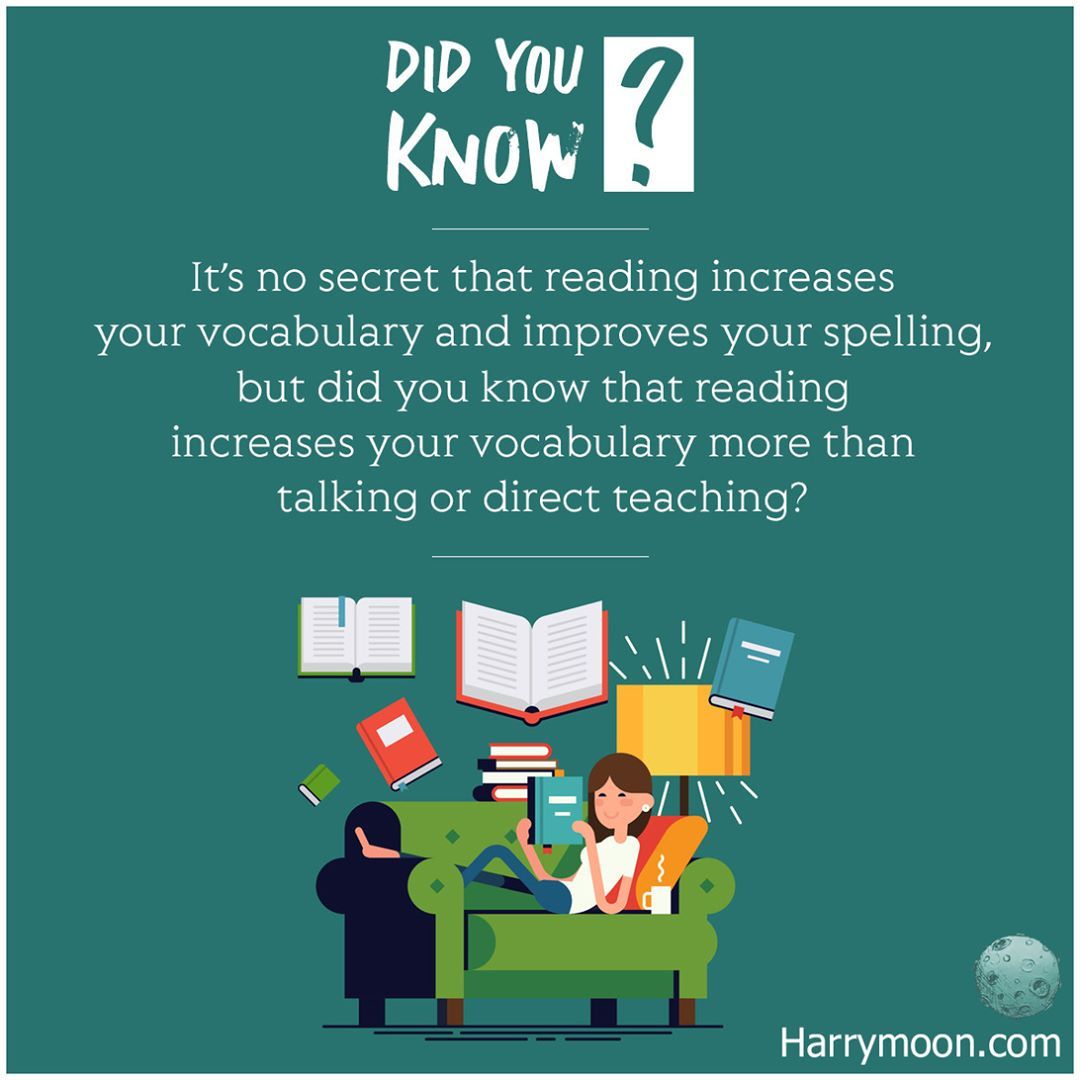
"Here is a fun tidbit that blows my mind every time I think about it. Research suggests that humans use the same three to 5 000 words in everyday conversation. Sound like a lot? Not when you consider there’s nearly 200 000 words in the English language. Books are like our gateway to this massive amount of words, and the more we understand their meanings and nuances, the more likely we are to speak or write them." 

Joanne Henderson-Klabe 

Broadening our vocabulary and thus the range of what we understand comes through repetition of seeing or hearing a word in context.

The Book Week slogan  allows for teaching wonderful vocabulary that children may not know through everyday speech. They are words associated with books, reading, science, procedure...Tier 2 and 3 words if we use English K -12  jargon. As teachers we are supposed to ask ourselves 

• How generally useful is the word?

• How does the word relate to other words, to the ideas that students know or have been learning?    

• What does the word bring to a text or situation?

Can't we just read quality literature and explain any word that students might ask or wonder about? How else do they come across new words, words to use in their own writing, words that just sound good and they want to use to impress? I want children and words to flourish hand in hand.

When the preschool classes grow seeds or seedlings, they borrow masses of books from the library and they don't just borrow the very simple ones. The teachers use vocabulary such as sprout; bloom; flower; stem; petals; roots; even germinate. They borrow the nonfiction books about parts of plants. They get very excited about watching sunflower or bean seeds grow. They look closely at Tilda's Seeds, an oversized book by Melanie Eclare which uses large photos to document the process involved in growing sunflowers. Yes, it is out of print and the clothing is dated but the planting and instructions are so vivid. It uses the word 'sprout'! They borrow Because of an Acorn  by Lola M Shafer and they  wander down the forest path to learn how every tree, flower, plant, and animal connect to one another in spiralling circles of life. An acorn is just the beginning. They are not limited by a 'published' unit that tells the teachers and students what to learn and how to learn it.

Year 1 used to do an author study of Eric Carle when they studied minibeasts. They became invested in his illustration process, his themes, especially change and how exciting and inspiring it can be. Using words like metamorphisis, chrysalis, cacoon, phosphorescence encourage students to explore new words, practise saying them and add them to their vocabulary.

This year while doing a See Think Wonder routine with a year two using a series of photos of hollows in trees, I was surprised how few of them used or knew the word 'hollow'. They knew the photos depicted 'holes in trees', but when we went on to explore A Hollow is a Home by Abbie Mitchell they took great pride in using the word 'hollow' appropriately. Next time I will also be able to use Life in a Hollow by David Gullan as well. When Year 2 look at trees and how large their role is in ecosystems there's a new set of words they need. Some haven't heard of seedlings or saplings, but if they had read stories such as Little Sap by Jan Hughes,  A Tree is a Home by Pamela Hickman or All About Trees  by Polly Cheeseman then when it comes to reading factual books such as A Hollow is a Home their background knowledge and vocabulary is already to use.

A new picture book, The Garden at the End of the World by Cassy Polimeni and Briony Stewart has just arrived in bookshops. It is about the  Global Seed Vault in Svalbard in Norway. 'Deep in the bowels of an icy mountain on an island above the Arctic Circle between Norway and the North Pole lies a resource of vital importance for the future of human­kind.' What a wonderful concept? But, we have a seed bank right here in Sydney too. It is at the Botanical Gardens at Mt Annan and is known as the Australian Plant Bank. It is well worth a visit, but even if you never go there, isn't it wonderful that our students can know that we are doing things to ensure all plants and seeds survive. 


Of course READ GROW INSPIRE hasn't been exhausted. There are so many 'rabbit holes' to go down, but this is probably enough for me, because just as I say a published unit and its chosen resources are only as good as the author's knowledge and experience, and that you need to 'own something' or 'have made it your own' to teach it well, it is time to do some planning of your own. Hopefully you will have access to some of these books. I realise the library I work in is not your average school library. The staff and students here are very well resourced. Sadly with the new more prescriptive syllabus, the library has become under utilised.

READ as many picture books as you can
GROW your reading skills, your vocabulary and your knowledge 
INSPIRE yourself to read more, grow more and do things a little differently!


Saturday, July 1, 2023

Read Grow Inspire Book Week Slogan 2023 (Part 6) IMAGERY and SYMBOLISM continued


Now for more of the ways the word 'seed' is used figuratively...


What do we mean when we say 'he sowed a seed of doubt' ? The Seed of Doubt  by Irene Brugnill and Richard Jones illustrates this adage very well. A little boy dreams of a world beyond the farm where he lives – a world full of mountain ranges, oceans and cities, where he could do anything. But one day he plants a seed from which doubts start to grow. Instead of thinking of all that he could do, he thinks more of what he could not. Can he overcome his fears and chase his dreams?


What are 'seeds of compassion'? In the book by His Holiness the Dalai Lama,  The Seed of Compassion he shares stories of his own childhood which highlight this concept. Once an ordinary child named Lhamo Thondup he grew up in a small village in Tibet where his mother taught him about compassion.


What are 'seeds of change'? We hear the saying 'Be the seed. Be the Change' and two books that demonstrate this are  Seeds of Change by Jen Cullerton Johnson and Sonia Lynn Sadler which tells the story of Nigerian Nobel Prize winner Wangari Maathai and next year Nina Laden's new book set in Madagascar, also called Seeds of Change  will look at this metaphor less figuratively as it is not about planting trees, but rather about having the courage and resilience to plant "seeds" that will improve ourselves and our community. It is very poetic


Sow seeds of strength

Ride out the storm.

Sow seeds of compassion 

Make hearts warm.

What about 'seeds of promise'? Teachers hear themselves saying this about a student or situation. In Little Seeds of Promise 
by Dana Raft and Reina Metallinou, Maya feels very lonely and lost when she moves to new country. Her grandmother has given her some seeds to plant when she gets there, but she wonders about whether to plant them and whether she will ever fit in. Can she risk planting them? 

The Seeds of Friendship  by Michael Foreman explores a similar situation through the eyes of a boy called Adam, yet the title likens seeds to friendship rather than promise.


Can a seed be personified? Read A Seed is Sleepy  by Dianna Hutts Aston and Sylvia Long; The Bad Seed by Jory John and Pete Oswald or Seed School  by Joan Holub  and Sakshi Mangal and your students will know that it can be.


You can teach figurative language without having to use the books suggested in the English K-2 units online! Their lists are only suggestions.

Thursday, June 29, 2023

Read Grow Inspire Book Week Slogan 2023 (Part 5) INSPIRE

 INSPIRE     WHO?


Inspire the World: A Kid's Journey to Making a Difference by Sammie Vance and Talitha Shipman

Obviously not every child is going to be a Sammie Vance. Sammie felt inspired to talk to her school principal about her plan for a friendship bench at her school, but what started as 8-year-old Sammie Vance's mission to get a buddy bench for her school to fight loneliness grew to be so much more. Now Sammie is making a difference beyond her hometown. In her first-ever book, Sammie shares how she's inspiring others through recycling, community, giving, determination, bravery, helping, being herself, and celebrating. She wants to inspire the world one kid at a time. Her website will tell you more. But, the good thing about introducing your students to Sammie Vance is that it shows them that a child can make a difference.

There are plenty of books you could use to inspire children or where they can see what has inspired people to do things. Our school has made a concerted effort to encourage Voice and Agency in our students. This too can be initiated by reading. Schools read about worm farms and get one, read about native bees and get a hive for their playground, read about the perils of plastic and change their lunch eating habits!

Below are some books which I think make good starting points for inspiration:

Grow  by Cynthia Platt and Olivia Holden Looking at a drab abandoned city lot, a girl has an idea. As she begins pulling weeds, neighbours young and old, black, brown, and white come to help. The community joins together, creating a colorful garden for all to enjoy. It is possible for one child to make a difference? Or

The Secret Sky Garden by Linda Sarah and Fiona Lumbers where Funni loves the old, disused car park, and spends a lot of time there flying her kite and playing her recorder, but something is missing. Definitely. So Funni decides to create a garden in the neglected space and after weeks of careful nurture, her garden in the sky takes shape.

The Wild Garden  by Cynthia Cliff

This book takes a look at the community garden as well as the environment beyond the community garden. Its message is about not expanding the planned community garden because it will take away the needed wild plants that the wildlife needs. We need to stop taking away from nature and learn to live with nature.  When the town wants to expand the garden Jilly and her grandfather show the people what the expansion will do and inspire them to wonder more broadly about the nature around them. Imagine if everyone learned to live with the nature as it is and help the wildlife instead of taking their space and needed ecosystems?


You Are a Beautiful Beginning by Nina Laden and Kelsey Garrity-Riley

Three children come together to build a magnificent and cozy treehouse for all their forest friends. Along the way, they discover the truth behind the adage that 'it is not the destination, but the journey.' his meditative and magical picture book encourages readers old and young to discover their own endless potential. This meditative and magical picture book encourages readers to discover their own endless potential. 


Wild Ideas  by Elin Kelsey and Soyeon Kim

Wild Ideas looks deep into the forests, skies and oceans to explore how animals solve problems. Whether it's weaving a safe place to rest and reflect, blowing a fine net of bubbles to trap fish, or leaping boldly into a new situation, the animals featured teach us a lot about creative problem solving tools and strategies. It  invites readers to indulge their sense of wonder and curiosity by observing the natural world, engaging with big ideas and asking questions.


We Move the World  by Kari Lavelle and Nadi H. Ali. Meet some of the world’s most beloved movers, shakers, scientists, activists, dreamers, and doers from the past and present who model what every childhood first can lead to! Neil Armstrong, Misty Copeland, Ruth Bader Ginsburg, and more were once kids they grew up to lead us to the moon, dance in the ballet, and break barriers. From first steps to solving puzzles and learning the alphabet, all the small things are only the beginning: they can lead to future activism and innovation that just might change the world!  Or

Children Who Changed the World  by Marcia Williams which tells the incredible true stories of child activists such as Baruani Ndume, the teenager who gave a voice to fellow refugee children in Tanzania.

In Our Hands by Lucy Farfort

When the world is plagued with isolation and cursed to live without colour, it is up to a group of determined children to grow a seed of hope that will inspire everyone to come together and build a better future. 


I Am One: A Book of Action by Susan Verde and Peter H. Reynolds

On the first page, the main character asks a beautiful bird, "How do I make a difference?" They doubt their ability to make a difference because they are "so small." However, when the bird gives them a seed, they realize that "beautiful things start with just One." They can plant a seed and start a garden They can also start a journey, paint a masterpiece, compose a melody, and break down walls. All these actions start with "one" thing: a first step, a first stroke of paint, a first musical note, and a first brick. 


Now, I hear you saying it's for Book Week and none of these books are Australian, so here's a favourite of mine (I have a framed print of the cover illustration courtesy of my friend at Momotimetoread who knows how besotted I am about plants and trees).

Florette by Anna Walker 

Mae’s family moves to a new home in the city.  Mae wishes she could bring the garden with her. She’ll miss the apple trees, the daffodils and the butterflies in the long, wavy grass, but there’s no room for a garden in the middle of the city ...Or is there? What she finds there sparks something special and beautiful that will make her feel much more at home.


If you are lucky enough to have a copy of Bob Graham's new book The Concrete Garden by the time Book Week comes around you could read it as it promises to be a timely, inspiring and uplifting story about hope and the power of creative expression.

When the children leave their homes,  Amanda is the last one out of the tower block. She brings some chalk with her. On every inch of the concrete outside, the children draw pictures of everything they could think of, from flowers and snails, to spaceships and queens. Before long, a beautiful and exotic garden is spread out across the concrete. You could compare this to The Chalk Garden by Sally Anne Garland where Emma uses her imagination to draw a beautiful flower garden with sidewalk chalk.  A tiny ecosystem develops outside her door, with real-life flowers that bud and bloom!


And lastly, I have just purchased Mother Earth: Poems to Celebrate the Wonder of Nature by Libby Hathorn and Christina Booth. The poems are good and you will enjoy reading them but the front endpapers are the piece de resistance. Here Christina Booth has painted a sublime illustration of nodes and tendrils pushing up through the dirt towards the sky surrounding a haiku, called Earth. There are teaching notes for this book here.