Showing posts with label Michael Morpurgo. Show all posts

Saturday, July 30, 2022

1st August Horses' Birthday

In the southern hemisphere, the Horses’ Birthday is celebrated by nearly all breeds on the first day of August. The reason for the selection of the first day of August in the southern hemisphere, as opposed to say the first day of January, May or November is that historically, the weather at the commencement of September is just beginning to warm up, prompting mares to commence their oestrus cycle, or ‘come into season’.  

A mare’s oestrus cycle is stimulated by the presence of extended daylight, nature intending that foals be born eleven months later through spring and summer when feed is plentiful so that mares can produce good supplies of nutritious milk. Therefore, mares successfully bred early in September will produce foals in early August.

Stories about horses are always popular in the library. We even have a few students who go horeseriding.  I have written about horse books before, but we have added new books to the library since then. For what there is see here.
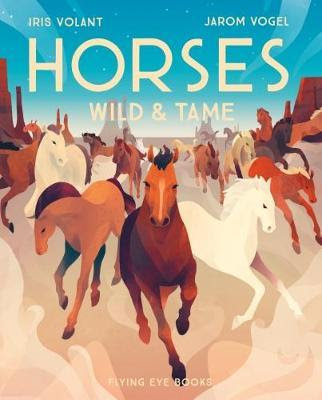


These are some:

Horses Wild and Tame by Iris Volant

Gallop! 100 facts About Horses by Kitson Jazynka

So She Did: The Story of May Wirth  by Simi Genziuk & Renee Treml

Clare and her Captain by Michael Morpurgo

The Painted Ponies  by Alison Lester

Wandering Star by Natalie Jane Prior & Stephen Michael King

Lucy and Copper  by Mandy Foot

and if you are looking for fun short novels, these two series are worth a look:

Fables From the Stables  by Gavin Puckett and You Freeman (5 books)

Colin the Cart Horse

• Hendrix the Rocking Horse

• Murray the Race Horse 

• Hayley the Hairy Horse

• Poppy the Police Horse

Roly-Poly Flying Pony Adventure by Philip Reeve and Sarah McIntyre

The Legend of Kevin

• Kevin's Great Escape

• Kevin and the Biscuit Bandit

• Kevin vs the Unicorns


Saturday, December 30, 2017

31st December Michael Morpurgo Queen's Honour

How nice to hear that another stalwart of the children's book world has been honoured with a knighthood. Not sure I think they should exist, but it does worry me that so many entertainers and sports people get them and so few children's writers and illustrators. So, congratulations to Sir Michael Morpurgo. I love his books, especially the ones that deal with animals 'at risk'. Wonderful to see that his work with Farms for City Children is highlighted in a picture book illustrated by Sir Quentin Blake!

Thursday, February 26, 2015

27th February Birds

Hard to believe we've been back at school already for over a month. The time has flown. There seems to be so much to do at the beginning of a school year. Over the last six months or so I seem to have bought so many picture books that feature birds and so many of them have simply outstanding illustrations. It got me thinking about how many books we already had in the library about birds so we decided to turn the library into an aviary to start the year's displays. It has been amazing. The teachers at school think it odd because they know I don't like birds, that is real birds. I'm quite scared of them since I had a magpie in the library and he couldn't get out. However I really like pictures of birds. They make for great illustrations, greeting cards, posters, sculptures etc so it was easy to decorate the library. I used some old books as my initial focus to sort out the wording to accompany the display -

Have You Seen Birds?  by Joanne Oppenheim and Barbara Reid. Like all of Reid's books this uses wonderful plasticine collage for the illustrations but my children do not engage with the text.
Birds, Birds and More Birds by Matt Cosgrove
Birds  by Kevin Henkes and Laura Dronzek. My preschool teachers love this book.
Birdsongs by Betsy Franco and Steve Jenkins. Perfect for having fun with the noises birds make.

I put out all the old favourites such as Edward the Emu; Edwina the Emu; Olga the Brolga; Enoch the Emu; Samantha Seagull's Sandal; Don't Let Pigeon Drive the Bus; Leonardo Pigeon of Siena; Pidge; Jeremy; Waddle Giggle Gargle; How the Birds Got their Colours; The Birdwatchers; Vuture's View; Condor's Egg; Owl Moon; Owl Babies; The Owl Who was afraid of the dark; Feathers for Phoebe; The Best Beak in Boonaroo Bay; Puffling; Little Owl Lost; Mozzie and Midgie and King of the Birds.

The library also has two beautiful biographies about two prominent bird lovers which we featured:
The Boy Who Drew Birds  by Jacqueline Davies and Melissa Sweet. This is the story of John James Audubon
For the Birds by Peggy Thomas and Laura Jacques. This is the the story of Roger Tory Peterson

And then all the new ones. I have put All I Said Was by Michael Morpurgo first because it is a great book to start a discussion about birds and their characteristics because in this story a boy wishes he was a bird, becomes a pigeon and then experiences the consequences of the change.

Monday, May 5, 2014

6th - 13th May Donkey Week

Donkeys don't feature in picture books as much as many other animals, except at Christmas when they often become the narrator or a first-hand witness at the birth of Jesus in books such as The Christmas Story as Told by Assellus the Christmas Donkey  by Janet Duggan and The Donkey's First Christmas by Susanne T. Schroder. However some stories that do feature donkeys make worthwhile reading and are often memorable. A favourite of mine from my early teaching days is Lydia Pender's The Useless Donkeys and no doubt it can still be found in some school libraries. The newer The Wonky Donkey with its accompanying CD and toy is a favourite with the children and parents in my library. Michael Morpurgo's story about Jo-Jo which originally appeared as a Yellow Banana reader has now been re-illustrated and published as a picture book with Helen Stephens' illustrations. Don't forget all the Anzac stories that feature Simpson and his donkey or other stories where donkeys play an integral role. And, if you are looking for a fairytale you could always revisit Perrault's Donkey Skin where the princess wears a donkey skin in order to avoid the king.


Here are some donkey stories I have put out on display this week.
Donkeys by Adelheid Dahimene
The Wonky Donkey by Craig Smith
• How Many Donkeys? An Arabic Counting Tale by Margaret Read MacDonald
Jo-Jo the Melon Donkey by Michael Morpurgo
Crash Bang Donkey by Jill Newton
The Magic Donkey Ride by Giles Andreae
• The Useless Donkeys by Lydia Pender

Together with the humorous donkey and goat series by Simon Puttock:
Goat and Donkey and the Noise Downstairs
• Goat and Donkey in the Great Outdoors
Goat and Donkey in Strawberry Sunglasses

Saturday, February 15, 2014

15th February World Whale Day


Driving through Mona Vale today I saw a sign advertising celebrations for World Whale Day and thought what a pity it was so close to so many other celebrations because children love whales and reading about them and it would have made a wonderful library display. Luckily in Australia we have National Whale Day as well in June so there will be another opportunity to put together a wonderful display of  books about whales.

In fact in the last month or so I have bought several new books for the library that feature whales and these four have especially memorable illustrations and are worth borrowing to read.

If You Want to See a Whale by Julie Fogliano &  Erin Stead
The Storm Whale by Benji Davies
Whale Shines by Fiona Robinson
Welcome Home by Christina Booth


And of course there's always older favourites that always work well when read aloud such as:
• The Lighthouse Keeper's Rescue by Ronda & David Armitage
My Friend Whale by Simon James, and
 The Morning I Met a Whale by Michael Morpurgo & Christian Birmingham


Saturday, May 11, 2013

12th May Cucumber Day


It is Cucumber Day in Britain. Why on earth would they have a day to celebrate cucumbers? Well this is what the website says:

Initially it might seem like an odd idea for a National Cucumber Day, but when you think about it the role of cucumber makes a lot of sense in our aim to become a healthier nation!


Did you know that a cucumber is 95% water?   And that it's a fruit?!   It comes from the same family as squash, watermelon and courgette/zuchinni.

Cucumber also has many health benefits.  It's a great source of potassium and essential vitamins and restores water to the body. 

So now you know! So celebrate by reading British author, Michael Morpurgo's Cool as a Cucumber!
If you have younger children and you are looking for a picture book Sally Smallwood has a photographic book with the same name.

Wednesday, January 5, 2011

6th January Epiphany Joan of Arc (1412 - 1431) Carl Sandburg (1878 - 1967)


Fog

The fog comes
on little cat feet.

It sits looking
over harbour and city
on silent haunches
and then moves on.

Carl Sandburg

Carl Sandburg was an American writer who was best known for his poetry. There would be very few poetry anthologies for children which do not have Fog or some other poem of his. Fog is perfect for learning and reciting. It is also good for teaching children about the power of imagery.

It is Epiphany, the twelfth day of Christmas, the time when the Three Wise Men came to visit baby Jesus in his manger, time to take down the Christmas decorations and time to think about going back to school. I wrote about Epiphany yesterday.

Joan of Arc, known as St Joan because she is a Catholic saint was a French heroine of the Hundred Years' War. Born a peasant, she led the French army to several victories before being captured, tried by the English and left to burn on a stake when she was only nineteen years old. Joan of Arc's story has been told in picture book format several times. See:
Joan of Arc by Josephine Poole and Angela Barrett
Joan of Arc by Diane Stanley
Joan of Arc: Heroine of France by Ann Tomert and Michael Garland, and
Joan of Arc by Michael Morpurgo and Michael Foreman (this has a longer text, but very dynamic illustrations)

Friday, October 1, 2010

5th October Gene Zion (1913 - 1975) Michael Morpurgo (1943) David Shannon (1960)


Michael Morpurgo is a British author who writes for all age groups, but is a consummate storyteller for young readers from about 8 to 12 or 14. His novels 'sing', have worthwhile themes, but never preach. He has done picture books as well with such well known illustrators as Michael Foreman, Patrick Benson and Christian Birmingham. He was the third Children's Laureate, but has been credited with Ted Hughes with the idea of creating the position. It is hard to know which books to single out, so I have put in a favourite of mine, The Dancing Bear. I was very interested to read on his website which of his books were his favourites. Currently I know an eight year old boy who is on a mission to read all of Michael's books. I have found it a bit difficult to convince him that he should wait till he's older to read some of his titles!

Back to the USA for the third birthday. David Shannon is an author/ illustrator. He is well known for his series of books about David which originated from a book he made when he was about five years old called No David! and could only write those two words. As an adult he used the idea and redid the book and went on to do others about David. One of the kindergarten classes at my school are besotted with the David books and they borrow them frequently and for long periods of time so they can revisit them. They also like Shannon's pirate books that he has illustrated for Melinda Long. How I Became a Pirate has great lines about bedtime reading which I have used to great effect at parent nights to convince them of the virtues of bedtime reading.

Monday, February 22, 2010

24th February Wilhelm Grimm (1786 - 1859)

I much prefer the bleaker tales from the Grimm Brothers to the more romanticised versions from Perrault. I really like the Grimm version of Cinderella which doesn't have a fairy godmother, but instead has a hazel tree that she planted as a twig on her mother's grave. As Cinderella weeps on the grave, the tree grows. Not many of the Cinderella picture books use this version. There is only one version in my library and it is in tatters, out of print and thus irreplaceable. In the Grimm version the sisters mutilate their feet, in an attempt to fit their feet into the glass slipper. I don't need this grim detail as much, but the Grimm Brothers do need to be congratulated on their diligent collecting and recording of traditional tales, even if their intended audience wasn't children. Imagine a childhood without Rumplestiltskin, Rapunzel, The Twelve Dancing Princesses and Snow White and Rose Red.

A collection of ten of the Grimm fairytales that I like is The McElderry Book of Grimms' Fairy Tales retold by Saviour Pirotta and illustrated by Emma Chichester Clark. And, Michael Morpurgo's Hansel and Gretel also illustrated by Emma, is an amazing retelling of the traditional story with lots of added thematic depth for discussion.

It is often hard sharing fairytales with the children I teach because they are very quick to tell you that they know them, but when I delve a little, too often their way of knowing is through a Disney film or a television cartoon. Fairytales are an important source of rich book vocabulary. Where else will they read words such as 'gown', 'slipper', 'leagues', 'spindle', 'cobbler', 'thorns' and 'enchanted'? And, if they don't have a thorough introduction to fairytales how will they enjoy books such as The Sisters Grimm, spoofs such as those by Ann Jungman and Allan Ahlberg, the twisted tales of John Scieszka and the myriad of modern fairy tales?