Thursday, January 13, 2022

SDG 14 Life Below Water


Goal 14 Conserve and sustainably use the oceans, seas and marine resources for sustainable development.

The ocean drives global systems that make the Earth habitable for humankind. Our rainwater, drinking water, weather, climate, coastlines, much of our food, and even the oxygen in the air we breathe, are all ultimately provided and regulated by the sea. 

Oceans are our planet’s life support as they provide water, food and help regulate the weather. Oceans also provide jobs for more than 3 billion people who depend on marine biodiversity for their livelihood. If we do not stop polluting our oceans, there will be severe problems that affect every person and living creature on the planet.

Choose a book from here.

This goal continues on well from the previous goal about climate because a lot of the climate action plans involve the oceans as well. The students at school know about rubbish in the oceans especially Kindergarten who do a unit of inquiry that looks at life in the sea. When they read about animals that live there or watch film clips about them they are often confronted by the threats things like, plastic, nets and oil are for these creatures. I thought if I started with the new book Saving Seal by Diana Jackson Hill and Craig Smith, the book would be new to everyone and therefore easy to talk about and relate back to other books the students already know that address the problem of plastic in the sea.

Here's the blurb:

Seal has made his home in the waters of a coastal village, but he often finds himself trapped and ensnared in the plastic rubbish filling the Bay. Fortunately, he is rescued by Lizzie and Grandpa Dave. 
Lizzie and Grandpa Dave are motivated to do something about cleaning up their Bay and saving the marine life who are being threatened more and more by the rubbish found in the Bay and on their beaches. They encourage the towns people to join them in their fight against plastic pollution devastating their beaches and harming marine life.

Where to next? You could choose another book about plastic in the ocean and compare and contrast the two books. Alba The One Hundred Year Old Fish by Lara Hawthorne would be a good one.


Here's the blurb:

Alba the fish has spent her entire life collecting precious objects that drift down to the ocean floor. From delicate shells to brightly coloured coral, each year on her birthday she gathers one more precious item. But over the years, Alba notices her collection is losing its sparkle and that the world is changing. What are these bits of plastic and metal? As the coral reef fades, Alba decides to leave her home behind. Can an old fish teach the world how to bring colour back to the ocean?  The One-Hundred-Year-Old Fish gently highlights the issue of pollution. 


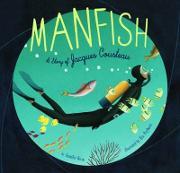
If you have older students, perhaps look at someone who works below the water by reading a biography about them. You could read about Jacques Cousteau, Sylvia Earle, Eugenie Clark or Curtis Ebbesmeyer. Here are some of the biographies, but there are others too.


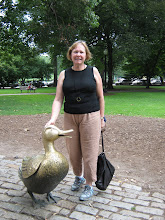
 Dr Curtis Ebbesmeyer is the scientist who monitors the watery fate of human-made cargo that has spilled into the ocean. Remember all those stories about rubber ducks that have been spilled overboard off freighters and where they ended up.

From the booklet:

Ask • Can you think of ways we could spread the message about how important marine life is and why we need to protect it?


• We read...


• This story made me want to ...


Wednesday, January 12, 2022

SDG 13 Climate Action


Goal 13 Take urgent action to combat climate change and its impacts.


The rising temperature of the Earth is called “global warming.” If the Earth’s temperature keeps getting hotter, we will feel the effects of it. For example, global warming will melt the Arctic’s sea ice and cause the sea level to rise. If the sea level continues to rise, many islands and countries will struggle to stay above water and people and animals will lose their homes. To avoid this from happening, all of us must do something to help the Earth.


Choose a book from here.
A good place to start with young students is to share a book about the shrinking polar icecaps and how the polar bears' habitat is shrinking. They love polar bears (probably because they are majestic and they don't live near them or see them) and there are so many wonderful picture books on this topic. 

However, the students I teach know about the shrinking habitat of polar bears from teachers, parents, documentaries and stunning picture books like Lindsay Moore's Sea Bearso I would start with Hello, Mr World by Michael Foreman. The students understand what it means to be sick so I think this story where Earth has been personified is an excellent way of introducing what is making our world suffer and talking about it.

Here's the blurb:

A topical picture book about the effects of climate change, ideal for very young children.  Michael Foreman brilliantly shows what climate change is doing to our world and inspires us all to make a difference. Mr World doesn't feel well. He's hot and sweaty and finding it hard to breathe. What will the doctors find when they examine their poor patient? 


This could then be followed up by something more didactic or instructive such as A Climate in Chaos by Neal Layton


Old Enough to Save the Planet  by Anna Taylor, Loll Kirby and Adelina Lirius


or Like the Ocean We Rise  by Nicola Edwards and Sarah Wilkins


From the booklet: (Remember these questions and tasks are designed as post reading for the student who is doing this at home with a parent or in class with a teacher and will only read one book from the list, so the responses need to be very open-ended.)

Ask • Have you heard about how there are now less polar bears? Why is this?


• We read...


• This story made me wonder what I could do to...


Tuesday, January 11, 2022

SDG 12 Responsible Consumption and Production


Goal 12  Ensure sustainable consumption and production patterns.

We rely on many natural resources in order to survive. As our economy and society progress, the natural resources that we depend on begin to run out. If the world population reaches 9.6 billion by 2050, we would need three planets worth of resources to keep the same lifestyle we have today.

Each year, an estimated one third of all food produced – equivalent to 1.3 billion tonnes worth around $1 trillion – ends up rotting in the bins of consumers and retailers, or spoiling due to poor transportation and harvesting practices.

Choose a book from here:


The children I teach have so many toys so it is easy to start with a discussion of how many are actually needed to make their life sustainable, shopping and whether they need more toys. In the past when I have shared The Surprise Present  by Shane McG with them the discussion has been very lively, so I think reading King Leonard's Teddy  by Phoebe Swan is probably a good place to start with very young children.

Here's the blurb:

King Leonard is so rich that he can buy whatever he wants. Anything old or broken is thrown onto the growing pile of trash outside his castle. But one day something breaks that can't be easily replaced. And what's worse, King Leonard can't find anyone who knows how to fix it.


Then perhaps a book about recycling. There are many books for young children about recycling clothes, but for the students I teach, many of whom have a musical instrument of their own, I think Ada's Violin  by Susan Hood and Sally Wern Comport is a better choice.

Here's the blurb:

The extraordinary true tale of the Recycled Orchestra of Paraguay, an orchestra made up of children playing instruments built from recycled trash.  
Ada Rios grew up in Cateura, a small town in Paraguay built on a landfill. She dreamed of playing the violin, but with little money for anything but the bare essentials, it was never an option...until a music teacher named Favio Chavez arrived. He wanted to give the children of Cateura something special, so he made them instruments out of materials found in the trash. It was a crazy idea, but one that would leave Ada-and her town-forever changed. 


You will find many film clips online about this amazing orchestra too, so this book can spread to make a great teaching unit. Just search: Recycled Orchestra.

This SDG is already being lived in our playground and classrooms through various rubbish initiatives the school's Sustainability Officer has put into practice, and the teachers spend class time on the environment, plastic use and recycling so for me this is an opportunity to make connections with the world outside school, but alternatively it would be easy to read titles from the list and connect them with the student's own lives.

From the booklet:

Ask • Do you know where your food comes from? How about where the waste goes once you are done eating? Do you think we waste things? What makes you say that?


• We read...


• This story made me want to...


Monday, January 10, 2022

SDG 11 Sustainable Cities and Communities


Goal 11 - Make cities inclusive, safe, resilient and sustainable.


Did you know that more than half of the world’s population lives in cities? Even though cities only make up 3% of the earth’s land, more than 3.5 billion people live in cities today, and that number is only growing.

As more people make cities their homes, it is very important to focus on making cities safe, inclusive, and sustainable. Are there footpaths in your city? Are there enough jobs and homes for everyone? Is it safe for your family to walk at night? Is the air in your city clean? Are the parks taken care of?


Select a book from here.


This book, Out of the Way! Out of the Way! by Umi Krishnaswami appears on many reading lists so if your library has it, it is a very good place to start.

Here's the blurb:

A young boy spots a baby tree growing in the middle of a dusty path in his village. He carefully places rocks around it as the local mango seller rushes past shouting, "Out of the way! Out of the way!" As the tree grows bigger, people and animals traverse the path until it becomes a lane, flowing like a river around the tree -- getting out of its way. Over time, the lane becomes a road, and a young man crossing the road with his children remembers the baby tree from long ago. By the time he is an old man, the tree has become a giant. The city traffic continues to rattle past, noisier and busier than ever, but sometimes the great tree works its magic, and people just stop, and listen. 


Two other books that allow for discussion of life in a city are these two by Sydney Smith.

Small in the City      and              Footpath Flowers


And lastly, perhaps look at a book that is about greening the city or growing things. These two both work well.

The Curious Garden  by Peter Brown   and   Errol's Garden    by Gillian Hibbs


  Tasks  for the booklet: 

Before reading, say: How we live affects the city. Ask: What do we do that hurts the city? What do we do that helps the city?


• We read...


• This story made me want to ...


Sunday, January 9, 2022

SDG 10 Reduced Inequalities


Goal 10 Reduce inequalities within and among countries.

Across the world there is still a lot of inequality to be found. What does inequality look like? For example, even in the richest countries, there are children who cannot afford lunch at school and go hungry, women who don’t get paid as much as their male coworkers for the same job, or people who are being treated differently because of their religion, age or where they are from.


Select a book from here.
My students certainly understand equality from maths and from personal forays with what they consider to be unfair or unequal, but whether or not they can clearly verbalise or visualise inequality is a different matter. They come from very comfortable middle class homes in a prosperous city. Demonstrating inequality will need to be personal or connected in someway to their life to start with. They will have all read and understood equal shares from reading a book such as The Doorbell Rang by Pat Hutchins, so I think I could read Four Feet Two Sandals to show that sharing and life for some children does not always work so equably.

 
Here's the blurb: 
When relief workers bring used clothing to the refugee camp, everyone scrambles to grab whatever they can. Ten-year-old Lina is thrilled when she finds a sandal that fits her foot perfectly, until she sees that another girl has the matching shoe. But soon Lina and Feroza meet and decide that it is better to share the sandals than for each to wear only one. 

Then maybe follow it up with something that talks about taking a stand, like Peter Reynold's Say Something!   

Here's the blurb:
The world needs your voice. If you have a brilliant idea... say something! If you see an injustice... say something! In this empowering picture book, author Peter H. Reynolds explores the many ways that a single voice can make a difference. Each of us, each and every day, have the chance to say something: with our actions, our words, and our voices. Perfect for kid activists everywhere, this timely story reminds readers of the undeniable importance and power of their voice especially when it comes to inequality.

This may also be the place to look at how disabled people, Indigenous people, people of other faiths are treated and whether it is equably.

These two books are suitable for very young readers and they will provide for lots of discussion post reading.

Two Mates  by Melanie and Maggie Prewett.    
Here's the blurb: 
Two Mates is the true story of the special mateship between two young boys who have grown up together in the coastal town of Broome in Australia's north-west. Jack is Indigenous and Raf is a non- Indigenous boy who has spina bifida. Jack and Raf take the reader on a journey of their daily life growing up in Broome. Together they search for hermit crabs, go hunting for barni, fish for salmon, explore the markets, eat satays and dress up as superheros. The fact that Raf is in a wheelchair is only revealed at the end of the story. 


Just Ask  by 
Sonia Sotomayor and Raphael Lopez
Here's the blurb:
Feeling different, especially as a kid, can be tough. But in the same way that different types of plants and flowers make a garden more beautiful and enjoyable, different types of people make our world more vibrant and wonderful. 

Just Ask,  celebrates the different abilities kids (and people of all ages) have. Using her own experience as a child who was diagnosed with diabetes, Justice Sotomayor writes about children with all sorts of challenges--and looks at the special powers those kids have as well. As the kids work together to build a community garden, asking questions of each other along the way, this book encourages readers to do the same- When we come across someone who is different from us but we're not sure why, all we have to do is Just Ask.


Booklet tasks:

• We know what equal means from maths, so we can work out what equality means, but what does inequality mean?


• We read...


• This story made me want to change how...


Saturday, January 8, 2022

SDG 9 Industries, Innovation & Infrastructure


Goal 9 - Build resilient infrastructure, promote inclusive and sustainable industrialisation and foster innovation.


Select a book from here.
Here is the chance to talk about all that helps people live their everyday lives, buildings, roads, bridges, technology, industry and how people make them happen. Of course there are questions about what is necessary, what is efficient, what can be sustained, but for children it is more a matter of what is there and how did it get there. A whole lot of pictures (photos) or a picture sort might be the way to start a discussion on infrastructure.

For younger readers who are always interested in trucks and construction perhaps start with building a road. Here's two, Road Builders by B. G. Hennessy and Simms Taback (old) and Road Crew Coming Through  by Sherry Duskey Rinker and A.G. Ford.

Here's the blurb:

Ever wonder how a road is built? First you'll meet the crew. Then you'll see all the trucks up close-cement mixers, bulldozers, dump trucks, graders, pavers-and learn what each one does. And finally, you'll watch a bustling new road come to life!


Here's the blurb:

The construction team is taking on their biggest challenge yet-building a brand-new superhighway! With the help of new rough-and-tough road-building machines, the crew gears up for an action-packed day of rolling, building, paving, painting, and all the jobs that go into making a strong new road. The process of putting a new road together is fascinating and involves a whole bunch of special vehicles, who help the original crew level, grade, flatten, pave, stripe, and open up a new road so that everyone can get home safe for bedtime!


For older students who know all about building roads and making things try How to Build a City by Isabel Otter and Harry Woodgate.


Here's the blurb:

From solar panels to sewers and from trams to tower blocks; follow our step-by-step guide and watch the city transform from a cluster of houses to a mega metropolis.
The picture book biography about urban planner, Jane Jacobs, Walking in the City with Jane by  Susan Hughes and Valerie Boivin is also worth reading.

Here's the blurb:

From the time she was a young girl, Jane Jacobs' curious mind made her a keen observer of everything around her. When she grew up, she moved to New York City, a place full of new wonders for her to explore. It was there she realised that, just like in nature, a city is an ecosystem. "It is made of different parts --- sidewalks, parks, stores, neighborhoods, City Hall . . . and people, of course. When they all work together, the city is healthy." So, when city planner Robert Moses proposed creating highways through the city that would destroy neighbourhoods and much of what made New York great, Jane decided she couldn't let it happen. She stood up to the officials and rallied her neighbors to stop the plans ---and even got arrested! Jane's bravery and ideas had a huge influence on urban planning that is still being felt today.

Booklet tasks:
Ask: Introduce the concept of infrastructure and what it means. • How did you get to school today? What infrastructure did you use to get there?

We read...

I think infrastructure is important because ...


Friday, January 7, 2022

9th January Word Nerd Day


My siblings think I'm a word nerd! The teachers at school think I'm a word nerd! So I guess I am. I prefer to say that words really interest me, their origins, purpose and power. I love picking up a picture book and reading sections to my colleague in the library. We both revel in great vocabulary and lyrical text. At the end of last year Britta Teckentrup's new book When I See Red  was being catalogued and we stopped to chat about it. I buy Britta's books because they never seem to disappoint. The illustrations are always stunning and we marvel at her output, but this book has an accompanying text which is also outstanding.


The heroine of this beautifully illustrated story feels her anger like a storm in a dark forest. It sweeps her away, and she thunders and howls. She pours down her emotions like sheets of rain; rage surges like a wind whipping angry waves. Her anger takes her on a wild ride.

The size of the font changes as her anger grows and abates. It is just so powerful. The words themselves tumble down the page, and their placement and size, as well as their meaning, effectively at generates the girl's spirit of rage and anger.


So many picture books have words that paint pictures just as much as the illustrations. I should make a bigger effort to record books that do this for me. I remember reading Ed and Rebecca Emberley's The Ant and the Grasshopper  and being astounded by the opening word image.

Somewhere on the boulevard of backyards an ant was struggling with the remnants of a picnic.

I doubt that many of my early readers would fully understand the meaning of the words 'boulevard' and 'remnants' within this context, but would I therefore not read the book to them, or worse still stop to explain what it means. Of course not. I would read the story and allow them to hear amazing vocabulary and maybe unpack it much later when we have enjoyed the story and the illustrations as a whole.

I have a box of 'word' books in the library for teachers and students to borrow for their reading and writing mentor lessons, but many of these books are more about collecting words and varying words than the beauty of them. See what is in the box here. This Pinterest page is obviously about more than just sharing picture book titles, but in amongst other things there are plenty of books to hunt out.

Among my favourites:

Phileas's Fortune  by Agnes de Lestrade and Valeria Docampo

The Word Wizard by Cathryn Falwell

The Word Collector  by Peter Reynolds 

One Word Pearl by Nicole Groeneweg and Hazel Mitchell


It is such a shame we are on holidays and I cannot do a display or plan a lesson. I would read 


One Word From Sophia
 by Jim Averbeck and Yasmeen Ismail.

What is the 'one word'?